Morning in New York: Politics Drives the Market

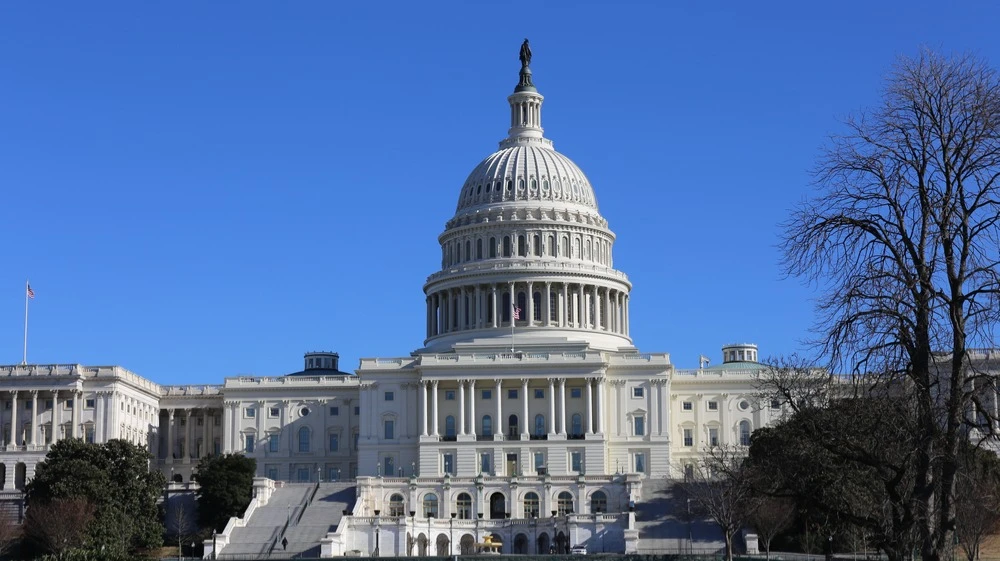
The results of the midterm congressional elections will be the main driving force during the upcoming session / Photo: Wirestock Creators / Shutterstock
A daily review and forecast of events in the U.S. stock market by Mikhail Denislamov, Deputy Director of Capital Markets Research at Freedom Broker.
We expect
The main driving force during the upcoming session will be the results of the midterm congressional elections. The Democrats have gained control of the Senate and, according to preliminary results, the House of Representatives. This increases political uncertainty and limits the White House’s ability to push through legislative initiatives. Investors fear tighter regulation of AI and data center construction, including at the state level.
In our view, the negative impact of the election proved to be short-lived: historically, a divided government has not been detrimental to stocks, and earnings growth for about 70% of the S&P 500 companies that have already reported quarterly results came in at just under 31%. Offsetting the political uncertainty for the AI sector are earnings reports from AMD (AMD), Super Micro Computer (SMCI), and Arista Networks (ANET), which confirmed accelerating demand for infrastructure. In premarket trading, solar energy stocks, including First Solar (FSLR) and Enphase Energy (ENPH), are rising: the Democrats’ stance is more favorable for the industry.
At 8:15 a.m. Eastern Time (ET), ADP will release its private-sector employment data for October (consensus: 67,000; September: 90,000), ahead of the Labor Department’s report on November 6. At 10:00 a.m. ET, the ISM Services PMI will be released (consensus: 54.8 points, September: 54.9, Freedom Broker forecast: 55.1). We will focus primarily on the price component (consensus: an increase from 74 to 74.6 points): a sharper rise could act as a negative trigger for the indices.
At 8:30 a.m. ET, the Treasury will announce the details of its quarterly debt issuance: the volumes of upcoming auctions could affect long-term bond yields.
WTI crude oil is hovering around $95 per barrel: talks between the U.S. and Iran have not yielded any results.
Before the start of the main trading session, McDonald's (MCD), Uber Technologies (UBER), and CVS Health (CVS) will report their earnings; after the market closes, Qualcomm (QCOM), Arm Holdings (ARM), AppLovin (APP), and DoorDash (DASH) will release their results.
S&P 500 futures are showing positive momentum, having fully recovered from last night’s decline. Russell 2000 and Dow Jones futures are up more than 1%, while Nasdaq-100 futures are up about 0.5%. We assess the risk balance as neutral amid heightened volatility. Buying is being driven by strong earnings reports from AI-related companies, as well as falling Treasury yields. The risk of tighter regulation in the tech sector is holding back the Nasdaq-100’s momentum.
What to Watch for in the Pre-Market
— Advanced Micro Devices (AMD) shares rose nearly 7% in response to the company’s third-quarter revenue growth of 45% year-over-year, to $13.38 billion, and an increase in adjusted EPS to $2.09 (consensus: $13.09 billion and $1.95, respectively). Revenue in the data center segment nearly doubled, reaching a record $8.55 billion. Revenue guidance for the current quarter is set at $17 billion (consensus: $16.23 billion); the company plans to grow sales by more than 80% in 2027 (consensus: 77%). This acceleration in growth is accompanied by moderate pressure on profitability: the gross margin in the fourth quarter is expected to decline from 56% to approximately 55%.
— Shares of Arista Networks (ANET) and Super Micro Computer (SMCI) are up nearly 11% and more than 7%, respectively. Arista’s quarterly revenue rose 58.5% year-over-year to $3.66 billion; adjusted EPS came in at $1.20 versus a consensus estimate of $1.08, and the EPS forecast for the current quarter exceeded expectations. Super Micro nearly quadrupled its revenue to $19.9 billion and raised its full-year revenue guidance to $72–82 billion. However, its gross margin fell from 17.5% to 12.7%, and operating cash flow remained negative ($434 million).
— Block (XYZ) shares are up more than 6%. Adjusted EPS in the third quarter more than doubled to $1.13, compared with a consensus estimate of $1.03, gross profit rose 22% year-over-year to $3.24 billion, including a 27% increase at Cash App to $2.07 billion. The company raised its gross profit forecast for 2026 to $12.63 billion and plans to increase it by at least 15% in 2027.
— Skyworks Solutions (SWKS) shares plummeted by more than 17%. Following the completion of its merger with Qorvo, the company released its first outlook for the combined business: in the first quarter of fiscal year 2027, revenue is expected to be $1.8–1.9 billion, with adjusted EPS of $1.25 (consensus: $1.52). Management expects a double-digit decline in revenue in the smartphone segment due to seasonality and weak demand in the premium segment. This is drawing increased attention to Qualcomm’s (QCOM) earnings report.
The Market on the Eve of...
Trading on November 3 on U.S. stock exchanges ended mixed, below the day’s highs. The S&P 500 gained 0.36%, the Nasdaq-100 rose 0.68%, the Dow Jones fell 0.38%, and the Russell 2000 rose 0.23%. The market was supported by a rebound in the AI sector following the sell-off on November 2: chipmakers (SOX: +2.63%), cloud providers, and cybersecurity solution developers. The IT sector (XLK: +1.31%) led the gains, while providers of non-cyclical consumer goods (XLP: −2.07%) amid a rotation out of defensive sectors and earnings reports from Sysco (SYY: −9.3%) and Archer-Daniels-Midland (ADM: −6.8%).
Market breadth remained negative: on the NYSE, there were 1.65 declining stocks for every advancing one, and the equally weighted S&P 500 (RSP: −0.33%) lagged behind the “classic” index by nearly 70 basis points. However, over the past 20 sessions, the RSP has outperformed the SPY by 6.4 percentage points. The RSI for the broad index stands at 40.2 points, compared to a median value of 61.3 across 11 sectors. Over the past five years, such a gap has been observed in only 0.3% of cases. This indicates that an unusually strong outflow of capital from the largest technology companies continues. Yesterday’s rise in AI leaders appears, for now, to be merely a localized rebound.
The number of JOLTS job openings in September rose from a revised 7.19 million to 7.52 million, the highest level since May (consensus: 7.16 million), while the share of voluntary quits increased from 1.9% to 2.1%. Industrial orders for September rose 1.8% MoM (consensus: +1.2%). The data confirmed the resilience of the labor market but did not provide the Fed with a case for keeping rates unchanged in December. Against this backdrop, Treasury prices fell, and the yield curve steepened: the yield on two-year bonds rose by 4 basis points to 4.62%, while those on ten-year and thirty-year bonds rose by 6 basis points to 4.96% and 5.33%, respectively.
Concerns about funding for the AI sector have eased somewhat. Oracle (ORCL: +5.9%) recovered some of its losses after raising $10 billion through a stock offering priced at $116 per share. Meta Platforms (META: +2.4%) raised $15 billion through a bond offering, drawing bids totaling approximately $58 billion.
Fiserv (FISV: +12.5%) reported flat organic revenue, compared with an expected decline. DuPont (DD: +8.6%) raised its full-year guidance. Eaton (ETN: +7%) recorded a record order backlog in its electrical segment. Shopify (SHOP: −8.7%) missed revenue expectations for the first time since 2022, while Zebra Technologies (ZBRA: −8.8%) disappointed with its profitability figures.
This article was AI-translated and verified by a human editor