Nebius Acquired an Israeli Startup to Accelerate Its AI Launch

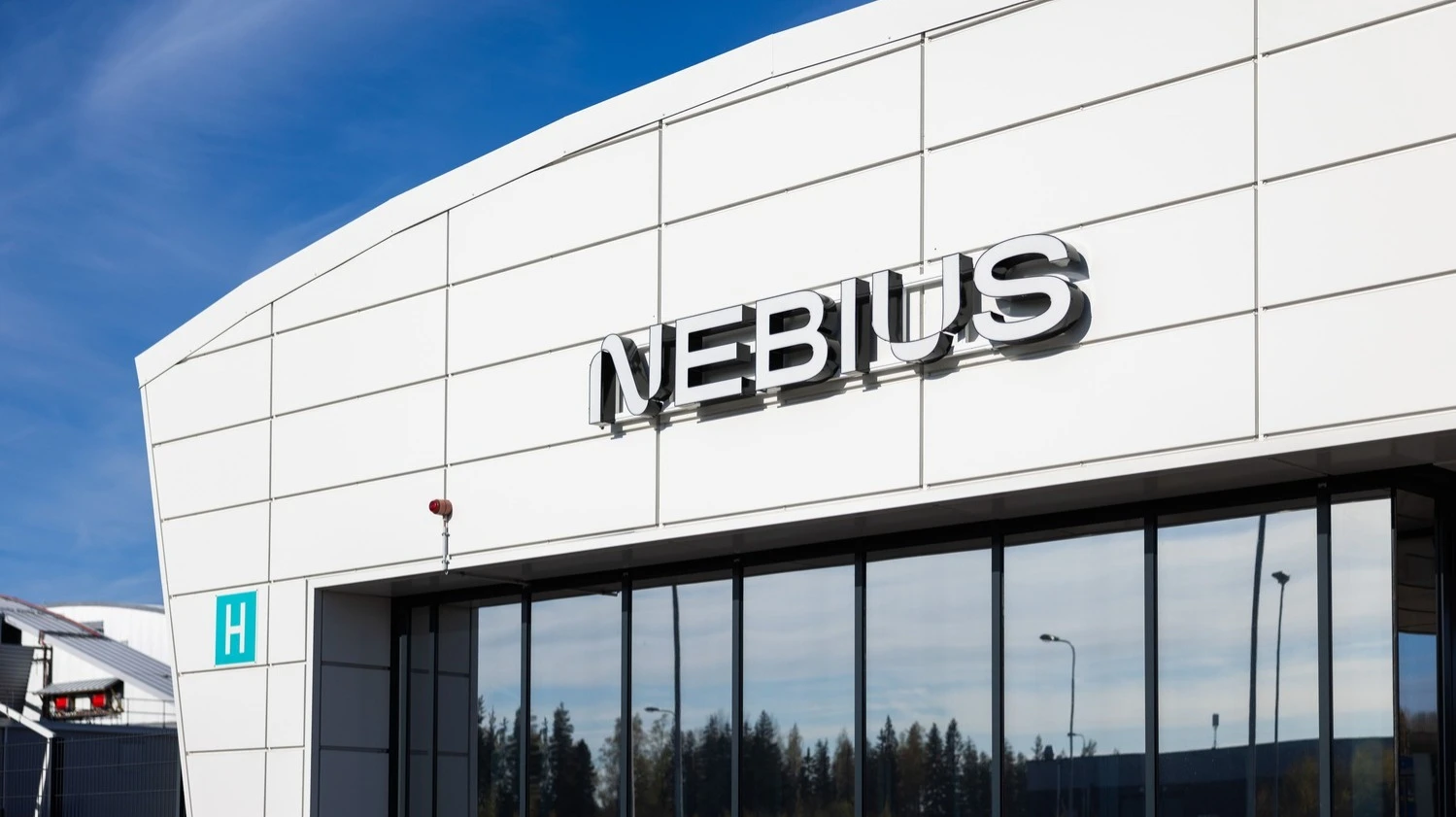
Nebius acquired the Israeli startup Inferize to accelerate AI operations / Photo: nebius.com
Arkady Volozh, founder of Nebius, a cloud computing provider for AI, announced the acquisition of the Israeli startup Inferize, whose technology reduces the time required to run large AI models, according to a company press release. The deal underscores Nebius’s commitment to optimizing the deployment and scalability of neural networks, notes GuruFocus.
In response to this news, Nebius shares rose about 2% in premarket trading on October 1, but after the market opened—in line with the rest of the U.S. stock market—they gave up their gains and were down more than 1% at the time of publication.
Details
The financial and other terms of the acquisition have not been disclosed; the deal is estimated to be worth $100–$150 million, according to the Israeli website Calcalis Tech. Inferize’s technology and team have already been integrated into Nebius Token Factory—the company’s platform for launching and running (inferencing) AI models, according to the press release.
The acquisition complements Nebius' technology stack. Since the beginning of the year, the company has already acquired three startups: Tavily, Eigen AI, and Clarifai. These acquisitions have strengthened the cloud provider’s key offerings and also allowed it to bring experienced engineers and researchers onto the team, Volozh said in May.
What is Inferize known for?
The Israeli startup Inferize was founded in early 2026 by Guy Bortnikov and Lior Gorbonos—both former members of the Granulate founding team — another Israeli company that developed software to optimize computing infrastructure and was acquired by Intel in 2022. The company’s headquarters in Tel Aviv had 17 employees.
In the three months since its founding, Inferize has created a working prototype of a technology designed to reduce GPU idle time, and in about 10 months of work, it has finalized this development. It allows for greater cost-effectiveness in token generation and a higher return on computing resources, Nebius noted.
Why is the development of Inferize important?
When an AI model needs to process a request, its weights (neural network parameters) must first be loaded—only then can it begin to generate a response. This delay, known as a “cold start,” causes the graphics processing units responsible for processing queries to remain idle while new instances of the model are launched, Nebius explained. Similar inefficiencies arise when updating model weights during the execution of tasks, such as in reinforcement learning (a machine learning method in which a model learns from its own mistakes and successes, constantly adjusting its internal parameters). The Inferize platform eliminates these idle costs by ensuring that resources scale strictly in accordance with actual workload. This improves hardware utilization and token efficiency, according to the company’s statement.
“Effective inference requires more than just fast graphics cards and optimized models. The entire system must respond quickly to changes in demand, including the speed at which additional capacity is made available to customers,” said Nebius CTO Danila Shtan. Inferize brings technology that accelerates this process, as well as a team with deep expertise in GPU (graphics processing unit) systems, he added. “We are integrating their solutions into Token Factory to make the platform more flexible and get the most out of our infrastructure,” Shstan added.
Context
Nebius Group is a Dutch neo-cloud provider that offers computing power for AI. The company has data centers in the U.S., Europe, and Israel, and its clients include Microsoft and Meta. Nvidia had previously announced plans to invest $2 billion in Nebius; the two companies will collaborate on infrastructure deployment, computing cluster management, and inference tasks.
Nebius began trading on Nasdaq as an independent company in 2024—after spinning off from the Russian assets of the former Yandex group. Since then, the company's stock has risen by more than 1,500%.
This article was AI-translated and verified by a human editor