New details of the trial against OpenAI: in alliance with it, Microsoft feared to repeat the fate of IBM
Microsoft CEO Satya Nadella's testimony and internal correspondence presented in court betray his concerns about Microsoft's strategic position amid the growing popularity of OpenAI

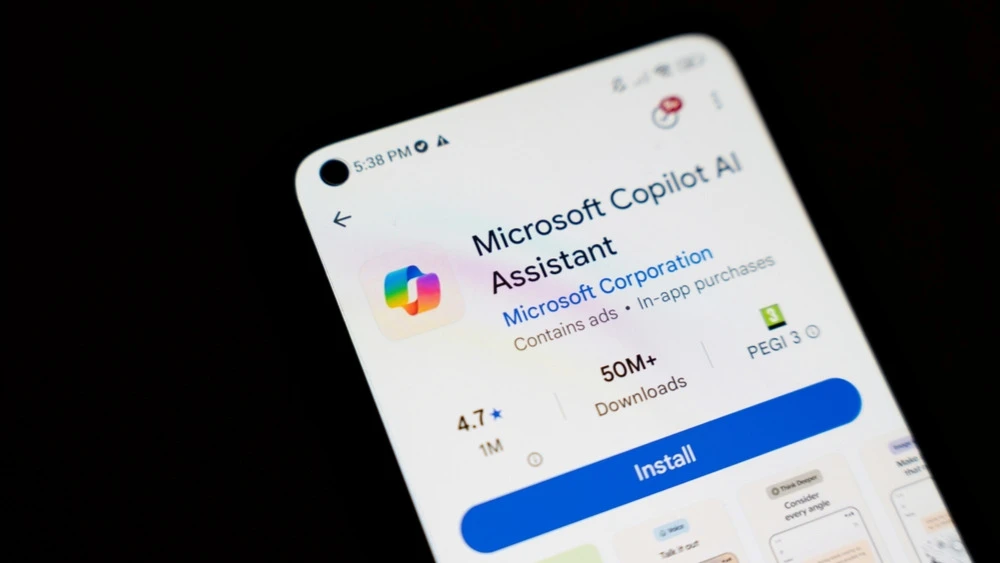
Microsoft's commercial partnership with OpenAI resulted in the launch of AI Copilot / Photo: daily_creativity / Shutterstock.com
"I don't want us to end up as IBM and OpenAI as Microsoft," Microsoft CEO Satya Nadella wrote to the company's top executives in 2022, fearing the AI startup could eventually eclipse its biggest investor. The letter was revealed during Elon Musk's lawsuit against the two partners. As a co-founder of developer ChatGPT, Musk accuses it of abandoning its original nonprofit mission and turning into a for-profit business, demanding that the restructuring be reversed.
What has come to light from Microsoft's internal correspondence
The Microsoft chief sent the letter in 2022, before investing $10 billion in OpenAI. Nadella's internal emails presented in court, as well as his testimony, betray concerns about Microsoft's strategic position amid OpenAI's growing popularity, the Financial Times emphasizes.
In the 1980s, IBM, the top executive mentioned, struck a deal with then little-known Microsoft to develop the DOS operating system for its personal computers, CNBC recalls. IBM's mistake was that the contract allowed Microsoft to retain intellectual property rights to the software it developed and do business with several other PC makers. As a result, the software became ubiquitous. Microsoft later began selling licenses of its Windows operating system to device makers, cementing its key role in information technology.
When Nadella was asked in court what he meant in that letter, he explained that he wanted to avoid a situation in which Microsoft would lose "its own self-sufficiency."
In the letters, the tech giant's CEO also argued that investing in the ChatGPT developer is a "one-way door": Microsoft can't build two supercomputers - one for itself and one for OpenAI - and must resign itself to losing out on the benefits of diverting limited computing resources away from its own AI teams.
"We were essentially outsourcing much of the development of the underlying intellectual property and were heavily dependent on OpenAI," Nadella said in court, explaining that he wanted to preserve Microsoft's access to technologies created through the partnership while continuing to build its own expertise and capabilities.
In another letter, Nadella elaborated on his concerns, "Right now we are a very thin layer on top of Nvidia, and all the intellectual property is held by OpenAI.... If we're going to spend that kind of money without controlling our own destiny, it doesn't make sense."
Since then, Microsoft has struck several deals with OpenAI to rebuild the relationship between the companies, and has tried to increase its independence in AI. Microsoft now owns about 27% of OpenAI, a stake valued at just over $200 billion, the FT points out.
Did Microsoft push OpenAI toward commercialization?
According to materials disclosed during the trial, in 2016, Microsoft gave OpenAI access to cloud computing at a deep discount. By 2018, when OpenAI's computing bills began to rise, "we were no longer comfortable considering it a marketing expense," Nadella said.
"So at some point you started thinking, 'enough with the charity, it's time to move on to business'?" - Musk's attorney Stephen Molo asked. The head of Microsoft answered in the affirmative.
Microsoft invested $1 billion in 2019, $2 billion in 2021 and another $10 billion in 2023, supporting OpenAI's transformation from a small research lab to one of the world's most valuable commercial companies. At the end of the March funding round, OpenAI's valuation had risen to $852 billion.
"[The investment] has worked out very, very, very, very well for Microsoft, hasn't it?" - Molo asked Nadella. The Microsoft CEO replied, "Because we were the only ones who took that risk."
In the lawsuit, Musk claims that Microsoft contributed to the violation of the principles on which OpenAI was originally created as a non-profit organization. In his version, the company was supposed to develop AI in the public interest, not for profit and Microsoft's interests. The billionaire also insists that Microsoft misused his initial investment in OpenAI, which he estimates at between $38 million and $44 million.
Musk's earlier testimony suggests that Microsoft's $10 billion investment was the key moment after which he decided that OpenAI was violating its nonprofit mission. He said he was concerned about the scale of that investment, and that's what prompted him to launch the proceedings.
Nadella said in court Monday that Microsoft's investment in OpenAI was never perceived by the company as charity or donation. He said the partnership was built from the beginning as a commercial one with mutual benefit for both parties. Nadella also said Musk never once approached him with objections to the Microsoft and OpenAI deals - not after the first investment in 2019, the exclusive license for GPT-3 in 2020, or the $10 billion investment in 2023.
When Microsoft attorney Russell Cohen asked if Musk knew how to contact him, Nadella replied, "We have each other's phone numbers," The Wall Street Journal quoted him as saying.
This article was AI-translated and verified by a human editor