No room to maneuver: five questions on how to bring back traffic in the Strait of Hormuz

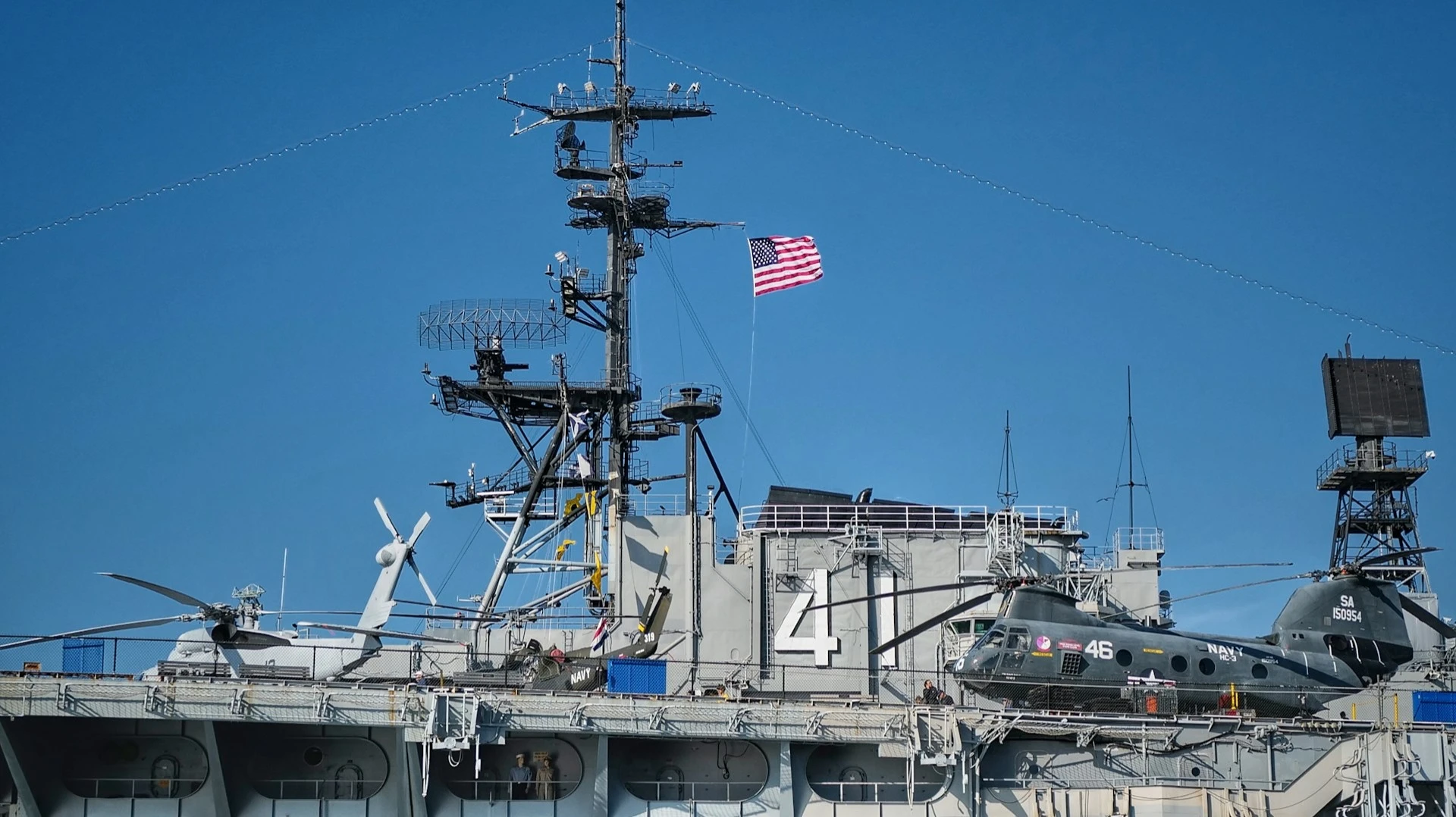
Five questions about what it takes to restore traffic in the Strait of Hormuz / unsplash.com / Sung Jin Cho
The United States does not yet have an understanding of when the first oil tanker will be able to pass through the Strait of Hormuz, White House spokeswoman Caroline Leavitt said March 25. She said Washington is working to ensure restoration as soon as possible. That said, the conditions Iran has put forward include recognizing its control of the crucial shipping lane. Tehran has said the strait will remain open after the war but will not revert to its previous regime.
The Strait of Hormuz is only 40 kilometers wide at its narrowest point, and the round trip for fully loaded tankers traveling at maximum speed takes 10 to 14 hours. That means they have almost no room to maneuver and become an easy target for attacks from shore or from small ships, Bloomberg writes. In addition, because of the relatively shallow depth, Iran can plant sea mines quite easily, the agency notes.
A return to normal traffic through the corridor is unlikely as long as the war continues, and even after it ends, it is unclear how quickly and how much shipping can resume. Bloomberg has compiled a detailed breakdown of what it would take to get the key artery of world trade back up and running.
When is it possible to start restoring traffic?
Only after the cessation of active hostilities. As Bloomberg notes, the mere threat of attacks from Iran has been enough for most shipping companies to refuse to cross the Strait of Hormuz. Three ship operators interviewed by the agency said that under no circumstances would they conduct their voyages through the strait while the war continues.
Even after a formal truce, the fairway will need to be cleared of mines before shipping can begin, Bloomberg warns. According to the experts it quotes, the process could take about two weeks. Minesweepers, naval drones and helicopters with sensors are being used for this purpose. The U.S. is also likely to continue attacks on Iranian military infrastructure near the strait to reduce risks. According to U.S. Central Command, more than 30 Iranian mine-laying vessels have already been destroyed or damaged, and missile positions have also been struck.
What might a military escort for ships look like?
Shipping companies that have not received security guarantees from the Islamic Republic will rely on convoys involving the U.S. Navy and allies for protection against missiles, drones and other threats. According to military experts interviewed by Bloomberg, the escort mission will likely involve a chain of warships stretched along the strait. They would move in tandem with merchant ships and cover them.
The U.S. Navy will likely employ Arleigh Burke-class destroyers to support the convoy, the agency suggests. The U.S. Air Force will also need to fly overflights in the Strait area to help detect approaching threats.
Will that be enough to bring traffic back?
The U.S. does not have enough ships to escort all ships passing through the strait - usually 140 per day, Bloomberg notes. Western military officials have said the resumption of traffic through the strait is possible only with the participation of a multinational coalition after a cease-fire. The cessation of hostilities may persuade the allies to heed US President Donald Trump's call to deploy their naval forces for a joint mission, Bloomberg writes.
At the same time, traffic will still be limited: if the strait is overloaded, there will be a risk of so-called line-of-fire restrictions - when, for example, a warship cannot destroy an approaching threat because a civilian vessel is in its path, the agency points out.
What else could be holding back the recovery of shipping?
Even with security in place, some shipowners may be in no hurry to return. As Bloomberg notes, the fear of attacks will not disappear immediately, and some ship operators may require protection not only in the Strait of Hormuz, but in the entire Persian Gulf.
In addition, the proximity of the Iranian coast leaves little time to detect and intercept approaching projectiles. Even advanced warships equipped with the most advanced systems could be overwhelmed by a large enough attack by a swarm of Iranian drones, Bloomberg concludes.
Have there been precedents for a large-scale convoy operation?
In December 2023, a U.S.-led naval coalition launched the Prosperity Guardian mission to escort commercial ships in the Red Sea - amid attacks by Iran-backed Houthis in Yemen. Many shipping companies then rerouted routes around the southern tip of Africa, increasing travel time by several weeks. At the peak of the operation, the U.S. deployed about a dozen warships. However, even in 2025, ships were still avoiding the Red Sea, Bloomberg writes. In May, the U.S. military hit more than 1,000 targets of the Houthis, leading to a brief cessation of hostilities. The strikes then resumed and four ships were sunk.
Bloomberg also recalls that during the Iran-Iraq war, the US officially entered the conflict in July 1987 by launching Operation Earnest Will - escorting Kuwaiti tankers to protect them from Iranian attacks. It was the largest convoy mission since World War II, with more than 30 warships involved at its peak. However, attacks on the ships did not stop immediately: during the first outing, one of the tankers, sailing under the US flag, exploded on a mine. Later, mines and missiles struck both Kuwaiti ships and American warships. In addition to the main operation, there was also a secret one - "Prime Chance", in which the US special forces attacked Iranian minesweepers at night, which eventually reduced the number of attacks on ships in the region.
This article was AI-translated and verified by a human editor