France and Italy agree with Iran on safe passage through the Strait of Hormuz
This, citing sources familiar with the situation, was reported by the Financial Times, in Italy the information about participation in such negotiations was rejected

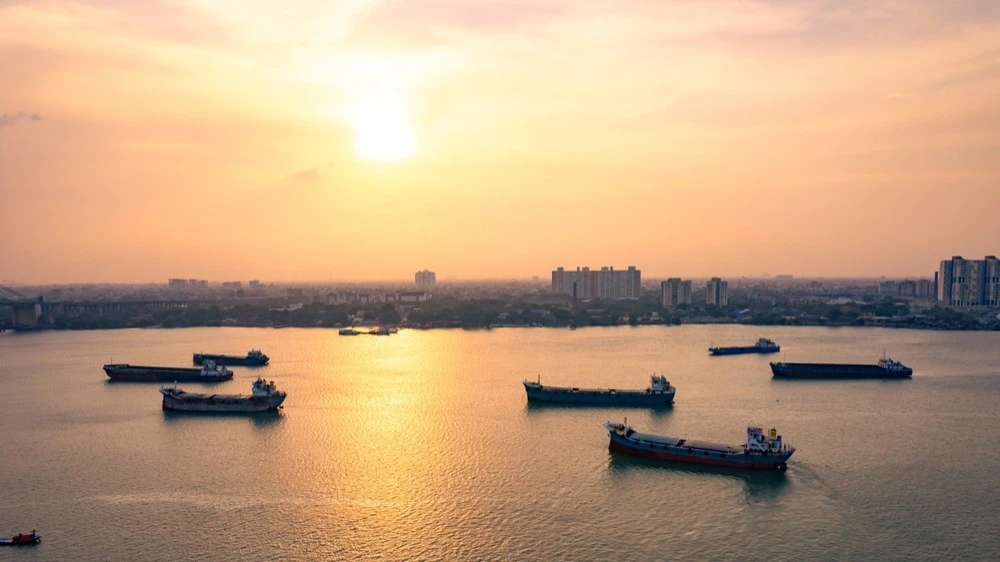
France and Italy have begun talks with Iran on the passage of ships through the Strait of Hormuz/Photo: shutterstock.com/Arnav Pratap Singh
Representatives of Italy and France have begun preliminary talks with Iran in a bid to conclude an agreement guaranteeing merchant ships and tankers safe passage through the Strait of Hormuz, the Financial Times reported, citing sources.
According to three officials familiar with the talks, the discussions are preliminary and aimed at finding a mechanism for safe navigation through the strait. However, there is no guarantee that the talks will lead to a result: Iran may use the blocking of the strait as a tool to pressure US President Donald Trump to end the conflict, the Financial Times sources said. Iran's new supreme leader Mojtaba Khamenei said in his first statement as head of state on Thursday, March 12, that the Strait of Hormuz "must remain closed."
Vessel traffic through this narrow water crossing, through which some 25 percent of the world's total offshore oil shipments and a significant volume of LNG passes, has been virtually halted for nearly two weeks - following Iranian threats and attacks on tankers.
European countries are trying to avoid direct involvement in the conflict in the Middle East, writes the Financial Times, noting that although Italy, France and Greece participate in the EU Aspides naval protection mission in the Red Sea neighboring the Strait of Hormuz, their fleets are not ready to escort tankers through the Strait of Hormuz at the risk of attack - because they fear further escalation of the war. Earlier, the U.S. administration talked about plans for the U.S. military to escort ships through the Strait of Hormuz to ensure security, but the U.S. Department of Energy said on March 12 that the U.S. Navy was not yet ready to do so and was focused on a military operation.
In Italy, as MarketWatch writes, the information about its participation in negotiations with Iran was denied.
Nevertheless, in parallel with these contacts between European countries and Iranian representatives, according to Wall Street Journal sources, India is conducting its own negotiations with Tehran on the resumption of shipping through the Strait of Hormuz: Indian authorities are trying to obtain permission for the passage of at least 23 tankers with oil and liquefied natural gas through the Strait of Hormuz. The vessels have been blocked in the Persian Gulf since the start of U.S. and Israeli strikes on Iran. On March 13, it became known that at least one Indian tanker was able to pass through the strait - it is carrying gasoline to Africa, wrote Reuters.
The prolonged blockage of the strait is being reflected in the markets, with Brent crude oil prices rising to more than $101 a barrel from around $73 before the conflict began.
Earlier this week, member countries of the International Energy Agency (IEA) agreed to release a record 400 million barrels from strategic reserves to stabilize the market. However, traders are concerned about when these reserves will come on the market. For example, the U.S. will send 172 million barrels of oil from its strategic oil reserve, but it will take about 120 days to fully release this volume, the IEA pointed out.
This article was AI-translated and verified by a human editor