Oil rose to $110. Goldman Sachs warned: it may be expensive throughout 2027
The U.S. presidential administration is considering a forceful scenario of deblocking the Strait of Hormuz - for this purpose the U.S. may occupy the Iranian island of Kharq, writes Axios

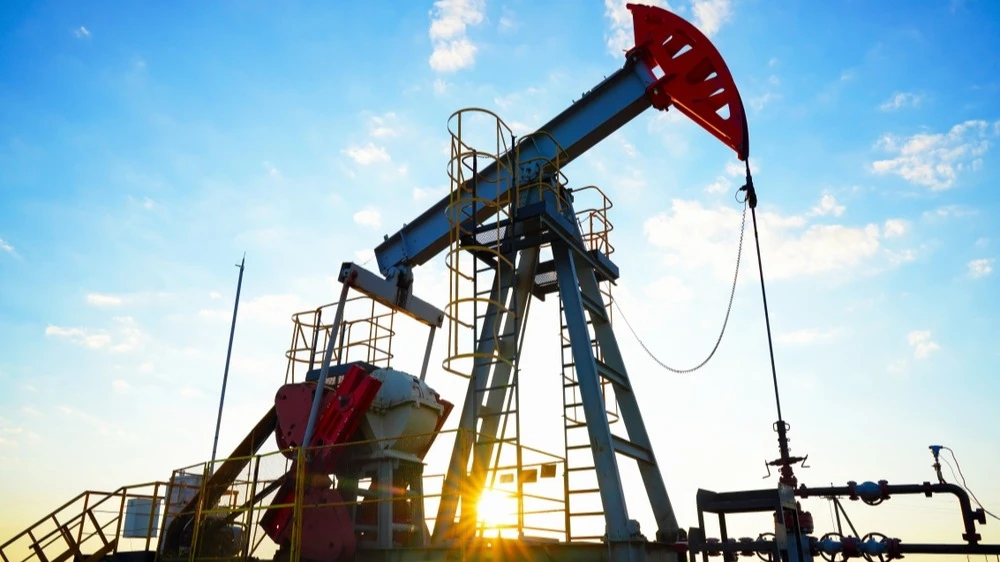
The current volatility in oil prices is due to a series of attacks on Middle Eastern energy infrastructure. Photo: Maksim Safaniuk/Shutterstock
Brent crude oil on March 20 returned to growth after two short-term intraday series of declines and is seeking a fifth consecutive week of growth, MarketWatch writes. At the time of publication, Brent is trading at $110 per barrel. At the intraday high, its price jumped to $111.22, showing an increase of more than 1% from the previous close. At the low on March 20, Brent cost $105.
Such dynamics of oil prices demonstrate against the background of contradictory signals from the Middle East region. On the one hand, Israel promised not to strike Iran's energy infrastructure for the time being. On the other hand, Axios, citing four sources familiar with the situation, reported that U.S. President Donald Trump is considering a forceful seizure of Iran' s Kharq Island (Iran's main export hub) to force Tehran to open the Strait of Hormuz. In addition, Reuters and The Wall Street Journal (WSJ) interlocutors say: the US military is moving thousands of additional Marines and sailors to the Middle East, increasing the number of US troops in the region, which already exceeds 50,000. This is the second large-scale transfer of Marines to the Middle East in the last week, WSJ points out.
Context
According to Axios' interlocutors, the Trump administration is considering plans to de-block the Strait of Hormuz by occupying or blockading Iran's Kharq Island. The island is home to Iran's largest oil terminal, through which about 90% of the country's total oil exports come. This would be an extremely risky move that could put U.S. military personnel in direct jeopardy, Axios notes.
Reuters writes that the U.S. Armed Forces may use Marines for landings, among other things. Thousands of additional marines and sailors the U.S. Armed Forces are just moving to the Middle East, two unnamed U.S. officials told the agency. No decision has been made yet on sending US troops to Iran itself, they said, but Washington will build up military capabilities in the Middle East for potential future operations in the region.
Such reports emerged on Friday, March 20, after Israel said it would refrain from strikes on Iran's gas fields after a request to that effect from Trump, and Britain, France, Germany, Italy, the Netherlands and Japan expressed "willingness to contribute to appropriate efforts to ensure the safe passage of ships through the Strait of Hormuz," through which some 25 percent of the world's offshore oil supply and a significant amount of LNG passes. "I also believe that this war will end much sooner than many people think," the United Kingdom, France, Germany, Italy, the Netherlands and Japan said at the press conference
What's in the oil market
Oil prices continued to show high volatility on March 20 amid these contradictory signals: Brent prices, after jumping to $111 per barrel in the middle of the day, fell to $106.9, and then - again returned to the daily highs at around $110 per barrel. April contracts for West Texas Intermediate (WTI) crude oil, after rising 0.9% to $97 per barrel, fell to $95.16 before rebounding to $98 per barrel. Both indicators remain below the weekly highs reached the previous day amid Israeli strikes on Iran's largest gas field South Pars and Iran's shelling of the Qatari LNG plant in Ras Laffan. Refineries in Qatar and on the Red Sea coast of Saudi Arabia were also hit by Iranian strikes. At that time, Brent exceeded $119 per barrel, while WTI futures gained ground above $100.
What the market is saying
- "The likelihood of a rapid decline in energy prices is unlikely as production has already been damaged," said Ole Hansen, head of commodity strategy at Saxo Bank. "The actual situation is that the market remains tight," he added(quoted by Reuters).
- "The longer energy prices remain high, the more the market tends to build into expectations tail risks (extreme negative scenarios) and regulatory mistakes, in which an interest rate hike would be back on the agenda," said Barclays analyst Emmanuel Kau (quoted in MarketWatch).
- Goldman Sachs' baseline scenario assumes oil production normalizes within four weeks of the full opening of shipping through the Strait of Hormuz, but risks to oil prices remain skewed to the upside both in the short term and into 2027, analysts say. The persistence of a number of large supply shocks in the past highlights the possibility that oil prices could permanently consolidate above the $100 a barrel mark, Goldman warned, noting that if disruption risks persist, Brent could surpass its historic 2008 peak (around $147), Reuters wrote.
This article was AI-translated and verified by a human editor