Oninvest Index. Quantum technologies: what small-caps to bet on in 2026?

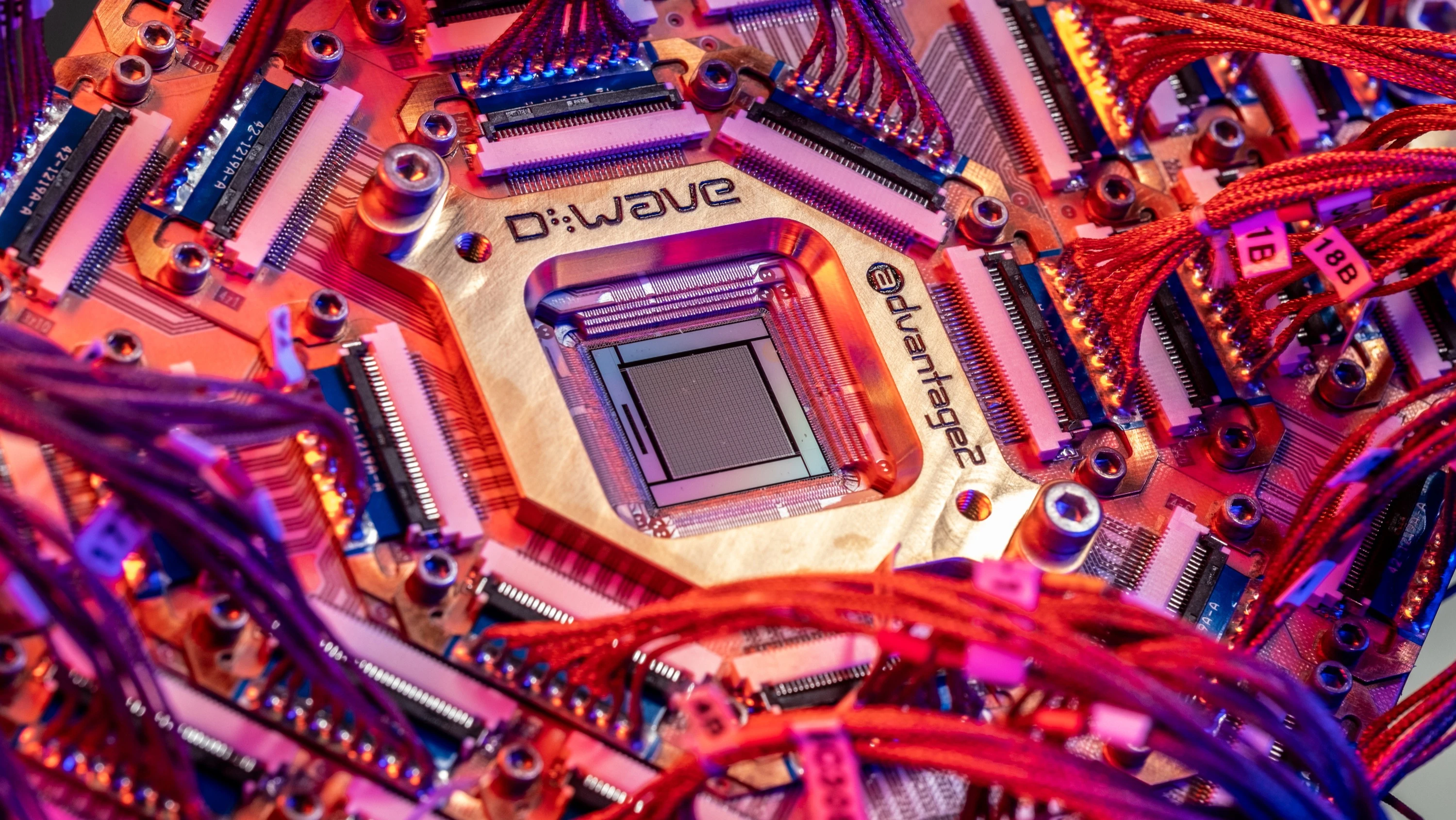
D-Wave's stock has lost about 20% of its value since the start of 2026, but Wall Street thinks it could rise more than 80% / Photo: www.dwavequantum.com
Quantum computing is one of the most stable and potentially high-return bets of the next decade, Navellier & Associates founder and chief investment officer Louis Navellier wrote in his column. "Hybrid quantum-classical models are already being used to manage portfolio risk and logistics routes with an accuracy unattainable by classical supercomputers," Navellier wrote. Although the quantum technology market is still in its early stages, growth estimates are increasing rapidly: $20 billion by 2030 is the "medium" forecast, and some analysts estimate the market could grow to $125 billion, Navellier notes.
Analysts of major investment banks increasingly consider quantum technologies as a factor of geopolitics, not just business. In a report dated March 23, Jefferies emphasizes that quantum computing is becoming an element of national security. According to analysts' estimates, China has already invested about $16 billion in the sector - about four times more than the United States - and by 2024 has secured about 60% of the world's patent applications in this area.
Barclays cites quantum advantage in real-world tasks as the key catalyst for 2026-2027. Achieving stable and accurate operation of quantum computers, in their opinion, will be a tipping point for commercialization. In addition, the bank estimated the potential demand for classical computing power - processors and video cards for error correction - at more than $100 billion.
What dynamics the Oninvest index shows
At the end of 2025, the equal-weighted Quantum Small-Cap Index EW, calculated specifically for Oninvest, lost 11.1%. The version of the index weighted by the market capitalization of companies Quantum Small-Cap Index CapW decreased by 10.8%. The Oninvest index includes 18 public companies from different countries - from manufacturers of equipment for quantum computing to processor developers and post-quantum cryptography, the market capitalization of the companies does not exceed $5.3 billion.
By comparison, the Russell 2000 Index, a benchmark for small- and mid-cap companies, rose 11.3%, while the S&P 500 broad market index added 16.4%.
Since the beginning of 2026, the situation has changed: the equal-weighted Quantum Small-Cap Index has added 5.5% (as of April 10), the capitalization index - 7.5%, outperforming the Russell 2000 (up 6%) and the S&P 500 (minus 0.4%). Moreover, hardware vendors have performed best since the beginning of 2026, while companies creating quantum processors and cryptographic solutions remain under pressure.
Which companies should an investor pay attention to
Selected three companies from the Quantum Small-Cap Index, with different risk profiles and growth prospects: France's Riber S.A., Switzerland's SEALSQ Corp and U.S. D-Wave Quantum.
Riber S.A. (Euronext Growth Paris: ALRIB)
The company describes itself as a world leader in the manufacture of equipment for molecular beam epitaxy, a technology for depositing atomic layers of semiconductor materials - a process critical to the fabrication of quantum dot lasers and silicon photonics. Riber was founded in 1964 and has remained a key supplier to semiconductor research centers and manufacturers worldwide ever since.
For fiscal 2025, the company reported a 2.1% year-on-year decline in revenue to €40.3 million, while its order book grew 24% to €26.9 million, with net profit up 27.1% to €5.2 million.
Since the beginning of the year, the company's Riber shares have risen by almost 266%. One of the company's key growth drivers is the ROSIE system for silicon photonics. The dividend for 2025 rose 25% year-on-year to 10 euro cents per share. Due to its small capitalization and listing on Euronext Growth Paris, the ratings of major investment banks for Riber are not published.
SEALSQ Corp (NASDAQ: LAES)
Swiss company specializing in secure semiconductors and post-quantum cryptography. Its flagship product is the Quantum Shield QS7001 chip for data protection against attacks using quantum computers. SEALSQ is a representative of the emerging quantum security market.
According to preliminary, unaudited company data, revenue in the first quarter of 2026 more than tripled year-over-year to approximately $4.1 million. SEALSQ reaffirmed its full-year 2026 guidance, expecting revenue growth of 50-100%. The company's potential order book exceeds $200 million for 2026-2029, of which more than $60 million is related to the company's QS7001 and QVault TPM post-quantum products. As of March 31, 2026, the company had over $525 million in cash and short-term investments. In March, the company signed a letter of intent to acquire Switzerland-based Miraex, a developer of photonic quantum interconnects.
Despite a marked improvement in operating performance, SEALSQ stock is down more than 25% since the beginning of 2026. The company has three ratings from Wall Street analysts, all of them "buy." The average target price is $6, more than double the current stock price.
D-Wave Quantum (NYSE: QBTS)
The only company in the world to offer two quantum platforms: quantum annealing systems for optimization problems and valve systems, acquired with Quantum Circuits Inc. for $550 million. D-Wave is already applying this to commercial projects, including logistics optimization and financial modeling.
At the end of FY 2025, revenue increased 179% year-over-year to $24.6 million, with a customer base of more than 135 organizations, including Forbes Global 2000 and Fortune 100 companies. Cash at year-end 2025 totaled $884.5 million.
D-Wave shares are up 172% for 2025, but are down about 20% since the start of 2026. Jefferies in a March 23 report gave the stock a Buy rating with a $45 target price, based on a 65x multiple to projected 2030 revenue ($433 million). The target implies more than double the closing price on April 15. Among the risks Jefferies noted uncertainty in the timing of mass adoption of quantum computing and competition from large technology companies.
According to MarketWatch, 15 analysts advise buying the company's stock and only one advises holding it. The average target is $38.1, suggesting an upside of 83% from the current value.
Does not constitute individualized investment advice.
