"Scorched-Earth Tactics": Why Wall Street Isn't Expecting a Quick Rebound in U.S. Stocks

Dell's Strong Results Did Not Stop the Sell-Off in Semiconductor Stocks / Photo: Elkowitz / Shutterstock.com
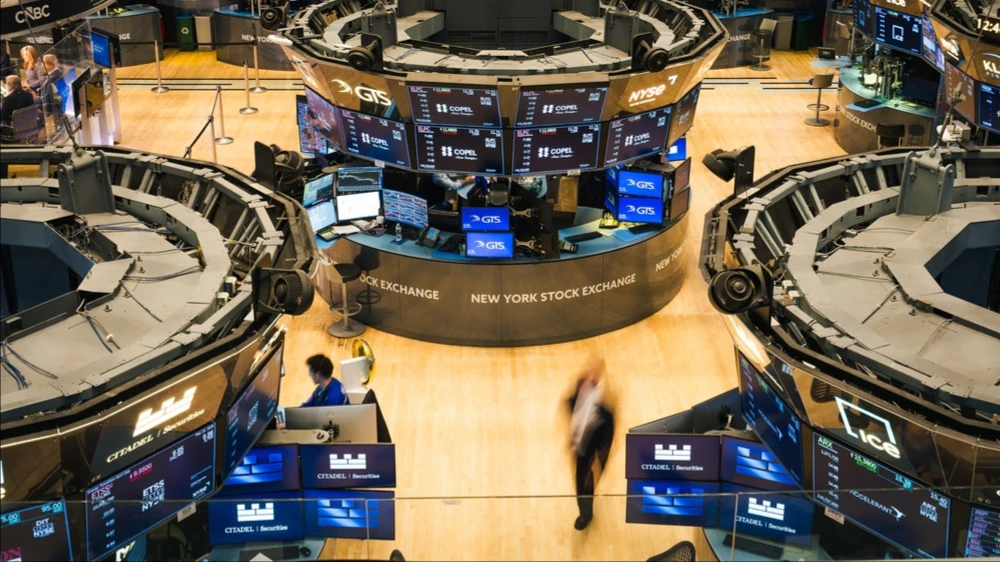
The trend in the stock markets on Wednesday, November 25, was expected to be quite different, as Dell had reported earnings the day before that significantly exceeded analysts’ expectations and once again demonstrated that: spending on artificial intelligence shows no signs of slowing down, according to Barron’s. However, the company’s results did not serve as a positive driver for its stock, as they might have a year ago: The S&P 500 fell 2.88% on November 25, the Dow Jones Industrial Average lost 1.58%, and the tech-heavy Nasdaq Composite fell 4.31%. Dell’s stock, meanwhile, dropped by more than 8%. Here’s what people are saying about the sell-off on Wall Street.
What Analysts Are Saying
— Investors’ reaction to Dell’s earnings report suggests that “the market has already lost interest in AI investments,” Barron’s quotes independent technology analyst Luke Lango as saying. According to him, although the financial performance of AI-related companies remains strong, investors seem convinced that demand for servers, chips, and all other equipment necessary for AI to function is about to plummet.
“Fundamental indicators show rapid growth, but the market is already pricing in a slowdown that hasn’t yet shown up in the numbers,” Lango writes. “The market is convinced that the development of AI infrastructure is about to hit a wall, and even the best financial results are unable to change investors’ minds.”
Shares of other AI-related companies are also falling for the second day in a row: Nvidia shares lost 9% on Wednesday, CoreWeave—a cloud computing company—fell 11%, and Oracle dropped 8.5%. Barron’s notes that the sell-off has centered on shares of virtually all companies that were previously considered potential beneficiaries of rising spending on artificial intelligence. This includes chipmakers, companies involved in optical networking technologies, as well as firms in the industrial and energy sectors.
— One of the few pieces of good news that Mizuho analyst Jordan Klein was able to find is that U.S. stock markets will be closed tomorrow, according to Barron’s. Thursday is Thanksgiving, and trading on Friday will be shortened.
“This is a full-blown buyer strike,” Klein states. “Quantitative and passive funds continue to recklessly sell off assets without showing the slightest emotion. A scorched-earth tactic prevails: the more they sell, the lower tech companies’ stock prices fall, since there are simply no buyers. The lower prices drop, the greater the need to sell.”
Unlike yesterday, when the main wave of selling was concentrated on AI-related stocks, the decline has now spread to other market segments. Inflation data released this morning and news about tariffs are unlikely to prompt investors to buy discounted stocks ahead of the holiday, Barron’s suggests.
— Jonathan Krinski, chief technical analyst at BTIG, warned of the risk of a further decline in U.S. stocks. According to his observations, when the Nasdaq index first loses 5% or more—as it did on November 20—and then rebounds by at least 5%—as it did on November 23—this has historically been followed by a new wave of selling. On average, the market has fallen 16% over the following 30 days after such volatility, he explains. If history repeats itself, the broad-market S&P 500 index could drop to 6,400–6,500 points, the analyst believes.
"Although it is unlikely that the market will move toward these levels in a straight line, more than half of the companies in the S&P 500 remain above their 50- and 200-day moving averages, and the shares of the world's largest company [Apple] are near all-time highs. Therefore, in the coming weeks, the market still has significant downside potential before the sell-off peaks and even the most resilient investors begin to offload their shares,” Barron’s quotes Krinski as saying.
In other words, it may be too early to buy stocks during the current market decline, Barron’s notes.

Context
The Personal Consumption Expenditures (PCE) price index for October, released on Wednesday, showed that inflation continues to run high. This reinforced expectations of Fed interest rate hikes in December and January and prompted investors to reduce their holdings of risky assets, according to CNBC. “The main concern is that the sell-off, triggered by deteriorating investor sentiment toward AI, could escalate into a more serious market decline due to concerns about economic growth if investors begin to price in too significant a rise in Fed rates,” David Wagner, head of equity investments at Aptus Capital Advisors, told the network.
This article was AI-translated and verified by a human editor