Seven long years of preparation: how China has built a defense in its trade war with the U.S.
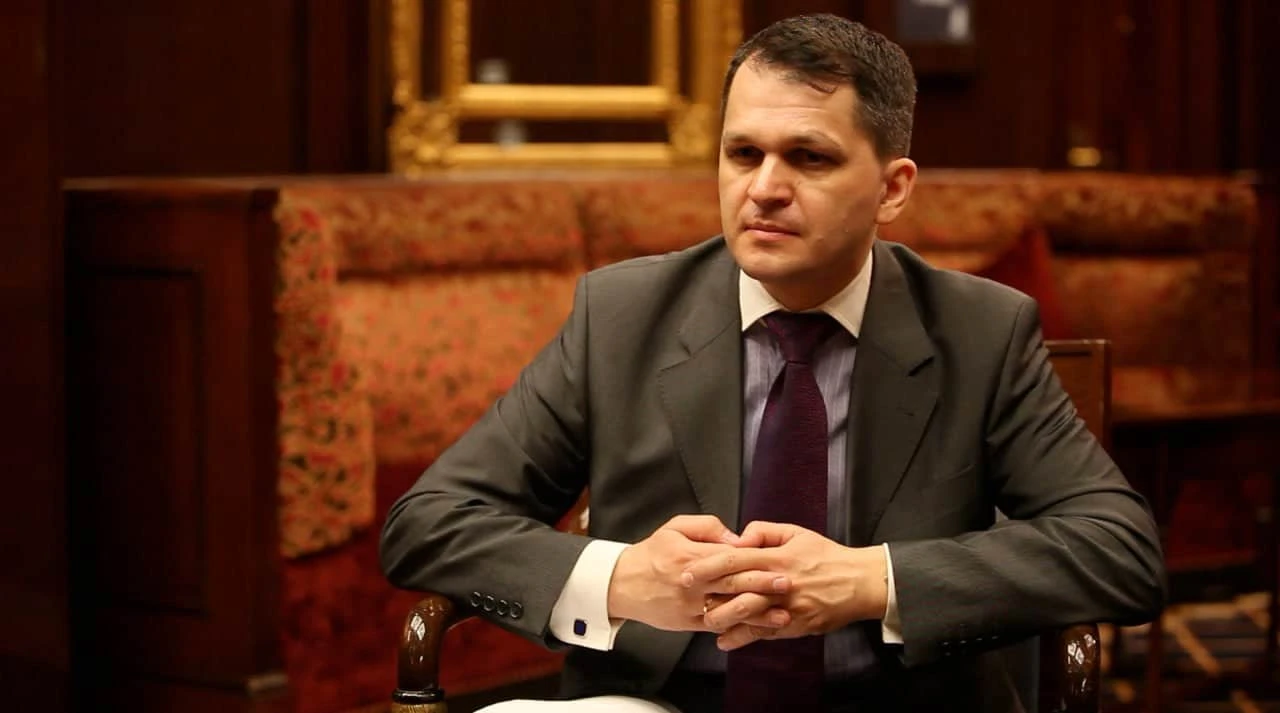
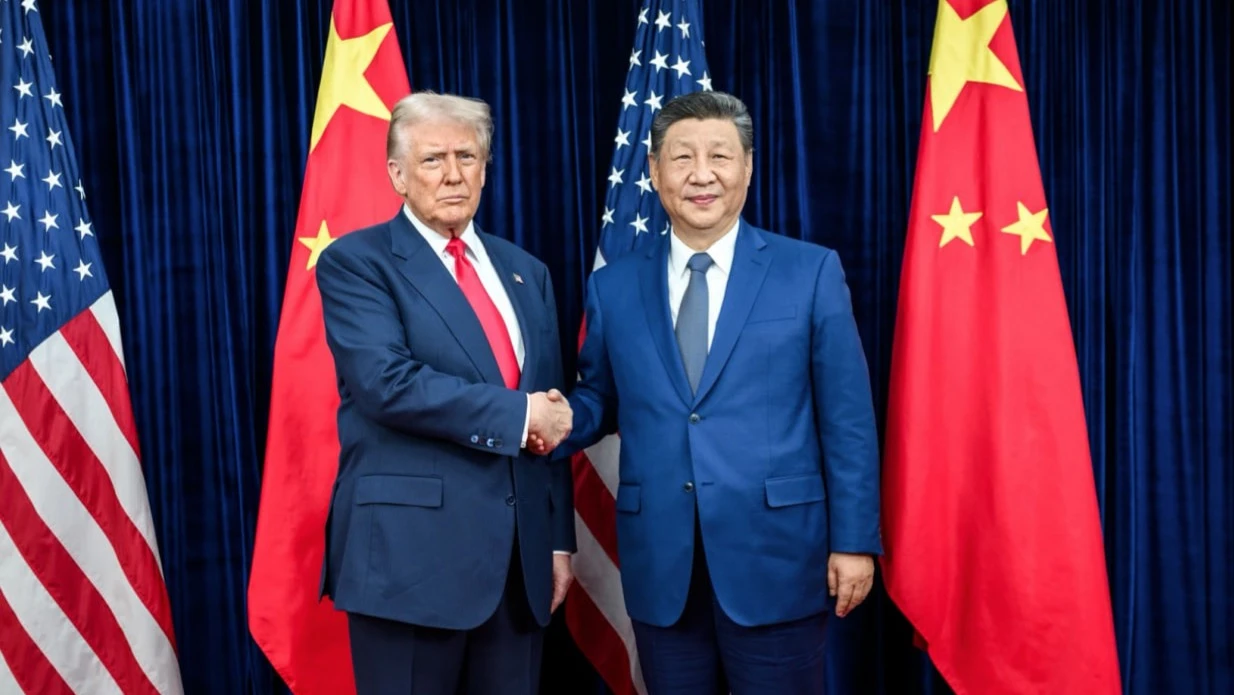
Having levied import duties against each other in April, the U.S. and China then twice postponed escalation in the trade war. After six months of negotiations, the two heads of state, Donald Trump and Xi Jinping, met on October 30 and announced a trade truce for another year. In the case of other countries, Trump managed to secure significant concessions. But Beijing took a tough stance and did not back down from it. It identified the weaknesses of its and the U.S. economies in advance and skillfully exploited them.
Wars and truces
In April, Trump raised the duties against China several times to 145%, but the latter was not afraid and in response raised them to 125%.
After the parties "went to different corners", the rates of fees were reduced and negotiations began. At a meeting on October 30, the leaders of the states reported a number of agreements that would be in effect for a year.
Trump stated, "Every year we're going to renegotiate [the] agreement that was made, but I think it's going to last much longer than one year."
The reaction of many observers was summarized by William Bratton, an analyst at BNP Paribas. He characterized Thursday's agreements as minor, noting that they do not "represent a 'grand bargain' or a sweeping reset of relations," The Wall Street Journal quoted his report as saying.
China has agreed to postpone for a year recently imposed restrictions on rare earth metal exports and to tighten controls on exports to the United States of chemicals used to make the drug fentanyl.
Trump, for his part, said that he discussed with Xi Jinping the export of American chips. He added that Nvidia will negotiate with Beijing on their supplies. But, as has been the case so far, we are not talking about the most advanced models. The two sides also agreed to waive for a year the additional duties they began charging each other's ships in October when they call at their ports (resulting in higher international freight rates).
Trump wrote on his social media network Truth Social that China has promised to buy U.S. soybeans "in huge volumes" and to agree on oil and gas imports. China's Ministry of Commerce confirmed agreements on soybean purchases, cooperation on fentanyl and export controls on rare earth metals.
Trump reduced from 20% to 10% duties imposed in retaliation for shipments of fentanyl constituents from China, bringing the overall duty rate for China down from 57% to 47%, he said.
Weaknesses
Beijing's tough stance was the result of careful preparations for a trade war.
In particular, they realized that they could ensure control over the situation through their dominance in the rare-earth metals market. China is a de facto world monopolist in this area.
They are used in modern technology, from washing machines and medical equipment to smartphones, electric cars and weapons, including F-35 fighter jets, missiles and radars. When China imposed export controls on a number of such metals in April, U.S. auto companies even had to suspend production.
In addition, China has bet that Trump will not be able to wage a destructive trade war for long because he is highly dependent on the stock market, the dynamics of which he takes as a gauge of his own performance.
Beijing has taken a tough stance because of a belief that trade escalation will cause markets to crash, as it did in April when Trump announced an all-out imposition of duties, people close to the Chinese leadership told the WSJ.
In fact, here Beijing has adopted the TACO principle ("Trump always backs down"), which market participants have been following since the spring.
According to people close to the decision-making process in Beijing, Xi's hardline strategy is based on the belief that Trump will eventually give in and make concessions. This confidence was bolstered by Trump agreeing to the first trade truce since Beijing's April decision on rare earth metals, the WSJ wrote.
The Chinese economy, of course, also has serious problems. The real estate market is in its fifth year of crisis, and the consumer sector is stagnating, also due to the production priorities of the Chinese leadership, which has also severely undermined the country's entrepreneurial spirit in recent years.
But on the other hand, Xi's actions are independent of stock market reactions and voter sentiment.
Ever since Trump's first presidency, the Chinese authorities have tried to strengthen their economy so that it can withstand external pressures.
Seven years ago, after Trump's first duties, China's Ministry of Science and Technology published in its official newspaper not the traditional panegyrics of national achievement, but 35 articles detailing China's weaknesses. Each addressed a specific bottleneck - a critical technology for the economy in which it was heavily dependent on imports, The Economist reports.
While not all such bottlenecks have been "expanded" (China, for example, depends on Western aircraft engine supplies and has not yet achieved leadership in producing the most high-performance chips), the authorities are working hard to rid China's supply chains of foreign components while incorporating China as an indispensable player in other countries' supply chains.
The country is also working to diversify its exports: although China's exports to the US fell 27% in January-September 2025, its global exports rose by more than 8%.
Having identified its own vulnerabilities, Beijing set about identifying U.S. weaknesses. In 2025, this approach yielded the necessary results.
This year, China has not bought a kilogram of soybeans, which are the largest U.S. export in trade with the U.S., with shipments totaling $12.6 billion in 2024. China has no problem buying beans from Brazil, and the U.S. farmers who grow them (who massively supported Trump in the election) are on the brink of ruin.
Trump has called it an "economically hostile act." In the absence of Chinese purchases, grain elevators in the United States are offering $10 a bushel or less for immediate delivery, while most farmers have a production cost of $12, The New York Times reported.
China is "trolling" America
In the rare earth metals sector, Beijing has used the most effective weapon that Washington itself uses - export controls, The Economist notes.
The country struck its first demonstration blow in December, in the final days of Joe Biden's presidency. Just one day after the U.S. announced new restrictions on computer chip exports to China, the latter banned exports of gallium, germanium and antimony to the United States.
The new administration paid no heed to that warning, and after Trump's April duties, China imposed a requirement to obtain licenses to export seven rare earth elements and related magnets that are used in the manufacture of weapons, cars, and electronics.
U.S. companies have found themselves in a difficult position. "We will no longer bear the blows from the US and believe we have the ability to fight back," Tu Xinquan of Beijing's University of International Business and Economics told The Economist.
After Trump backtracked, lowered duties and announced the first trade truce with China, the latter resumed shipments of rare earth metals. But on Oct. 9, three weeks before Xi's proposed meeting with Trump, Beijing struck again. It was a response to Washington's decision in late September to ban exports of advanced semiconductors from the United States to "subsidiaries" of Chinese companies already on the sanctions lists.
Beijing has established a global licensing regime for virtually all rare earth elements, as well as for their production technologies and lithium-ion batteries. In fact, it is now able to ban any use of these metals if any part of the production process involves China, including the use of its equipment.
The U.S. has imposed semiconductor export restrictions to prevent China from producing chips smaller than 14 nanometers, and the new Chinese measures impose controls on the use of rare earth elements in such chips, explains Sean Stein of the U.S.-China Business Council. "They're sending a signal that it's payback time," he said, adding that China is effectively "trolling" America.
Trump responded by threatening 100 percent duties, but instead opted to negotiate a new truce with Xi two days before they were to take effect and a year-long lifting of October restrictions on rare earth metals.
Equal opponents
Trump, in his own fashion, rated the results of his "terrific" meeting with Xi a 12 out of 10. "Tactical agreements" will allow the two countries' finance ministers to transform them into a comprehensive agreement that could be finalized during Trump's visit to China. He has scheduled it for April 2026, if not earlier, Dennis Wilder, former director of China analysis at the CIA, told the Financial Times.
Many observers, however, are skeptical about the long-term prospects.
"Major tensions between the U.S. and China remain unresolved, so tensions could easily flare up again," Bloomberg quoted Julian Evans-Pritchard, a China economist at Capital Economics, as saying.
Even if the current truce holds, both sides will try to further weaken economic ties and increase their independence from each other, he believes. Trump's announcement of a 10 percent duty cut, in his opinion, is not a big deal for Chinese exporters, who are well prepared for the trade war, including by moving production to other countries, and are not really hurt by the higher rates.
Washington has to recognize that it is now "dealing with an equal rival capable of inflicting substantial economic damage on it - and this is a relatively new situation for the United States, as well as a development that, at least in our eyes, confirms China's ascension to the status of a global economic superpower," according to the BNP Paribas report.
This article was AI-translated and verified by a human editor