Small-caps mainstay: Burry's investment, Beyond Meat crisis, Spirit finished work

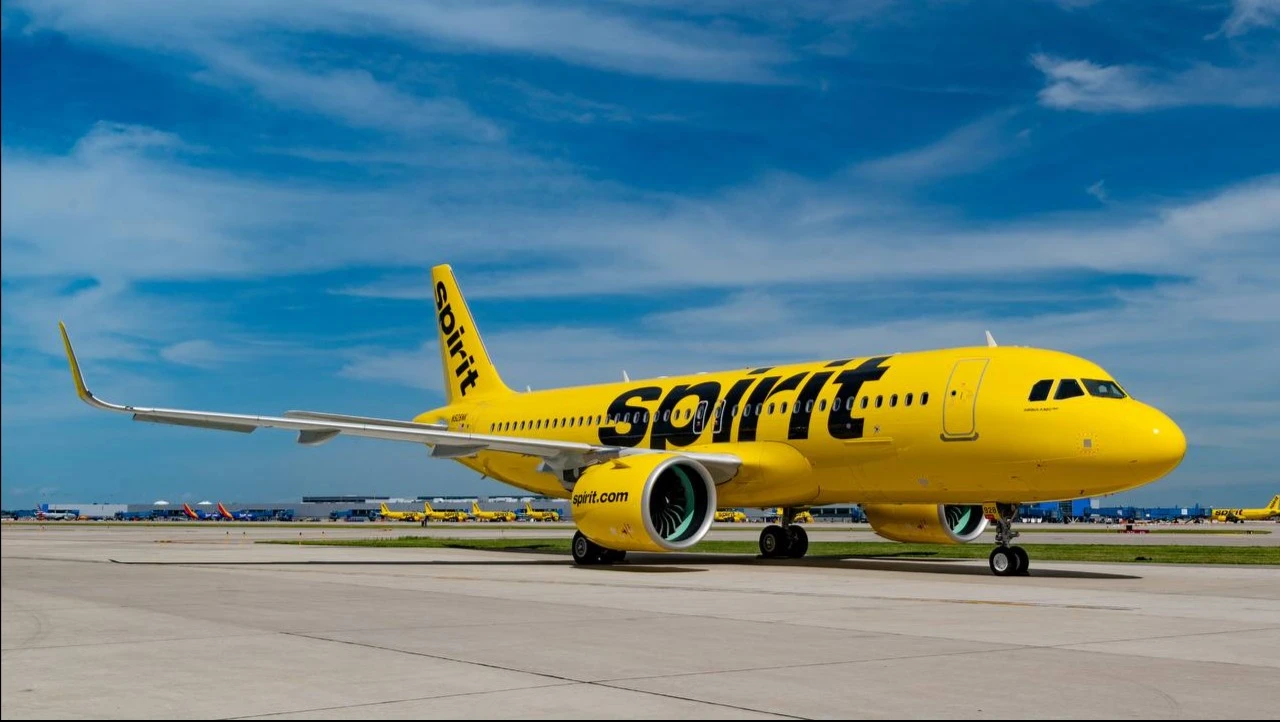
US low-cost carrier Spirit Airlines ceased operations after a financial crisis exacerbated by soaring fuel costs amid conflict with Iran / Photo: spirit.com
US low-cost carrier Spirit Aviation has announced that it will stop flying, in part due to soaring fuel costs. Michael Burry disclosed the purchase of shares in small-cap scientific equipment manufacturer Bruker. Launch vehicle developer Firefly Aerospace, a mid-cap competitor to SpaceX, reported record revenue, while plant-based meat maker Beyond Meat continues to lose sales amid declining demand. Read about the main events in the small-caps sector from Ma 4 to 8 in our review.
Pioneer discounter Spirit has discontinued flights
Low-cost airline Spirit Aviation announced on Ma. 2 that it would be winding down its operations with immediate effect. Spirit has been trying to restructure its business for a year and a half, but the recent significant rise in oil prices and the U.S. government's refusal to provide financial assistance, seriously clouded its prospects. Against the backdrop of the news, Spirit's quotations collapsed - they have already lost about 98% for the year and are trading at the level of penny stock.
Spirit, a pioneer in low-cost transportation, has faced increasing competition in recent years from large carriers offering cheap tickets, soaring labor costs and engine problems that have caused dozens of the airline's planes to stop flying.
What else is there to read?
- How other airlines cope with rising prices for aviation fuel was analyzed by Ivan Lapshin in the article "Prices are higher, forecasts are worse, flights are canceled: how airlines survive the fuel crisis".
SpaceX rival's stock soars on record earnings
Firefly Aerospace, a developer of launch vehicles and orbiters, said its subsidiary will participate in the U.S. Golden Dome missile defense program. And on the same day it reported quarterly revenue up 40% year-over-year to a record $80.9 million - more than Wall Street analysts had expected. Amid the news, the stock rose nearly 9% in premarket trading on May 5, but lost about 5% in after-hours trading.
Firefly's net loss for the quarter increased by almost 61% to $96.7 million. Barron's believes that sales volume is now more important to investors than profits. In addition, the company was able to launch a rocket in the spring that went into orbit and delivered a payload demo for Lockheed Martin, the largest U.S. military-industrial corporation. Since the beginning of the year, quotes Firefly soared more than 77%. The company's securities have five "buy" ratings from Wall Street analysts and three "hold" ratings. The average target is $46.75, with a potential upside of almost 18%.
What else is there to read about it?
- Elon Musk's SpaceX IPO preparation with a potential valuation above $2 trillion has increased investor interest in the entire space sector. Analyst Aldiyar Anuarbekov selected five small-caps for Oninvest to bet on the sector before SpaceX goes public. Which companies are they? - in the article "Space Rally: 5 small-caps to invest in the sector before SpaceX IPO".
Michael Burry has bought shares in a scientific equipment maker
Cult investor Michael Burry bought shares of small-cap laboratory equipment maker Bruker Corporation, noting that he has "no doubt about the quality and sustainability of this business." Burry bought preferred stock (ticker BRKRP) with an annualized yield of about 6% and mandatory conversion on September 1, 2028.
Bruker manufactures high-tech scientific equipment used in pharmaceuticals, biotechnology, semiconductor, academic research and clinical diagnostics. On Ma 6, the company released its first quarter 2026 report, the first major test of Michael Burry's bet. The market took the results positively: the stock rose more than 10% after the publication.
Wall Street analysts only track Bruker common stock (BRKR). According to MarketWatch, the stock has nine buy recommendations, six hold recommendations, and only one sell recommendation. The average target price is $46.5, implying a potential upside of about 10.5%.
Beyond Meat's revenue fell by more than 15%
Plant-based meat maker Beyond Meat reported that its revenue fell more than 15% last quarter, to $58.2 million, due to lower sales of burgers and plant-based chicken analogs. The company forecast the figure could fall 14-20% in the next three months. After the report, quotes of the company collapsed by almost 14.5% in trading on Ma 7, and the next day - lost another almost 7%.
Beyond Meat, once a promising startup with investments from Leonardo DiCaprio and Bill Gates, has struggled for years as consumer demand for plant-based meat substitutes in the US has weakened. Because of this, its shares have hit several lows in the past year. But in October 2025, the stock rose by almost 1400% in four days amid support from Reddit users who called its products "not just a veggie burger, but a symbol of rebellion".
The Motley Fool notes that the company is expanding its product line, but still advises most investors to avoid its stock because of the high competition in this market. Wall Street is generally negative on Beyond Meat's prospects: its securities have four "sell" ratings from analysts and three "hold" ratings. The average target price is $0.66, below current quotes.
Electric car maker Lucid's stock fell after the report
The released quarterly report of electric car manufacturer Lucid did not match analysts' expectations. While the company's quarterly revenue grew 20% year-over-year, its operating loss increased 43% over the same period. The company also dialed back its vehicle production forecast for this year. As a result, the stock fell nearly 5% in premarket trading on May 6, but ended the main trading session down 1%.
Since the beginning of the year, Lucid's quotations have collapsed by 40%. Motley Fool wrote that a series of setbacks undermined investor confidence in the manufacturer: either deliveries were interrupted due to problems with a supplier, or attracting new investment raised concerns about dilution of the share of current shareholders. The company's securities have nine "hold" ratings from analysts, two "buy" and three "sell" ratings. The average target is $10.2 - 62% above the current value.
