Prices higher, forecasts worse, flight cancelations: how airlines are weathering the fuel crisis

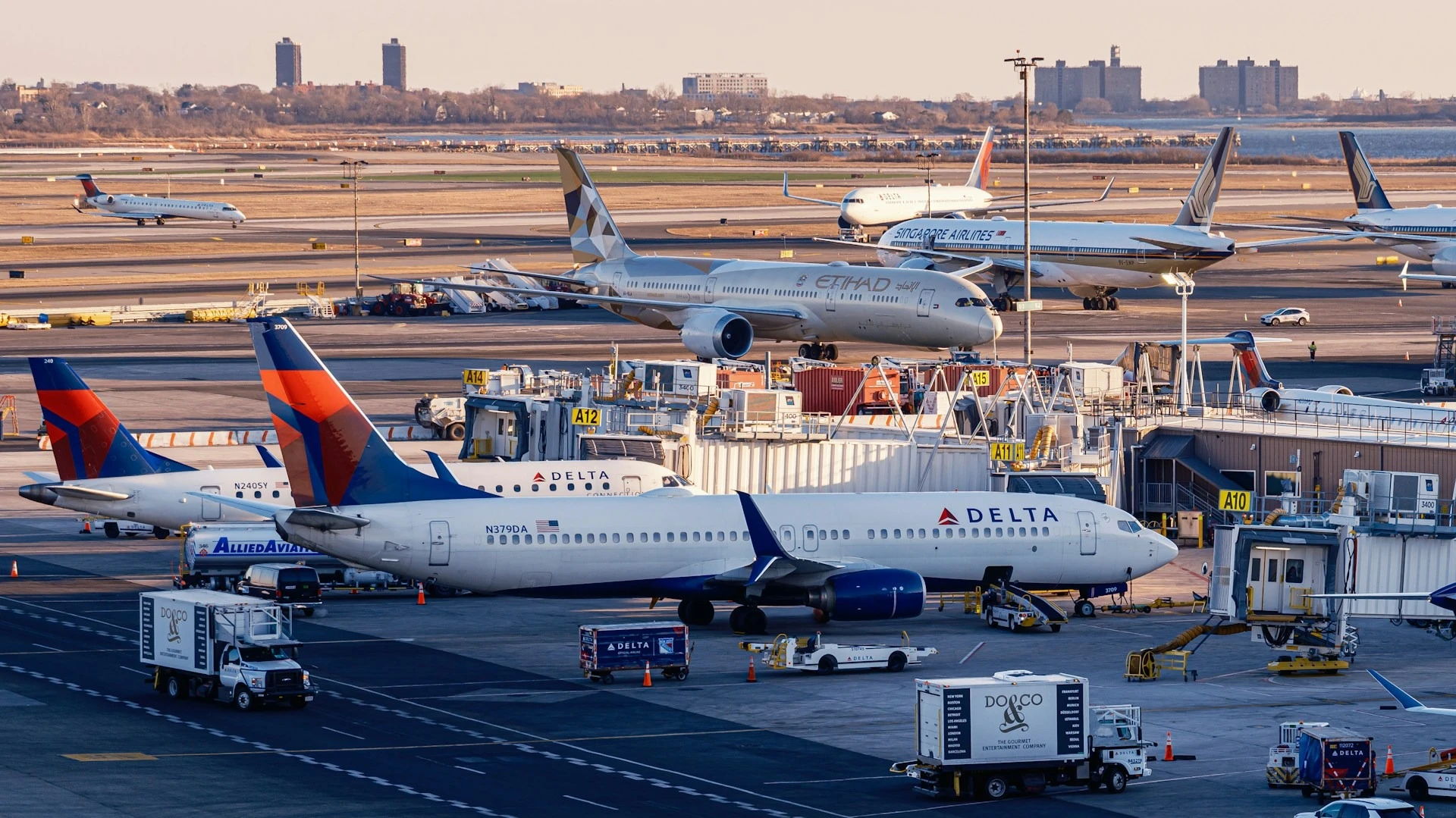
Air carriers around the world are increasing ticket prices, introducing additional fares and reducing the number of flights due to expensive jet fuel / Photo: Unsplash.com / Lumin Osity
The sharp, approximately twofold increase in jet fuel prices that has occurred since the beginning of the war between the US and Iran is forcing the airline industry to change its business strategy. Companies are raising fares, making baggage more expensive, cutting back or canceling flights altogether. And still there is already one victim of this crisis.
Reuters has compiled the various practices of some of the largest airlines from around the world in dealing with fuel shortages.
How airlines survive
- Air Canada announced it will cut four of its 38 daily flights to New York due to rising fuel prices. It also suspended its full-year forecast due to volatile fuel prices.
- Air China, China Southern Airlines and China Eastern Airlines, China's three largest carriers, have raised fuel surcharges on domestic flights by 500%, to 60 yuan ($8.8) for routes shorter than 800 kilometers and 120 yuan ($17.6) for longer flights.
- Air France-KLM said it expects fuel costs to rise by $2.4 billion this year and downgraded its forecast for flight growth to 2-4% instead of the previously expected 3-5%. The holding earlier also announced plans to raise ticket prices for long-haul flights: a round-trip flight will go up by €50. KLM announced on April 16 that it would cancel 160 flights across Europe in the next month due to rising fuel prices.
- Air India has discussed sending non-technical staff on unpaid leave and cutting flight volumes by over 20% for the next three months. The company also said it would replace the fixed fuel surcharge on domestic flights with a range-based system.
- Air New Zealand said April 7 that it will cut the number of flights in May and June and raise fares. It was one of the first in the world to raise prices due to the fuel crisis.
- American Airlines, one of the leaders in the U.S. airline market, expects fuel costs to rise by more than $4 billion in 2026. The company raised fees for the first and second checked bags by $10 and for the third by $150 on domestic and short-haul international flights, and cut some benefits for economy class passengers.
- Hong Kong-based Cathay Pacific, on the other hand, said it will reduce fuel surcharges on most passenger flights from Ma 16 thanks to a "flexible response" to volatile jet fuel prices.
- Delta Air Lines, the most expensive U.S. airline by market capitalization, will cut capacity by about 3.5 percentage points from its original plan and raise baggage fees.
- European low-cost carrier EasyJet warned of a half-year loss of 540-560 million pounds ($732-759 million), including an additional 25 million pounds of fuel costs in March.
- Korean Air had intended to go into "emergency management" mode from April amid rising oil prices, a Reuters source said in late March.
- Germany's Lufthansa has said that rising fuel prices will cost the group €1.7 billion in 2026. Its subsidiary ITA Airways will raise ticket prices by 5-10% in 2026 to offset rising fuel costs. Lufthansa also introduced a new Economy Basic fare for short- and medium-haul flights, which will allow only a laptop bag or small backpack to be carried free of charge. The airline previously announced that it will reduce its short-haul flight schedule by 20,000 flights by October 2026.
- Scandinavian SAS said it would cancel 1,000 flights in April after canceling "several hundred" flights in March.
- U.S. low-cost carrier Spirit Airlines has ceased operations after a financial meltdown caused in part by soaring fuel costs amid a war with Iran.
- US carrier Southwest Airlines, similar to its competitors, has raised fees for first and second baggage by $10. The head of the company warned that the jump in fuel prices would be a billion-dollar blow to the airline at the end of the quarter
- Portugal's TAP said the tariff increase would partially offset the impact of higher fuel prices on revenue.
- SunExpress, a joint venture between Turkish Airlines and Lufthansa, will introduce a temporary fuel surcharge of €10 per passenger on flights between Turkey and mainland Europe.
- United Airlines, another U.S. carrier, said ticket prices may have to be raised by 15-20% to offset rising fuel costs. The company has already increased fares five times at the end of the first quarter of 2026, and has also raised baggage fees.
- European low-cost carrier Volotea has introduced a new pricing system under which ticket prices will be linked to fuel prices, with a possible additional charge of up to €14 per passenger per flight.
This article was AI-translated and verified by a human editor