South Korea's central bank is headed by a star economist. His challenges are the war in Iran and market records

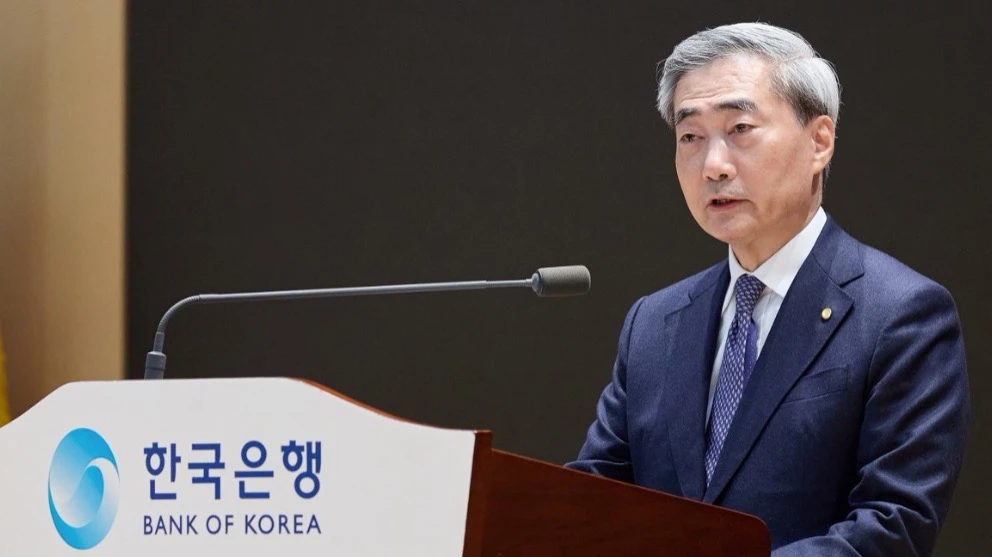
South Korean economist Shin Hyun Song has been advising central bank governors for decades and now heads the Bank of South Korea himself. Photo: X / Hyun Song Shin
South Korean economist Shin Hyun Song has spent decades advising central bank governors on reducing financial risks, controlling inflation and ensuring economic stability. After the 2008 crisis, he developed macroprudential policy principles that have been adopted by central banks around the world. Now Shin will have to put his knowledge into practice in his home country - on April 21, he became the head of the Central Bank of South Korea. He will face a whole set of challenges, including a possible stock market crash after phenomenal growth.
International currency from an international economist
Shin Hyun Song, whom the Financial Times calls a "star central banker," has built a career in Western universities and international organizations.
For the past 12 years he has been chief economic advisor at the Bank for International Settlements (BIS), often referred to as the central bank of central banks.
Now Shin has returned to the department where, according to Reuters, his father was involved in calculating foreign exchange reserves in 1957, shortly after the Korean War. Since then, the figure has grown more than 2,000 times, and at the end of 2025, South Korea ranked ninth in the world in terms of foreign exchange reserves, totaling $428.1 billion.
However, by March they had shrunk to $398.7 billion, and the South Korean won exchange rate fell to its lowest since 2008, approaching 1,500 won per dollar. The country's monetary authorities explain the devaluation, in particular, by the significant outflow of capital that local retail investors invested in the U.S. stock market.
At the same time, South Korea aims to increase the share of the won in international settlements. This requires stabilizing the exchange rate and removing some of the restrictions that Shin recommended the country impose a decade and a half ago, when he became an adviser to the then president of South Korea in 2010.
"Even China is having trouble internationalizing the yuan. Looking at things realistically, it will be a challenge," Chang Jaechul, an economist at Pinnacle Economic Research Institute, told Reuters. - Still, one of the main advantages Shin will bring to the Bank of Korea will be his vast network of contacts around the world."
Shin himself said in his inaugural speech that together with the government, the central bank intends to introduce 24-hour foreign exchange trading and establish a system for settlement in won overseas to facilitate the use of the Korean currency.
A whole host of problems
Shin will have to do so in the face of increased inflation risks and potential damage from the war in the Middle East to an economy whose growth rate has already fallen. Growth of just 1.7% in the first three months of 2026 from a quarter earlier was the fastest in 5.5 years. For all of 2025, the economy grew just 1%.
Concerns about economic stability have also increased over the past year due to rising tensions with the United States, South Korea's most important trading and strategic partner.
These challenges will test a man regarded by his peers as one of the foremost central bankers of his generation, but who has spent most of his career in academia, says the Financial Times.
"Shin's influence in academic economics and central banking really can't be overstated," macroeconomics expert Jesse Schrager, an associate professor at Columbia University's School of Business, told the newspaper. - "As for the challenges facing the Bank of Korea, I can't think of anyone I'd rather see at the helm during a period of economic and financial turmoil.
Shin himself in March called the war with Iran, which has deprived the world of about 20 percent of its oil and liquefied natural gas supplies, a temporary supply shock.
"This is a classic example of looking ahead rather than reacting with monetary policy measures," he said, but warned that going forward much will depend on the duration of the conflict and how long inflationary pressures persist.
As a specialist in monetary and macroprudential policy, Shin has previously said: when inflation expectations start to change, central banks should be proactive: otherwise, he said, much more drastic measures to tighten MPCs would be needed later.
South Korea's consumer price index rose 2.2% in March from March 2025, and the Bank of Korea warned that inflation will accelerate in April due to higher oil prices. The central bank has kept the interest rate at 2.5% since Ma last year.
But government bond yields continue to rise due to changing monetary policy expectations at home and abroad, as well as influenced by supply and demand and heightened geopolitical risks in the Middle East, Nikkei Asia reported, citing the Bank of Korea's quarterly report.
The latter is a significant risk for South Korea, as it is the world's fourth largest importer of oil. Oil futures have roughly doubled in price since the start of the conflict, but current physical deliveries are at times at prices double what they were before the war. The won has fallen in value by more than 6% since the start of the Middle East conflict, and consumer and business sentiment has seriously deteriorated, Nikkei Asia wrote.
Additional pressure is exerted by the situation on the housing market. Its prices, primarily in the capital region, are already considered exorbitantly high, and with the growth of bond yields and mortgage rates, the situation may become even more complicated.
There was a boom in real estate transactions in 2020-2021, with many purchases being backed by a five-year fixed-rate loan, and now those borrowers will have to refinance at higher rates, Jiho Yoon, senior economist for South Korea and Taiwan at BNP Paribas, told Nikkei Asia. The increased spending will undermine private consumption in the country, he said.
Market risk
At BIS, Shin advised central bank governors on financial stability and systemic risk issues.
"A key component of macroprudential regulation should be a countervailing force that counteracts the natural decline in measured risks during an economic upturn and the rise in those risks during the subsequent downturn," according to one of his most cited papers, "Fundamental Principles of Financial Regulation," which Shin wrote with co-authors.
In simpler language, he described the systemic risks that led to the 2008 global financial crisis (of which Sheen warned in advance) with a vivid metaphor. The Millennium Bridge in London began to sway not because of some visitor's irresponsible behavior, but because the rational, synchronized behavior of a multitude of people trying to keep the balance increased the instability. This bridge over the Thames was opened in June 2000. It had to be closed immediately after the public rushing onto it provoked strong vibrations. After strengthening work, the bridge was reopened a year and a half later.
An additional risk that Sheen may have to "balance" could be the stock market situation.
The Kospi index is setting record after record. Since the beginning of 2026, it has risen by more than 53%; over the past year, it has risen by almost 160%.
Korea and Taiwan have generated 75% of emerging market returns over the past year, with most of it coming from just three stocks, two of which are Korean, writes Ruchir Sharma, chairman of Rockefeller International. They are Samsung and SK Hynix, as well as Taiwan's TSMC, all semiconductor makers.
U.S. tech giants are planning $700 billion in artificial intelligence investments this year alone, and this "massive spending is fueling the profitability of three Asian giants," Sharma notes. The combined profits of the three companies are projected to exceed the combined profits of Apple, Amazon and Alphabet, and Samsung's operating profit is expected to more than six times this year, to $185 billion.
That's more than any American Magnificent Seven company except Nvidia.
A rally of this magnitude begs the question: when will it end? A landmark study showed that if a country or industry outperforms its stock index by more than 150% in two years, there is a high probability of a sharp correction in the next two years. And the semiconductor sector has outperformed the MSCI EM Emerging Markets Index by more than 180% over the past two years. If past experience is to be believed, they appear to be at risk.
Thus, Shin may also face a stock market decline and will have to decide how investor losses will affect the stability of the economy and its growth.
This article was AI-translated and verified by a human editor