South Korea's stock market outperforms France's - after $2.2 trillion rally

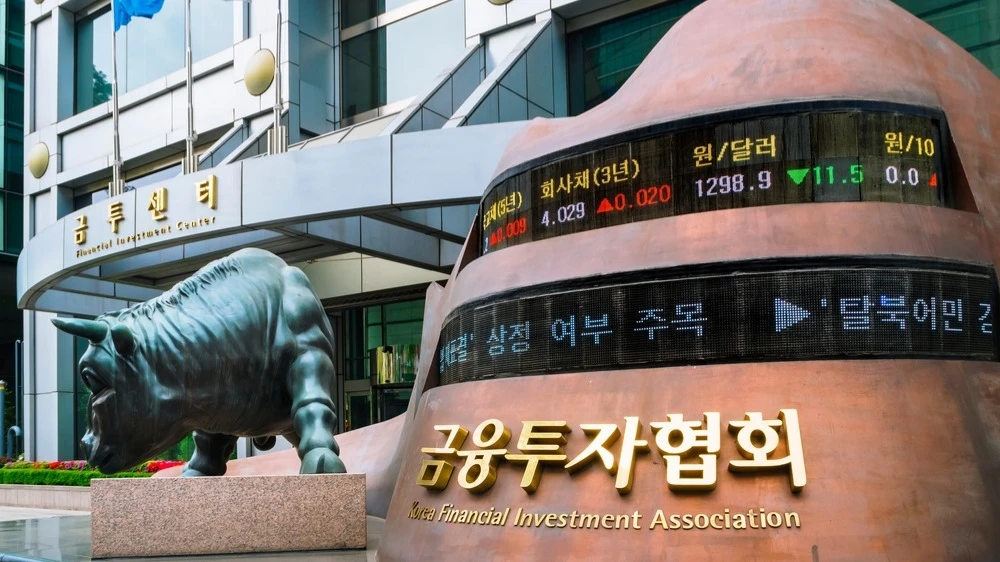
South Korea's stock market has surpassed France and Germany in capitalization / Photo: VTT Studio / Shutterstock
South Korean stock market has moved to the ninth place in the world in terms of capitalization, surpassing France and Germany, Bloomberg writes. The market was supported by another rise in shares of Asian IT companies, which also contributed to growth in other emerging markets, the agency notes.
Details
The market capitalization of South Korea's stock market reached $3.76 trillion, up about $2.2 trillion since the start of the year, compared with $3.69 trillion for French stocks, according to data compiled by Bloomberg as of Tuesday, Feb. 24.
South Korea's benchmark KOSPI index has gained about 44% since the beginning of the year and has become the best performing stock market in the world this year, the agency said. By comparison, France's CAC 40 has added about 4.5% since the beginning of January. The main German stock index DAX 40 has added 2.6% since the beginning of the year.
The German stock market overtook the South Korean stock market in terms of capitalization on January 28, Bloomberg calculated. At that time, the capitalization of the South Korean market was $3.25 trillion, while that of the German market was $3.22 trillion.
Bloomberg attributes such dynamics on European markets to more restrained investor sentiment, a smaller share of technology companies in benchmarks in France and Germany compared to South Korea's Kospi, as well as political and economic factors. The agency attributes the success of South Korean stocks to the AI boom and the growth of South Korean technology companies.
What about other emerging markets
Technology sub-index MSCI (part of the MSCI Emerging Markets Index) rose on Wednesday, February 25, by 2.6% - the leaders of growth were Taiwan Semiconductor Manufacturing (TSMC) (shares at trading on February 25 in Taiwan added 2.5%) and Samsung Electronics (+1.8%). This allowed the MSCI index to add 1.3% and update the record, increasing growth since the beginning of the year to 15%, notes Bloomberg.
Indian IT stocks on February 25 also recovered after falling to 30-week lows on February 24 amid a report by Citrini Research, which predicted large-scale global job cuts due to the introduction of AI, Bloomberg notes. Also on February 24, foreign investors bought $2.77 billion worth of Taiwanese shares - it was the largest one-day wave of purchases in the last two decades, Bloomberg reports.
What the analysts are saying
Korea's surge, which allowed it to outperform France and Germany, reflects a rapid revaluation of the market by investors who are allocating capital to AI beneficiary companies in emerging markets, including memory chip makers and robotics developers, Bloomberg notes. Korea's growth has been fueled by a combination of shareholder-friendly reforms and the country's growing role in the global AI supply chain, the agency adds.
Franklin Templeton strategists Christy Tan and Markus Weyerer forecast a continued rally in the South Korean market, Bloomberg points out. "Korea looks fully valued on the back of rapid growth, but remains structurally undervalued," they noted, adding that the market could gain further revaluation "with continued political stability and corporations delivering shareholder returns at an institutional level."
However, some analysts also expect the French stock market to recover amid the easing of political turbulence in the country. The adoption of the French budget in early February marked the end of a difficult period for the country's market, which began 18 months ago and was triggered by French President Emmanuel Macron's decision to dissolve the National Assembly and call early parliamentary elections in June 2024, Bloomberg reports. "Once the budget is approved, political risks, at least for the coming months, can be considered largely removed," said Arnault Giraud, head of cross-asset strategy at Kepler Cheuvreux in Paris. The French market could benefit from capital inflows as investors diversify their portfolios and reallocate funds from U.S. equities and the technology sector, he said.
This article was AI-translated and verified by a human editor