Stabilization or escalation: Two scenarios, four names to play the U.S.-Iran conflict

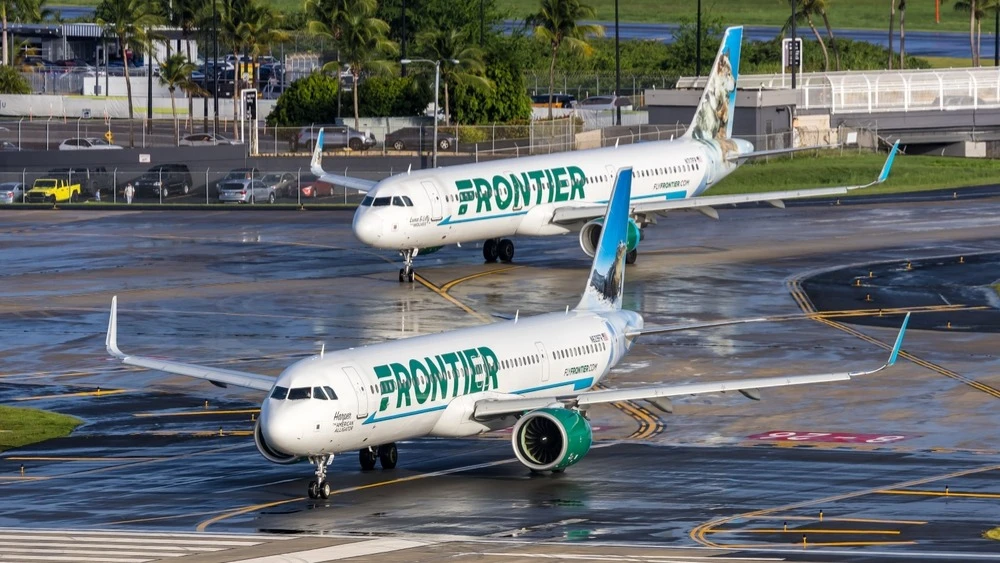
Frontier's high fuel share of costs makes profits sensitive to jet fuel prices / Photo: Markus Mainka / Shutterstock.com
Since the start of the year, the Russell 2000 index, the benchmark for small- and mid-cap stocks, has risen nearly 11.5% – despite a selloff in March, when it lost more than 10% from its January peak. Such volatility has been driven in part by the scale of the conflict in the Middle East and its impact on commodity flows. The closure of the Strait of Hormuz became the trigger that pushed Brent crude toward $120 per barrel, while small caps are particularly sensitive to fuel costs and consumer sentiment.
U.S.-Iran talks in Islamabad on April 11-12 ended without result, and U.S. President Trump announced a naval blockade of Iran starting April 13. Nevertheless, markets almost immediately began to reprice the risks. If by mid-April investors were still betting on a swift resumption of negotiations and the reopening of the Strait of Hormuz, a second round of talks is now in question. On Tuesday, Trump extended the two-week ceasefire: Iran declined to take part in new meetings, and negotiations have reached a deadlock. On Truth Social, Trump wrote that the government in Tehran is divided, without setting a new deadline.
Against this backdrop, the geopolitical premium in oil has not disappeared, and Brent continues to trade around $100 per barrel. The situation remains fluid, and the further market direction effectively comes down to two scenarios. Below, we outline them and highlight four names that could benefit depending on how the conflict in the Middle East plays out.
Stabilization scenario
If the parties reach an agreement and traffic through the Strait of Hormuz begins to recover steadily, the result would be a fairly sharp correction. Brent crude could retreat to the $80-90 per barrel range under this scenario. Further ahead, as the geopolitical premium fades, prices could shift toward a more typical $60-70 by the end of the year. Stocks that sold off on the fuel shock would gain momentum for a recovery. The most “pure-play” beneficiaries in this case appear to be ultra-low-cost airlines and freight carriers, which have been hit hardest by the spike in diesel and jet fuel prices.
Frontier
Frontier (ULCC) is an ultra-low-cost carrier with a fleet of 176 Airbus aircraft. In the fourth quarter, the company’s revenue was broadly flat year over year (down 0.5%) at $997 million, while net income declined 1.9% to $53 million ($0.23 per share). At the same time, compared with the third quarter, revenue rose 12.5%, and the company returned to profitability versus a net loss of $77 million in the third quarter.
Frontier is one of the most fuel-efficient airlines in the U.S., so a decline in jet fuel prices quickly improves its margins. At the same time, the high share of fuel in its cost base makes the business sensitive to price fluctuations. The average price of jet fuel in the U.S. remains elevated at $3.87 per gallon, according to Argus U.S. Jet Fuel Index data as of Monday. By comparison, before the war, on February 27, it stood at $2.50 per gallon.
From February 27 (the last trading day before the conflict began) to March 18 (the point of maximum drawdown), Frontier Group shares fell about 30% to $3.10 per share, before bouncing back to $4.70 per share as of Monday. According to MarketWatch data, nine Wall Street analysts recommend “hold,” and three “sell.” The average target price of $4.40 per share implies nearly 5% upside.
Covenant Logistics
Covenant Logistics (CVLG) is a freight carrier specializing in expedited and dedicated transportation, as well as warehousing logistics. In the fourth quarter, Covenant Logistics’ revenue rose 6.5% year over year to $295.4 million. Adjusted net income fell 41% to $8 million. The company is working to diversify its business toward less cyclical segments (e.g., dedicated contracts, warehousing logistics), reducing its reliance on spot rates.
From February 27 to March 15, Covenant Logistics shares lost about 16% – amid the spike in diesel prices – but then began to recover. Since the start of the year, they have gained nearly 42%. Analysts at Stephens in early February maintained an “outperform” rating with a target price of $30 per share; since then, the stock has risen nearly 10%. According to MarketWatch data, three analysts recommend “buy,” and one “hold.” The average target price of $31.70 per share is broadly in line with the current share price.
Escalation scenario
If negotiations collapse and the naval blockade persists, pushing oil above $100 per barrel, investors would need to quickly shift toward defensive scenarios. Traditionally, gold attracts attention in such moments, but in the current conflict aluminum also presents an interesting opportunity. The March 28 Iranian strikes on the facilities of EGA (UAE) and Alba (Bahrain) effectively removed about 3.2 million tons of annual production from the global system – nearly half of the Middle East’s total output.
The market reaction was immediate: aluminum prices on the London Metal Exchange broke a four-year high, rising above $3,500 per ton. The situation is becoming critical for the U.S., where imports account for 85% of total aluminum demand, which is used across industries from aerospace to beverage can production.
Kaiser Aluminum
Kaiser Aluminum (KALU) is a producer of value-added aluminum products for the aerospace, packaging, and automotive industries. This is not a direct bet on exchange-traded aluminum prices, but the company could benefit from regional supply shortages and rising premiums in the North American market if disruptions boost demand for domestic processing and support margins.
In 2025, Kaiser Aluminum’s revenue rose 12% to $3.37 billion, while net income increased to $113 million from $66 million a year earlier. The company also reported record EBITDA of $310 million, more than 28% higher than in 2024. In the current year, the management expects revenue growth in its core processing business of 5-10% and EBITDA growth of 5-15%.
Over the last 12 months, the company’s shares have surged 160%, and since the start of the year they are up nearly 33.5%. Two analysts recommend “hold,” and one advises “buy.” The average target price of $143.70 per share implies roughly 6% downside.
Hecla Mining
Hecla Mining (HL) describes itself as the largest silver producer and a leading producer of critical minerals in the U.S., with assets in Idaho, Alaska, and Canada. In 2025, Hecla Mining’s revenue rose 53% to $1.42 billion, while net income surged 811% to $321 million.
The company’s leverage shows a clear downward trend: the net debt/EBITDA ratio declined from 0.7 to 0.3. Operating performance in the fourth quarter also confirms the positive trend: silver production increased 2% quarter over quarter to 4.6 million ounces. At the same time, the average realized price of silver rose 45% year over year, and gold rose 39%. Against this backdrop, the company’s market capitalization has increased by more than 200% over the last 12 months.
An important nuance: during the current conflict, precious metals have behaved atypically – in moments of panic selloffs they declined alongside the broader market as investors sought liquidity. However, in an environment of prolonged inflation and a weaker dollar, gold and silver have historically outperformed. In this context, Hecla Mining offers investors strong operating leverage due to its low production costs at key assets such as Greens Creek and Lucky Friday.
Six Wall Street analysts currently recommend “hold,” three “buy,” and one “sell.” The average target price of $25.80 per share implies upside of nearly 42.5% versus the closing price on Tuesday.
Implications for investors
In both scenarios, the key variables remain oil prices and the overall level of geopolitical tension. A clear inverse correlation is visible: companies that benefit from de-escalation will inevitably come under pressure if the conflict continues – and vice versa.
For an investor with a moderate risk appetite, a rational strategy would be to build positions across both “baskets” to hedge uncertainty effectively. The market is currently extremely sensitive to the news flow and is effectively trading on headlines. In this environment, it is important to remember that small-cap stocks are inherently volatile, and geopolitical triggers can reverse their trajectory within hours.
This material does not constitute individualized investment advice.