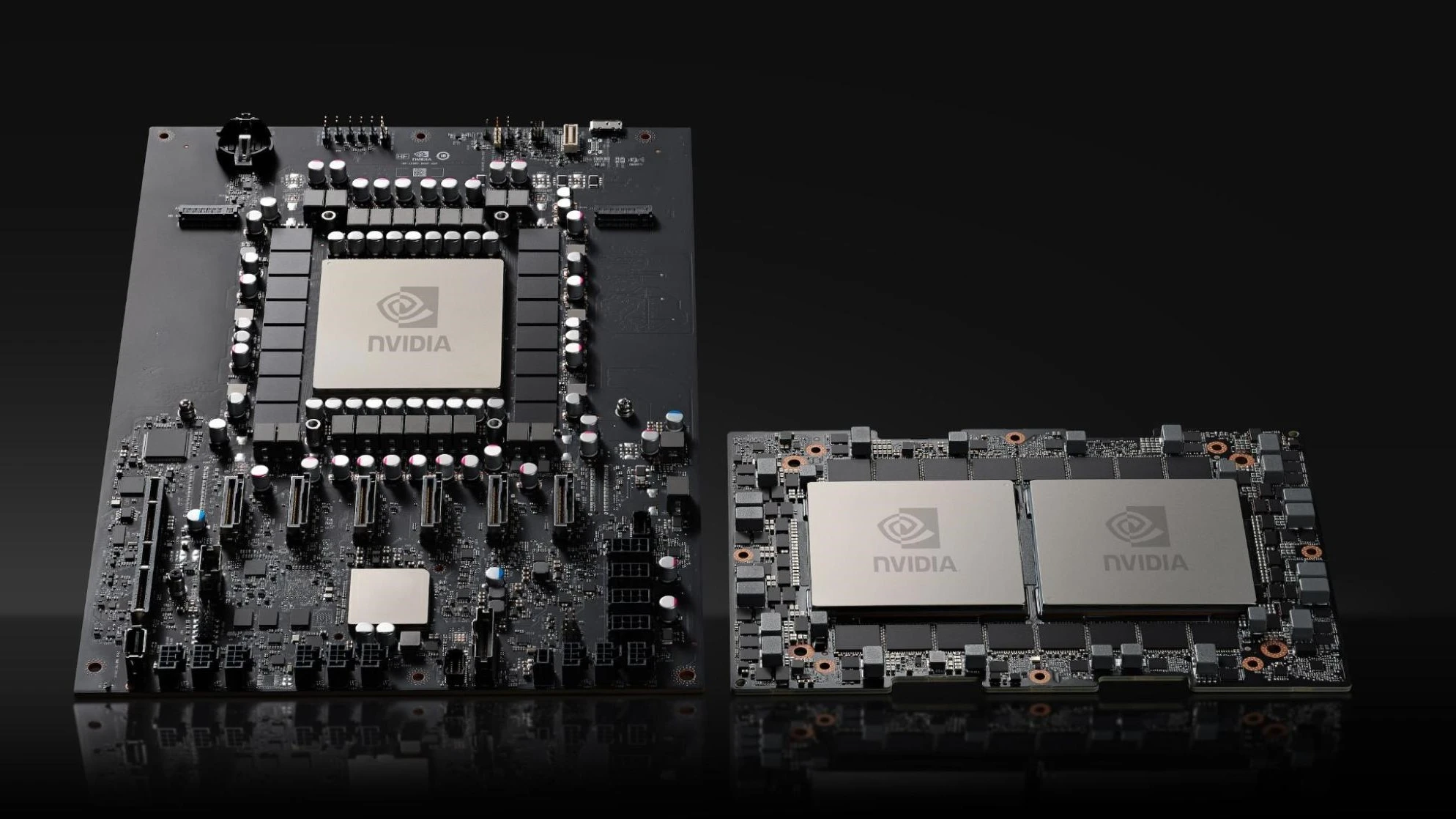
Stress Test: Which Nvidia Suppliers Will Be Hit Hardest After Huang's Departure?

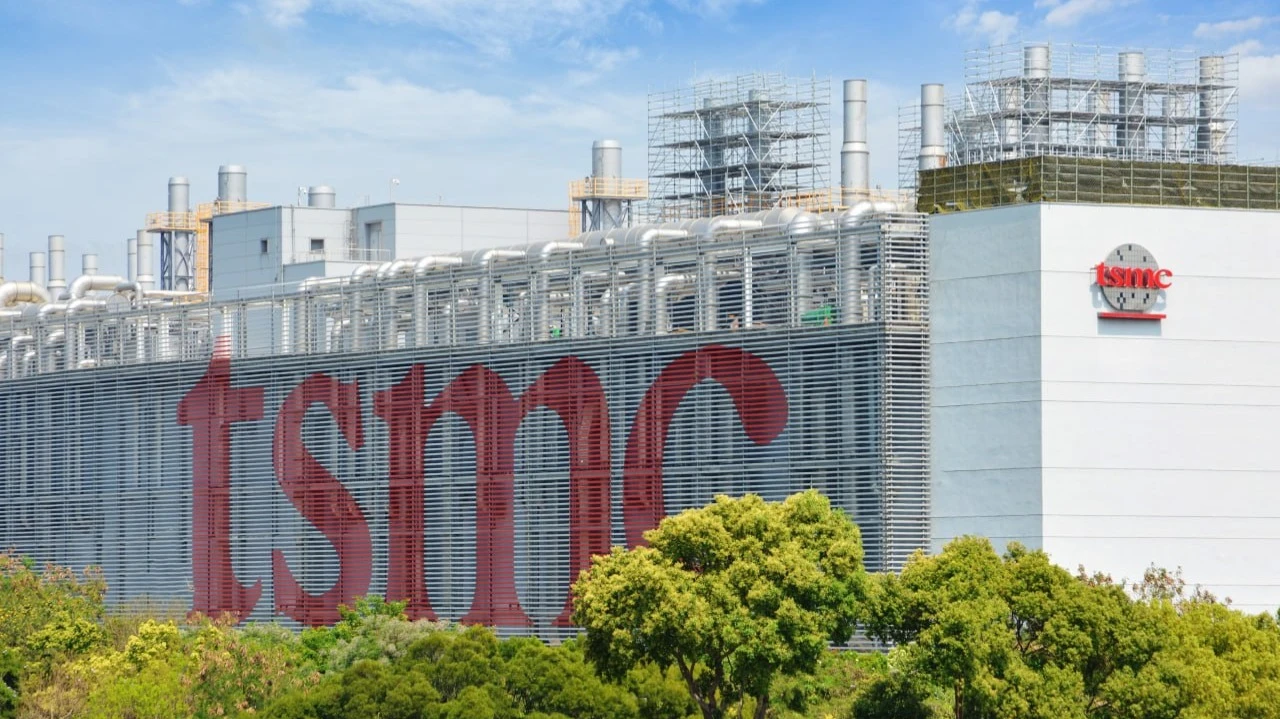
Analysts have identified weak links in Nvidia's supply chain, while TSMC has the strongest position / Photo: Vidpen / Shutterstock.com
Following Jensen Huang’s resignation, investors are wondering whether Nvidia will continue to support cloud providers. But another risk remains largely unnoticed—one facing companies in Nvidia’s chip manufacturing ecosystem that test and supply components to the company. They may find that the company’s new leadership will be slower to bring the next generations of accelerators and server platforms for data centers to market, or may cut back on orders. Who will be in the most vulnerable position?
Fears About the Future
Nvidia's partners and suppliers across Asia are preparing to revise their plans for expanding production if Huang's successor does not reserve their capacity as aggressively, Reuters reported, citing several market sources.
A spokesperson for an unnamed Taiwanese OSAT company, which assembles and tests semiconductor chips for other companies, told Focus Taiwan that the company is considering reallocating part of its 2027 budget to mitigate the risks associated with Huang’s departure. The fate of new projects and ventures promoted by the former Nvidia CEO himself is now in question, The Korea Herald reports, citing a local official and a spokesperson for an unnamed Nvidia partner company.
Local analysts are also discussing the risks facing suppliers. For example, Kiwoom Securities suggests that Nvidia’s new management may change the allocation of orders among suppliers and the schedule for joint product development. Daol Investment & Securities, meanwhile, points to uncertainty regarding the tech giant’s long-term roadmap and its future collaboration with partners.
Why are these potential changes for suppliers specifically linked to Huang’s departure? According to the U.S. research firm SemiAnalysis, it was he who encouraged them to expand their production capacity and take on projects that were challenging from both a technological and logistical standpoint. Huang negotiated directly with the CEOs of suppliers, securing priority shipments and more favorable terms for Nvidia in exchange for access to its cutting-edge GPUs. For example, thanks to such agreements, in 2027, HBM4 memory from SK hynix could cost AMD, Google, and Amazon an average of 24% more than it does for Nvidia, SemiAnalysis suggested.
How is the Nvidia chip ecosystem structured?
In the study *Tracing Value Added in the AI Hardware Supply Chain*, UNCTAD economists Lukas Heidemann and Nicolas Maistr reconstruct the production of the Blackwell-based Nvidia GB200 NVL72 server rack—from chip development to the assembly of the data center system. For this model, Nvidia designs the GPUs and Grace processors. The logic chips are manufactured by Taiwan’s TSMC based on Nvidia’s design, and TSMC also performs advanced GPU packaging using CoWoS technology. HBM and DRAM memory for the chips are supplied by South Korea’s SK hynix and Samsung Electronics, as well as the U.S.-based Micron. The rack also includes dedicated SSD storage, provided by the U.S.-based SanDisk and Japan’s Kioxia. Contract manufacturers, including Amkor and SPIL, handle the packaging and testing of other microchips. Server nodes and racks are assembled by Quanta, Wistron, Wiwynn, and Foxconn.
In their study, Heidemann and Meister point to an asymmetry in the distribution of economic rent from a $3.3 million server rack.
According to their calculations, Nvidia captures 67% of its value added. Another 6.7% goes to memory suppliers, nearly 5% goes to TSMC, and 4% goes to assemblers.
The remainder is distributed among suppliers of electronics, materials, cooling and energy-saving systems, and other equipment, as well as testers. Economists attribute this imbalance to the fact that, within the chip manufacturing ecosystem, Nvidia controls the rarest and most difficult-to-replicate assets — the CUDA software platform with its broad developer base, and the NVLink and NVSwitch interconnect technologies, which enable all components in a server rack to function as a single system. The other participants in the supply chain produce important but more standardized components and services. This is precisely why they will be more sensitive to order volumes, prices, and competition.
What has Nvidia already reserved?
So far, the company has released new accelerator architectures roughly every two years: Ampere in 2020, Hopper in 2022, and Blackwell in 2024. In between, Nvidia released updates, including the H200 in 2023 and Blackwell Ultra in 2026. According to the roadmap Huang presented at Computex 2026, this pace will continue in the coming years: the new Rubin architecture is expected to debut in 2027–2028, and Feynman in 2029–2030. However, the company has not publicly disclosed what comes after that.
To maintain a high production rate, Nvidia actively supported the expansion of its component suppliers’ manufacturing capacity. For example, in October 2026, it announced that the U.S.-based company Amkor plans to increase its chip packaging capacity in South Korea by more than 300% by the end of 2028. Nvidia provided Amkor with a $3 billion advance payment for the packaging of its chips. As part of its agreements with Nvidia, Japan’s Ibiden pledged to triple the capacity of its chip substrate manufacturing plant. Meanwhile, Taiwan’s SPIL planned to increase its output of optical modules 15-fold by mid-2027. Nvidia provided both companies with a “multi-billion-dollar advance.” KYEC received $1.1 billion from Nvidia to reserve capacity for final chip testing in the U.S. In addition, in June 2026, Nvidia and SK hynix also announced a multi-year partnership to develop next-generation memory, without disclosing the purchase volumes or the term of the agreement.
Analysts at the U.S. consulting firm IDC believe that one of the key metrics investors should monitor in light of the turmoil at Nvidia is the company’s spending on its ecosystem.
Nvidia does not disclose the breakdown of shipments among suppliers. According to its report for the third quarter of fiscal year 2027, which ended on October 25, 2026, its liabilities to suppliers increased to $390 billion, up from $279 billion in the previous quarter. The company attributes the increase primarily to long-term memory purchases. Nvidia plans to make its largest purchases in fiscal years 2028 and 2029—$203 billion and $92 billion, respectively—and is expected to purchase an additional $69 billion worth of equipment by the end of fiscal year 2027.
However, these figures provide insight primarily into the scale of the company’s procurement plans; they do not guarantee that the company is committed to receiving the entire specified volume within the stated timeframes. In its report for the previous quarter, the company warned that, prior to placing firm orders, certain agreements could be canceled, postponed, or modified, although this could result in additional expenses.
How can you assess supplier vulnerability?
One indicator of vulnerability is Nvidia’s share of a supplier’s revenue. However, most companies in its ecosystem do not disclose their largest customers in their financial results.
Japan's Ibiden is one of the few companies that discloses its revenue from Nvidia in monetary terms. According to the published figures, the American company accounts for 29.4% of its revenue.
Other manufacturers generally provide anonymized data. For example, TSMC only states in its financial reports that its largest customer accounted for 19% of revenue in 2025, while its second-largest customer accounted for 17%. Its largest customer is Nvidia, according to Taiwan News, citing company data and industry publications. SK hynix refers in its financial reports to “external customer A,” which accounted for 23.9% of revenue in 2025. This is also Nvidia, according to the Korean publication Seoul Economic Daily. Nvidia is not among the five largest customers of Samsung Electronics that the company discloses in its financial reports (those are Alphabet, Apple, Deutsche Telekom, Hong Kong Techtronics, and Supreme Electronic). Together, they account for 15% of the company’s revenue.
The second important question for an investor is how quickly the supplier will be able to find other buyers and redirect its capacity to them.
Manufacturers of substrates produced for specific chips may be more vulnerable. According to Goldman Sachs, Unimicron currently generates limited revenue from supplying substrates to customers other than Nvidia. Analysts at Bernstein, for their part, have warned that Ibiden risks losing a significant portion of its orders if Nvidia cuts back on purchases.
SK hynix is now stronger than Samsung Electronics and relies on memory shipments to Nvidia, according to Kim Yeon-gon, an analyst at Mirae Asset Securities. However, changes in the supply chain configuration do not mean a decline in demand for AI technologies. Furthermore, memory usage in ASICs (application-specific integrated circuits) is on the rise. A more diversified customer base could even strengthen the position of Korean suppliers in negotiations with Nvidia, he believes.
The degree of dependence on Nvidia varies among companies that test and assemble chips and server racks. According to ToAlpha’s assessment, KYEC, ASE Technology, and Wistron work with both Nvidia chips and ASICs. Wiwynn, on the other hand, focuses more on servers with ASICs developed by the cloud companies themselves. This reduces the dependence of these companies on orders from Nvidia.
Quanta may find itself in a more vulnerable position: according to ToAlpha's assessment, its business is more dependent on shipments of Nvidia GPU systems than those of other companies.
TSMC holds the strongest position. According to 2024 OECD data, the company manufactures chips for 99% of modern AI accelerators. According to ToAlpha analysts, TSMC is not particularly vulnerable; its production capacity can accommodate orders from AMD and ASIC developers.
This article was AI-translated and verified by a human editor