The dollar has fallen to its lowest level in almost four years. What is devaluing the currency?

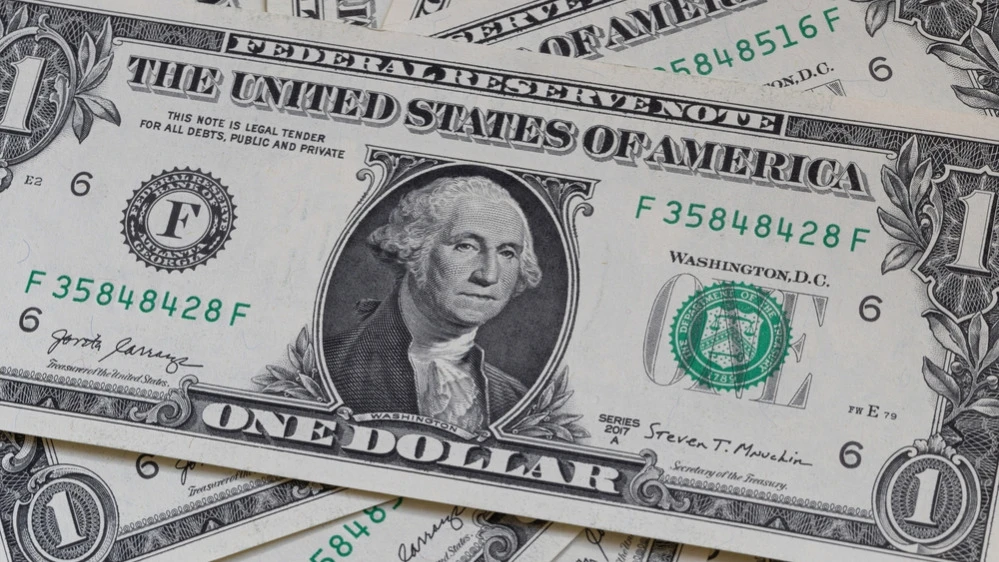
The Bloomberg Dollar Index fell 0.7% in trading on January 27, reaching its lowest level since March 2022. The world's main reserve currency is depreciating for the fourth day in a row, demonstrating the worst week since Ma, notes Bloomberg.
What affects the dollar
The weakness of the dollar reflects investors' caution after a series of unpredictable decisions from Washington, including President Donald Trump's threat to establish control over Greenland, explains Bloomberg. In the long term, the U.S. currency is under pressure from risks to the Fed's independence and the growing budget deficit.
"The structural factors pulling the dollar down are weakening confidence in U.S. trade and defense policy, the politicization of the Fed and declining investor confidence in the government's ability to manage its finances sustainably and responsibly. All of these could outweigh the neutral cyclical backdrop so far and continue to weigh on the dollar," Elias Haddad, head of markets strategy at Brown Brothers Harriman & Co, told Bloomberg.
Investors also fear that the U.S. will take action to strengthen the Japanese yen. "The dollar-yen rate requests made by Fed officials on Friday further weakened the dollar," George Catrambone, head of bonds at DWS Americas, told Bloomberg Radio.
Late last week, traders reported that the Federal Reserve Bank of New York was contacting financial institutions to clarify quotes on the yen, a standard step that often precedes Fed intervention to support the Japanese currency, Bloomberg explains.
The yen strengthened about 0.7 percent to 153.03 per dollar in New York on Tuesday. Earlier this month, its exchange rate approached 160 per dollar - its lowest level since 2024 - but then rebounded amid rumors of potential currency intervention by authorities.
The dollar's decline also supported the euro, which rose to $1.1939, its highest since 2021. The British pound added 0.5% to $1.3748, its highest level since July.
"The huge turnover in the G10 basket of currencies options market this year confirms that the topic of US dollar depreciation is gaining popularity among investors. Whether the Fed's actions will be the beginning of a tentative "Mar-a-Lago Pact" (as investors ironically call Trump's attempt to regulate the dollar along the lines of the 1985 Plaza Accord pact negotiated by several countries to ease the US trade deficit) is still a question. But for macro traders, it's clearer: the dollar is headed down a slippery slope," said Bloomberg Markets Live strategist Mark Cranfield.
What's next
Fresh macro data from the U.S. demonstrate the stability of the economy, because of which traders expect the Fed to leave the rate unchanged at the meeting on January 28, writes Bloomberg. However, for the rest of the year the markets are laying down two reductions by 0.25 p. p., while other major central banks either do not plan changes, or even allow raising rates, the agency notes.
Nevertheless, the situation is complicated by the expectation of who Trump will appoint as the new Fed chairman: it is assumed that it will be a supporter of lower rates. In addition, the risks of a partial shutdown are increasing: Democrats have said they will block the budget bill if Republicans do not remove funding for the Department of Homeland Security from it.
"Now that a shutdown is once again a possibility, dollar bulls have plenty to worry about," said Societe Generale head of currency strategy Keith Jukes. - US economic growth will continue to be a key factor influencing the Fed's moves, and hence how much further the dollar can weaken."
This article was AI-translated and verified by a human editor