The main thing for the morning: gold exceeded $5000, Germany will create an analog of Starlink

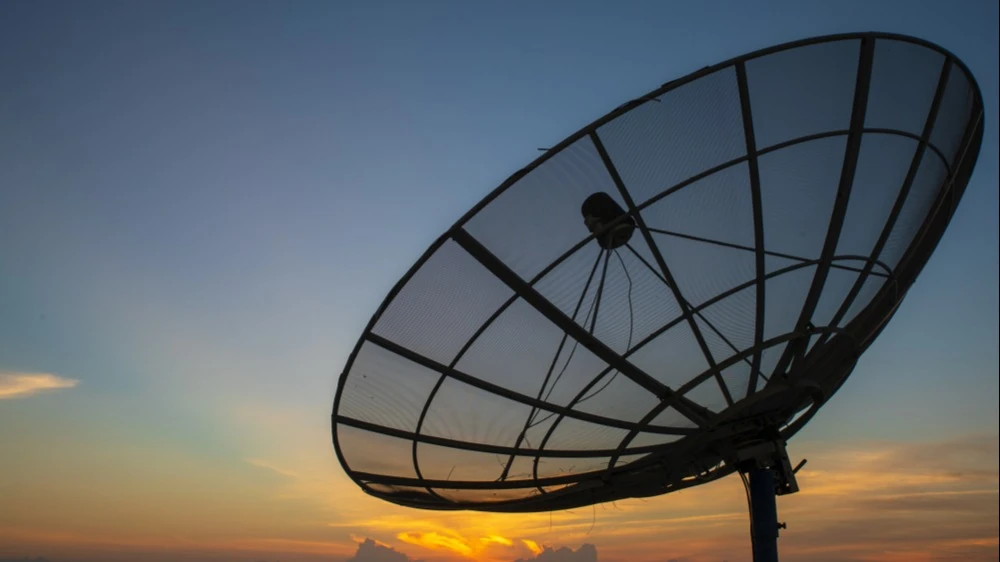
Rheinmetall and satellite manufacturer OHB are discussing the creation of a secure satellite communications network for the Bundeswehr - the military analog of Starlink / Photo: H_Sutthichai / Shutterstock
Gold surpassed $5,000 an ounce amid fears of a debt crisis, inflation and a weakening dollar, reflecting investors' flight to safe-haven assets. The U.S. is increasing pressure on allies, forcing Canada to abandon the idea of free trade with China and threatening new tariffs. On these and other topics - in our review of key events for the morning of January 26.
Gold exceeded $5000 per ounce for the first time
Gold exceeded $5000 per ounce for the first time, ahead of Wall Street expectations, Yahoo Finance reports. Investors are looking for protection against the depreciation of money amid the rapid growth of government debt around the world, the publication points out. According to economist Robin Brooks, the market is increasingly concerned that governments will "erode" debt through inflation, and the falling dollar only accelerates the rise in gold prices due to demand from non-dollar investors.
Investment banks are also reinforcing bullish forecasts: Goldman Sachs raised its year-end target price for gold to $5400, noting the influx of private investors seeking to diversify portfolios amid global political uncertainty. Since the beginning of the year, gold has added about 15%, continuing its rise after jumping 65% in 2025, the publication points out.
Canada has abandoned the idea of free trade with China
Canada does not intend to conclude a free trade agreement with China, Canadian Prime Minister Mark Carney said after US President Donald Trump threatened to impose 100 percent duties on Canadian exports, CNBC reports. According to Carney, Ottawa respects the obligations under the trade agreement with the United States and Mexico and will not conduct such negotiations without notifying the partners. Trump, in turn, accused Canada of trying to become a "transshipment point" for Chinese goods on their way to the United States.
Tensions escalated amid a recent tentative agreement between Ottawa and Beijing to reduce mutual duties on selected goods. Canada agreed to allow a limited volume of Chinese electric cars at a reduced rate, while China will reduce tariffs on Canadian agricultural products, including rapeseed oil.
Germany is preparing a military analog of Starlink for billions of euros
German defense concern Rheinmetall and satellite manufacturer OHB are discussing a joint bid to create a secure satellite communications network for the Bundeswehr - the military equivalent of Starlink, the Financial Times reports. The project could receive funding from the €35 billion budget that Berlin has allocated for military space technology in an effort to reduce dependence on the United States and rapidly build up defense capabilities.
This is a multibillion-dollar contract for a network of satellites in low-Earth orbit for secure military communications, including on NATO's eastern flank. Germany expects to build the system mainly by national companies. Interest in the project is growing against the backdrop of the desire of European countries to reduce their dependence on U.S. solutions and expectations of a sharp increase in military spending in space.
China opens nickel and lithium futures to foreigners
China will allow foreign investors to trade futures and options on nickel and lithium carbonate, part of Beijing's strategy to increase its influence on global commodity markets, Bloomberg writes. The regulator said these contracts will be included in a list of 14 instruments available to non-residents to increase China's role in price formation and support the international use of the yuan.
China is the world's largest buyer of raw materials, but key benchmarks are still formed in London and New York. The authorities expect that allowing foreigners to trade in nickel and lithium - key metals for batteries - will allow China to have a stronger influence on global commodity prices, which are currently formed mainly outside the country.
What's in the markets
- Japan's broad Topix index was down 1.9 percent, with the Nikkei 225 losing 0.73 percent in trading on Jan. 26.
- Hong Kong's Hang Seng index was down 0.2%. CSI 300 index of mainland China was growing by 0.29%.
- In South Korea, the Kospi index was down 0.61 percent, while the Kosdaq was up 6.9 percent.
- The Australian Securities Exchange (ASX) is closed due to the holiday.
- S&P 500 futures were down 0.18 percent, Nasdaq Composite futures were down 0.25 percent and Dow Jones Industrial Average exchange-traded contracts were down 0.17 percent.
This article was AI-translated and verified by a human editor