The maker of Jeep and Fiat announced a return to profit. Why did the stock collapse?
The collapse in Stellantis' stock price was the deepest since it announced multibillion-dollar losses in February

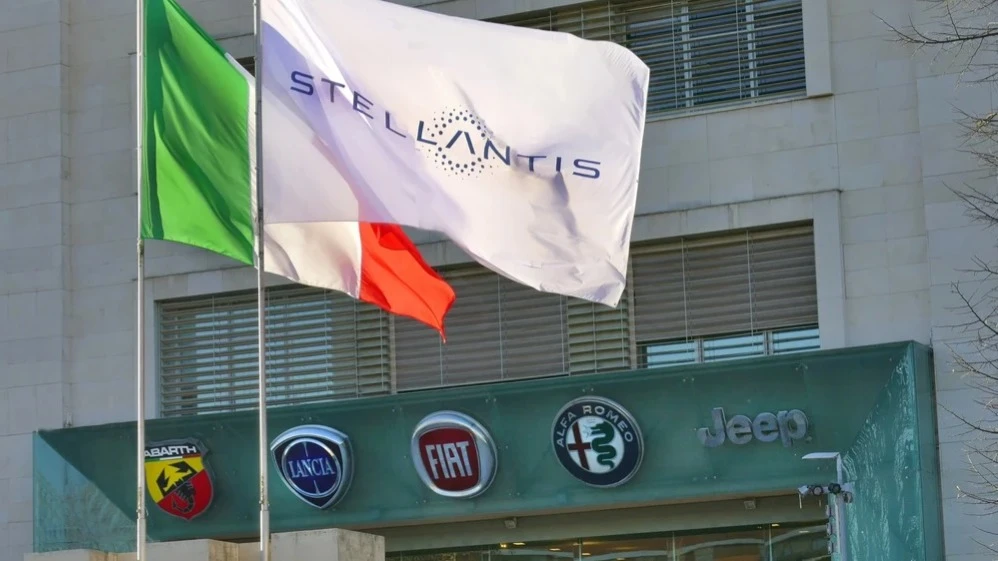
Stellantis' claims of success in its key US market failed to convince investors due to an abundance of one-off revenue items / Photo: Antonello Marangi/Shutterstock.com
Auto concern Stellantis, which went into a €22 billion loss in 2025 due to its refusal to switch to electric cars, managed to become profitable again earlier this year. But details of the quarterly report disappointed investors: the margin of Europe's second-largest carmaker by sales in the key North American market was worse than expected, and its profit was paper thin.
Details
The automaker, formed at the start of the decade by the merger of Fiat-Chrysler with Peugeot, recorded a net profit of €377 million in the January-March quarter, compared with a net loss of €387 million a year earlier. Stellantis' global shipments rose 12% in the first quarter, mainly due to a 17% jump in North America. The automaker attempted to breathe new life into the U.S. Ram brand by bringing back a powerful gasoline engine to these pickups and resuming participation in auto racing, Bloomberg writes.
Despite Stellantis' seemingly positive quarterly results, its shares fell by almost 10% at the opening of trading in Milan. The sell-off became the largest since February, when quotations collapsed by 27% after the announcement of the concern's "strategic reset" in favor of cars with traditional engines, multibillion-dollar write-offs in the electric car business and refusal to pay dividends. Stellantis securities are also down more than 5% on the US trades.
What the analysts are saying
Quotes of Stellantis collapsed after analysts drew attention to lower-than-expected margins of the carmaker in North America, as well as a reported one-time gain of about €400 million from the expected future refund of customs duties, Bloomberg points out. Because of the abundance of one-time revenue items, Stellantis' quarterly successes no longer look so convincing, AIR Capital analyst Pierre-Olivier Essig told the agency.
Analysts at Bernstein and UBS estimate that without the paper effect of duties not yet refunded, Stellantis' operating margin in North America would be negative, The Wall Street Journal reported. "The underlying performance in North America is disappointing and that is where the focus is now," UBS said. What clarification management gives on the North American market is likely to determine further investor sentiment, the Swiss bank said.
Stellantis' recovery could be hampered by geopolitical and economic turbulence, Equita Sim's Martino De Ambrogi warned clients. "It remains difficult to forecast the macroeconomic situation and we believe inflation dynamics are worth monitoring," he said.
What about the stock
Since the beginning of 2026, Stellantis shares have fallen in price by 36%, which makes the company the main outsider of the European stock index Stoxx 600 Automobiles & Parts, states Bloomberg. According to FactSet, the Wall Street consensus on Stellantis has risen over the past three months from neutral (Hold) to "above market" (Overweight, consistent with a buy recommendation). The average target price of the company's securities traded in New York at $9.1 per piece, calculated by the service, reflects their growth potential by 18% during the year.
Context
Stellantis and its main competitor in Europe, Volkswagen (VW), are having to adapt to extremely challenging market conditions. In the European market, they need to ramp up sales of electric vehicles to meet strict environmental regulations and fight off competitors from China. In addition, the war in the Middle East and rising gasoline prices have led to a widespread revival of interest in electric vehicles, the Financial Times reports.
On the contrary, in the United States, global car companies are experiencing a crisis due to the refusal of the forced transition to electric power. The radical change in the White House's climate policy has cost automakers at least $75 billion in asset impairment losses, the FT notes. Following US President Donald Trump's decision to abolish the $7500 tax deduction on the purchase of new electric cars, their sales in the country fell by 27% in the first quarter. VW was hit hardest: its deliveries to the United States collapsed by more than 80%.
This article was AI-translated and verified by a human editor