China's electric car exports up 140% due to energy crisis: who to bet on


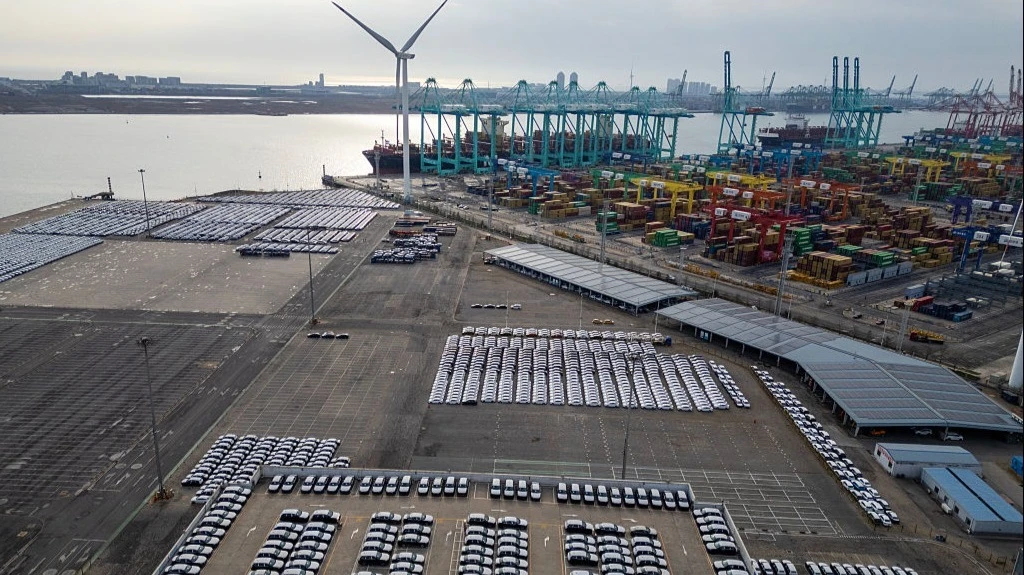
Buyers' attitudes toward electric cars could change if oil prices stay high for a few months / Photo: Lintao Zhang/Getty Images
Exports of electric cars from China reached a record level in March due to the threat of the biggest energy crisis since 1973. Experts surveyed by Oninvest speak of a possible redistribution of the market in favor of the largest players. And China will have a special role here.
Scenario-1973: Will China be able to use the energy crisis for expansion?
China's exports of electric and hybrid cars rose 140% in March compared to March 2025, the China Association of Automobile Manufacturers reported April 9. According to Cui Dongshu, secretary general of the organization, a similar shift toward fuel-efficient vehicles occurred for Japanese automakers during the oil crisis in the 1970s.
Chinese automakers could rapidly expand their global footprint during the Strait of Hormuz crisis.
Although local manufacturers are still experiencing a drop in sales domestically, BYD saw a 40% drop in sales, while Tesla saw shipments from its Shanghai plant grow by 9%. BYD took the title of global sales leader away from Tesla in 2024. According to Cantor data (a March 22, 2026 note is available from Oninvest), BYD's number of units produced and delivered for 2023-2025 exceeds all competitors, including Tesla. Will the balance of power change now?
BYD's strengthening and risks for China
According to a March 24 note from JPMorgan (available at Oninvest's disposal), Chinese companies already have a track record of stock gains due to higher oil prices. In most periods of rising oil prices since 2015, shares of BYD, used in the note as a proxy for China's EV sector, have outperformed both MSCI China and the automaker sector index, especially with oil above $80 a barrel.
However, the closure of the Strait of Hormuz also carries risks for China and the electric car market in general, Ruslan Klyshko of AF Capital Management told Oninvest
Scarcity of raw materials is a key risk for the electric vehicle market. EV production is critically dependent on lithium, nickel, cobalt, as well as copper and aluminum. Rising prices for these components directly increase the cost of batteries, which form up to 30-40% of the cost of a vehicle. Additional pressure is exerted by rising logistics costs, which partially offset the price advantage of EVs over internal combustion engine vehicles.

However, BYD has a unique resilience compared to Western and even domestic competitors, notes Askar Akhmedov of ATLAS Capital:
BYD produces the batteries itself and has access to lithium mining projects in Brazil. The switch to lithium-manganese-iron-phosphate chemistry in its next-generation batteries has increased voltage and energy density while reducing dependence on expensive nickel and cobalt. BYD is using its own fleet of giant ships to combat the logistical crisis caused by the strait closure. And while rerouting through the Cape of Good Hope adds 4,000 nautical miles and 14 days of travel time, having its own fleet reduces the cost of shipping a single unit by 40% compared to competitors dependent on third-party transportation companies.

In Southeast Asian countries, attendance at BYD showrooms has quadrupled, Akhmedov says.
From the investor's point of view, the key issue is the sustainability of the current surge in demand, Ruslan Klyshko emphasizes. If oil and energy prices normalize, this effect will be quickly offset, as the market has repeatedly shown.
A chance for Tesla
In the US, there is also an increase in sales, and it started before the war in the Middle East: Dmitry Pozdnyakov, analyst at Freedom Broker, tells Oninvest.
They were higher in March than in February, and in Feb.
higher than in January. While in China, rising fuel prices are strengthening the external expansion of producers, in the US they are accelerating the redistribution of shares between players.
Revision of strategies by major automakers is already changing the market structure. General Motors, Ford Motor and Stellantis have announced tens of billions of dollars in cuts in electric vehicle investments and write-offs amid weak demand.
Against this background, the position of Tesla is strengthening, which may become one of the main beneficiaries of market redistribution, notes Pozdnyakov.
Last year, Tesla's share of the U.S. market was down to 40 percent versus more than 60 percent a few years earlier, but the trend has reversed in recent months.
On April 2, Tesla presented delivery volumes for the first quarter of 2026. Last quarter the company delivered 358.0 thnd electric vehicles (+6.3% YoY). According to our estimates, the company's market share in the US market last quarter could be around 50%. We believe that in the coming quarters Tesla could be among the main beneficiaries of the electric car market due to its market share growth.

When to expect a structural shift
Previous fuel price spikes have structurally altered buyers' decisions not immediately, but only when prices remain high for long periods, such as in the US during the 1973 oil crisis. Harvard economist Elaine Buckberg estimates that prices will begin to influence buyers' decisions if they remain high for longer than three months. After that crisis, the shift to fuel-efficient cars took years: the share of imported, mostly Japanese cars increased in the U.S. from about 15% at the beginning of the decade to more than 25% just by the end of the decade. For investors, this means that the key factor remains not the growth in demand per se, but the ability of individual companies to use such periods to expand market share.
This article was AI-translated and verified by a human editor