"The market is ripe for a correction." What do analysts call a possible trigger?
Markets that haven't experienced corrections in a long time are becoming increasingly sensitive to any negative signals, Wall Street says

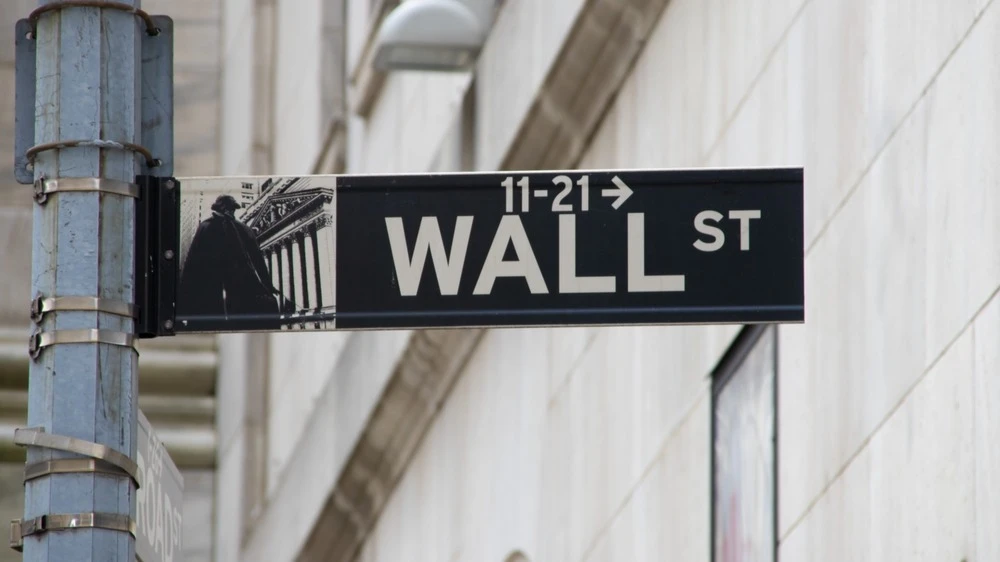
After soaring through 2025, the rally in global markets is becoming increasingly fragile, analysts say / Photo: hakazika18 / Shutterstock
After soaring through 2025, the rally in global markets is becoming increasingly fragile, analysts say, CNBC writes. Long absence of corrections, high concentration of capital in shares of the largest companies and investors' habit of ignoring risks increase the vulnerability of markets. Against such a background, even a moderate external shock - from geopolitics to weak company reports - can start a chain reaction of sell-offs, according to Wall Street.
Details
"Veterans" of the stock market warn: after the rapid growth in 2025, the global rally may be short-lived, writes CNBC. World stocks started 2026 quite confidently: the MSCI All Country World Index, which reflects the dynamics of more than 2500 securities of large and medium-sized companies in developed and emerging markets, has grown by more than 2% since the beginning of the year. According to LSEG, on January 15, the index renewed its historical maximum after growing by 20.6% in 2025. However, according to analysts surveyed by CNBC, markets are becoming increasingly vulnerable: prolonged growth without corrections, with high market valuations of companies and calm investors increase the risk of a pullback.
What the analysts are saying
- Goldman Sachs -- The lack of notable corrections over the past nine months makes markets increasingly vulnerable to a sharp shift in sentiment, said Timothy Ma, chief Asia-Pacific equity strategist at Goldman Sachs.
"After a very strong 2025, especially for Asian markets, and more than nine months without a significant pullback, the historical clock is ticking - the market is effectively 'ripe' for a correction," he notes. Over the past 15 to 35 years, Ma says, markets have typically experienced a correction of 10% or more every eight to nine months. "That hasn't happened now. If there will be a catalyst in the form of strengthening geopolitical risks, investors should be ready for a decline," - emphasizes the analyst.
Ma likened the current investor sentiment to a chemistry experiment: "Drop by drop, nothing happens - and suddenly the last drop changes color. Markets tend to ignore geopolitical risks until they really start to matter". Despite this, the analyst remains generally positive, especially on Asian equities, but notes that with high valuations and overheated sentiment, pullbacks can be sharper, so risk management comes to the fore.
- Schwab Center -- Kevin Gordon, head of macro research at the Schwab Center for Financial Research, agrees that the risk of a correction has increased, but not necessarily because it's been too long without a pullback. When valuations are inflated and market sentiment is close to euphoria, he says, the likelihood of deeper drawdowns increases. At the same time, optimism alone is usually not enough for a market reversal - a negative catalyst is needed, the expert says. In his opinion, anything can become a trigger: geopolitical events or changes in economic policy, as well as investors' disappointment on the background of corporate reports.
Gordon notes that measures such as credit card interest rate caps or heightened geopolitical tensions could put pressure on stocks if they begin to significantly erode corporate earnings or cause bond yields to spike.
The analyst also cites the sustainability of the artificial intelligence boom as one of the key uncertainties. Markets are increasingly questioning whether the rapid growth in capital expenditures of hyperscalers (Big Tech companies) will continue to translate directly into revenue growth. "It won't always be that way," he notes, adding that market leadership is already starting to shift toward small and medium-sized companies.
- BCA Research. Miroslav Aradski, deputy vice president for global investment strategy at BCA Research, notes that the S&P 500 index has not shown a drop of 10% for 185 days. In itself, this is not a signal of an imminent correction, says the analyst, emphasizing that, however, a long period of calm in the markets can weaken the vigilance of investors. In particular, Aradsky mentioned the gaining popularity in the U.S. market strategy "TACO " - an acronym for "Trump Always Chickens Out" ("Trump Always Chickens Out"), which reflects the belief of investors that the tough statements of the U.S. president will eventually be replaced by compromises.
"There is a deep paradox in the TACO strategy: the lack of market discipline gives Trump more room for potentially destabilizing actions. This means that the next crisis could be bigger than the previous one," Aradsky warns.
- Freedom Capital Markets. From a technical perspective, markets are showing classic signs of a "late-stage [upward] cycle," according to Jay Woods, chief market strategist at Freedom Capital Markets. Strong corporate earnings don't always translate into sustained price gains, and market leadership is concentrated in a narrow range of major companies, CNBC writes.
"The major indices are rather sideways right now, with the overall market remaining fairly broad and resilient," Woods notes, pointing to a rotation of investor interest in small companies, as well as in the materials and energy sectors. That said, any disruption in the momentum of the largest technology companies could have a disproportionate impact on the market. "The Nasdaq 100 index has not updated its high since October and could be the first among the major indices to enter a correction phase," he noted.
Context
Investors generally ignored spikes in geopolitical tensions, viewing recent episodes - including the U.S.-EU standoff over Greenland - as information noise rather than a long-term threat, CNBC noted. Markets also rose slightly after another softening of U.S. President Donald Trump's rhetoric on duties on European goods before the S&P 500 posted a second consecutive week of declines on Jan. 24 for the first time since June. Despite this, however, the U.S. stock market still remains at levels relatively close to record highs.
This article was AI-translated and verified by a human editor