Quietly exit the US market: how investors are seeking protection from Trump's policies

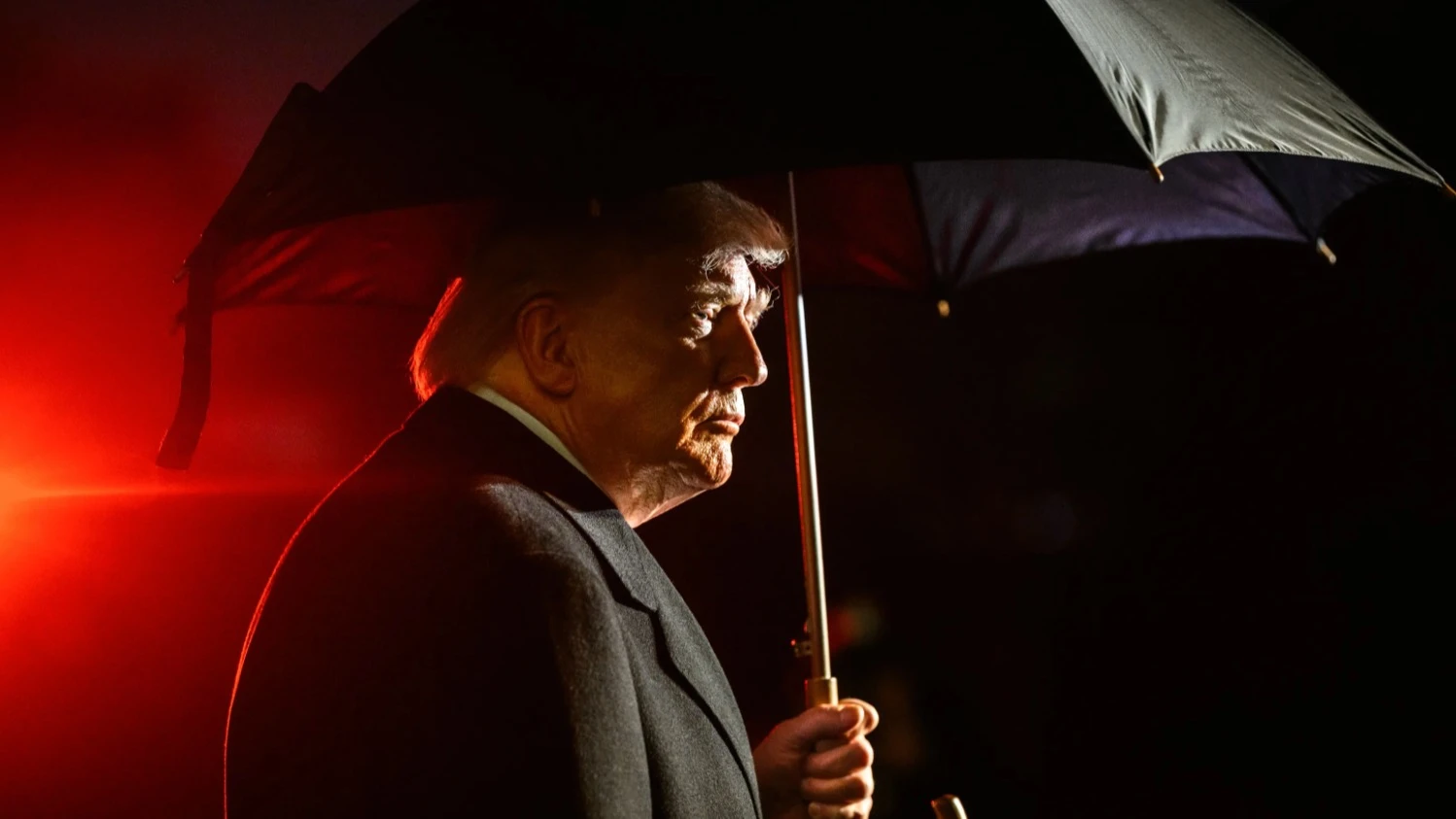
U.S. President Donald Trump has backed away from a last-minute takeover of Greenland. But among investors, his policy has sparked talk of cutting back on investments in the US market. Photo: The White House
Donald Trump's policies and behavior make investors seriously consider withdrawing some funds from the United States. Although the power and scale of the economy and the U.S. financial market will attract them, the process of dedollarization and diversification to the detriment of U.S. assets will continue. Most likely, this will be done in a non-public manner.
Leave the U.S.?
Last week's World Economic Forum in Davos (WEF) marked the virtual dissolution of the 80-year-old transatlantic coalition: although US President Donald Trump backed down at the last minute on the Greenland takeover, European leaders have realized that the States are no longer their ally.
In the financial world, the split has sparked talk that international, and especially European, investors will begin to hedge against unpredictable and increasingly foreign-hostile U.S. policies by increasing diversification and reducing investments in U.S. assets.
Two events drew the most attention to this topic. Just before the WEF opened, George Saravelos, global director of currency market analysis at Deutsche Bank, released a report questioning whether Europe would remain invested in U.S. assets given Trump's threats to seize Greenland. Europe is the largest investor in the U.S., holding $8 trillion in bonds and stocks - almost twice as much as the rest of the world, Saravelos noted.
"In the face of the existential upheavals to which the geo-economic stability of the Western alliance is being subjected, it is unclear why Europeans should continue to play this role," Saravelos wrote.
The events of recent days may further stimulate rebalancing of investment portfolios in favor of non-dollar assets, he said.
His analysis immediately received practical confirmation. Danish investment fund AkademikerPension said it will get rid of US Treasury bonds by the end of the month, as Trump's policies create too high credit risks. The fund manages assets worth $25 billion, of which $100 million was invested in Treasury bonds.
The only reason to hold these securities is to manage risk and liquidity, but "we thought we could find alternatives to that," said Anders Schelde, AkademikerPension's chief investment officer.
The management of Greenland's SISA Pension fund ($1.1 billion in assets, of which about 50% is invested in U.S. equities) is analyzing whether to stay in U.S. securities, CEO Soren Schock Petersen said. He added that if the fund gets rid of U.S. securities, it would be more of a "signal" and a "symbolic move" given the size of the U.S. market.
The U.S. administration was quick to dismiss the idea. Treasury Secretary Scott Bessent in Davos several times ridiculed the suggestion of a European exit from U.S. assets, and then said that it was expressed by just one analyst at Deutsche Bank. Bessent said the bank's CEO allegedly called him and told him that Deutsche Bank "does not support this analyst report." A bank spokesman told Bloomberg that its analysts work independently, "so the views expressed in individual reports do not necessarily reflect the views of the bank's management."
Trump, in his own manner, promised to hit back "hard" if European countries began selling off U.S. assets. "All the trump cards are in our hands," he declared.
Diversifying away from the U.S. market is impossible, acknowledged Sergio Ermotti, CEO of Swiss bank UBS, which owns one of the world's largest wealth management companies with $7 trillion in assets.
"The US is the world's strongest economy" and selling its assets is a "dangerous bet" that could go sideways, he warned.
European countries account for nearly 40% ($3.6 trillion) of international investments in U.S. Treasuries, according to the U.S. Treasury Department as of November 2025.
In reality, investors, even conducting international diversification of their investments, are not getting rid of American assets completely, notes Bloomberg Intelligence. The inflow to funds investing exclusively in U.S. stocks has indeed dropped to one of the lowest values in recent years. But investors are shifting to global exchange-traded funds, and in them 65-70% are American assets.
Quiet exit
Nevertheless, diversification is on the agenda - even at U.S. Pimco, the world's largest bond fund management company ($2.2 trillion in assets). To the negative factors for the US, Chief Investment Officer Dan Ayvasin added the presidential administration's attack on the Fed.
Central Bank Chairman Jerome Powell faces criminal prosecution: he has received a subpoena from the Justice Department, which suspects him of giving false testimony to Congress about the renovation of the Fed's headquarters.
It is important to realize that this administration is very unpredictable. What are we doing about it? Diversify... We do believe that there is a multi-year period of some diversification away from U.S. assets.
The Fed's independence on monetary policy is crucial for markets, Ayvasin insists.
But the attack on Powell is more of a threat to the new Fed chairman, who will take office in May and whom Trump is thus warning not to go against his desire to lower interest rates.
"Trump is fighting the next war, not the last one," the CEO of a US financial services company told the FT. He asked not to be named so as not to become a target for the President, the newspaper said.
"Aggressive rate cuts in an environment of strong [economic] growth and elevated inflation will likely lead to higher long-term rates," Ayvasin said.
In other words, it will lead to a decline in US bond prices, which will make such investments unprofitable for current holders.
Investors are still "looking to diversify by moving out of U.S. assets, and I would describe it as a quiet exit from U.S. bonds," Cathie Koch, CEO of TCW Group, told Bloomberg.
In search of an alternative
You don't have to swap U.S. assets for assets in other countries to diversify, points out Ray Dalio, founder of Bridgewater Associates.
"When you see a 67% rise in the price of gold, that's not the precious metal going up," he told Bloomberg in Davos. He said this is evidence of gold buying primarily by central banks, but also by other market participants to diversify away from fiat currencies, not just the dollar.
Poland's Central Bank, which bought 100 tons of gold in 2025 (more than any other central bank), last week approved a plan to buy another 150 tons (worth about $24 billion at the current price).
The price of gold on Friday approached $5000 per ounce, despite the de-escalation of the conflict around Greenland, and on Monday exceeded this mark. Trump has ruled out the use of military force and refused to impose duties on goods from eight European countries promised on Jan. 17. And NATO Secretary General Mark Rutte has reached a framework agreement with him to use the island for U.S. security.
Trump's attack on the Fed undermines the leadership role of the United States and its central bank that has ensured the dominance of the dollar and the American financial system since World War II - a dominance that Barry Eichengreen, a professor of economics and political science at the University of California, Berkeley, has long called "an exorbitant privilege."
But just because there is no real alternative to the dollar in the world does not mean it is invulnerable, he wrote in a column in the Financial Times. However, there is nothing stopping central banks from replacing dollar assets with domestic investments - not just bonds, but also less liquid instruments domestically, following the example of sovereign wealth funds, Eichengreen points out.
For many investors, the U.S. market will remain a priority, the world's largest economy is still growing faster than the European one, analysts at Citigroup write (they are quoted by Bloomberg). Nasdaq CEO Adena Friedman points to the same.
"Investment companies have an obligation to find the highest yields," she said at the WEF. - We just have to continue to create higher yields in our economy so that the inflow of investment does not stop".
Nevertheless, according to Citigroup, the topics of de-dollarization and the growing U.S. budget deficit are becoming increasingly relevant for many investors. De-dollarization may positively affect asset values in emerging markets, as it has already done in 2025, the bank said in its report.
Inflows into iShares Core MSCI Emerging Markets, one of the largest emerging markets exchange-traded funds with $135 billion in assets, totaled nearly $6 billion in January. It may turn out to be the largest monthly inflow since the fund's launch in 2012, Bloomberg notes. Meanwhile, outflows from the SPDR S&P 500 U.S. equity exchange-traded fund totaled $13.4 billion, which could be the largest since last March, when Trump prepared to impose duties on all countries on "liberation day."
The MSCI Emerging Markets Index is up 7% YTD, while the S&P 500 is up 1%. The former outperformed the latter at the beginning of the year for the first time in nine years.
"The diversification trend away from U.S. assets - both stocks and bonds - that began after 'redemption day' last year is still in effect," says Alan Siow, portfolio manager at Ninety One. - Investors are trying to gauge when the daily headlines, which could change in a few days or weeks, will turn into a new long-term paradigm. When the market comes to that conclusion, the rivulet could turn into a stream."
This article was AI-translated and verified by a human editor