The S&P 500 and Nasdaq returned to renew records. Brent cheapened by 4%
The Russell 2000 index of small and mid-capitalization companies also reached a new high

Several U.S. commercial vessels have passed the Strait of Hormuz / Photo: X / NYSE
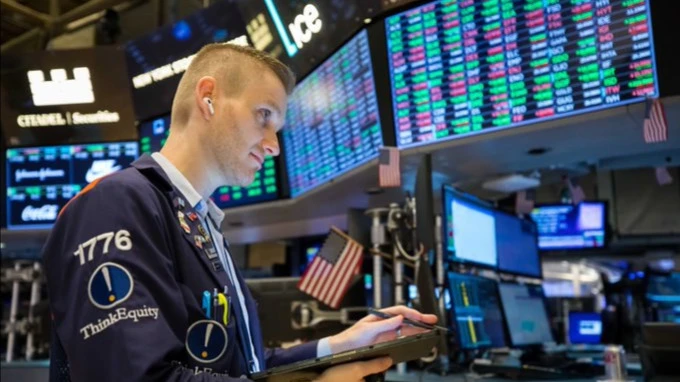
The S&P 500 and Nasdaq Composite stock indices rose to record highs at the end of trading on Tuesday, Ma. 5, thanks to lower oil prices and a strong reporting season. Stocks in the U.S. returned to growth after declining a day earlier on fears of a new escalation in the U.S.-Iran conflict. U.S. Defense Secretary Pete Hegseth said Tuesday that a truce between the sides "certainly remains in place" and that two U.S. commercial ships had passed through the Strait of Hormuz escorted by destroyers, showing that "the route is open."
Details
- The S&P 500 broad market index rose 0.81% on Ma. 5 and ended the day at a new high of 7,259.2 points.
- The Nasdaq Composite Technology Sector Index rose just over 1% and also closed at a record high of 25,326.1 points.
- The blue-chip index Dow Jones Industrial Average added 0.73%, reaching 49,298.25 points. It rose for the first time after two consecutive days of decline.
- The Russell 2000 index of small and mid-cap companies rose 1.75% to end the day at a record 2,845 points.
- Brent crude futures were down 3.75% to $110.15 per barrel, while U.S. crude WTI was down 3.56% to $102.6 per barrel. During the day, the cost of Brent fell briefly below $110 per barrel - for the first time since April 30.
- Gold rose 0.75% to $4556 an ounce.
- Bitcoin grew by 2% over the day and cost about $81,600. The token was at this level for the first time since January.
What influenced the stock
The truce between the US and Iran remains fragile amid new attacks in the Strait of Hormuz. However, U.S. Defense Secretary Pete Hegseth said Tuesday that the truce is "certainly holding" and that "two U.S. commercial vessels along with U.S. destroyers have already safely passed through the strait, showing that the route is open," CNBC reported.
However, Axios sources in the US and Israel say US President Donald Trump could order a resumption of military action as early as this week if the "diplomatic stalemate" is not resolved.
A Trump administration official, according to Axios, on Sunday informed Iran of an upcoming US operation to "escort" ships through the Strait of Hormuz and warned Tehran not to interfere. Thus, the White House wanted to reduce the risk of a possible escalation of the conflict, the publication notes. Despite the warning, Iran launched a series of strikes against US Navy ships, commercial vessels and the United Arab Emirates. After that on Tuesday, Hegseth tried to reduce the importance of Iranian attacks, which gives hope to investors for de-escalation of the conflict, emphasizes Axios.
Additional support for shares was provided by a new series of quarterly reports, which were better than market expectations. About 85% of companies in the S&P 500 index, which have already reported, exceeded expectations, CNBC writes with reference to FactSet data.
Intel shares jumped nearly 13% after Bloomberg reported that Apple is trying to find an alternative to longtime partner TSMC and is in talks with Intel and Samsung to produce its main processors for its devices at their U.S. factories. Following that report, the PHLX Semiconductor index rose 4% to a high.
DuPont de Nemours shares rose 8.4% on Tuesday after the company's first-quarter earnings and revenue beat forecasts. American depositary receipts of Belgian brewer Anheuser-Busch InBev rose 8.7% after strong quarterly results.
Despite the strong report, the securities of AI developer Palantir Technologies collapsed by 7%: investors still fear a "software apocalypse" as a number of analysts say AI from OpenAI and Anthropic is getting close to Palantir's capabilities.
What the analysts are saying
- "We've seen just incredible reporting, not just from technology companies, but from a wide range of companies in the S&P 500 as well as the Russel 2000," Zachary Hill, head of portfolio management at Horizon Investments, said in a conversation with CNBC. He notes, however, that the market is confident that the U.S. and Iran "want some sort of resolution to this conflict," which is driving the indexes to all-time highs. "The market has largely stopped reacting to the situation around the Strait of Hormuz," Hill said. - "I think it would take a significant change in the facts on the ground or a really sharp spike in oil prices for the market to get involved again in this skirmish over the conflict.
- The recovery in global equities from lows hit amid the war with Iran has been so narrow that the market is poised for broader gains even with moderately positive news, according to JPMorgan Chase strategists led by Mislav Matejka, Bloomberg writes.
- "Many investors are trying to guess where to expect the next blow from in relation to war with Iran and oil prices, but historically stocks have been pretty quick to put geopolitical events behind them, and we think the current situation will be no exception," Bloomberg quoted Julian Koski, co-founder and chief investment officer of New Age Alpha, as saying.
This article was AI-translated and verified by a human editor