The third horseman of the apocalypse: will war with Iran lead to food shortages
Food price spikes are often the cause of political cataclysms: in 2011, they set the stage for the Arab Spring

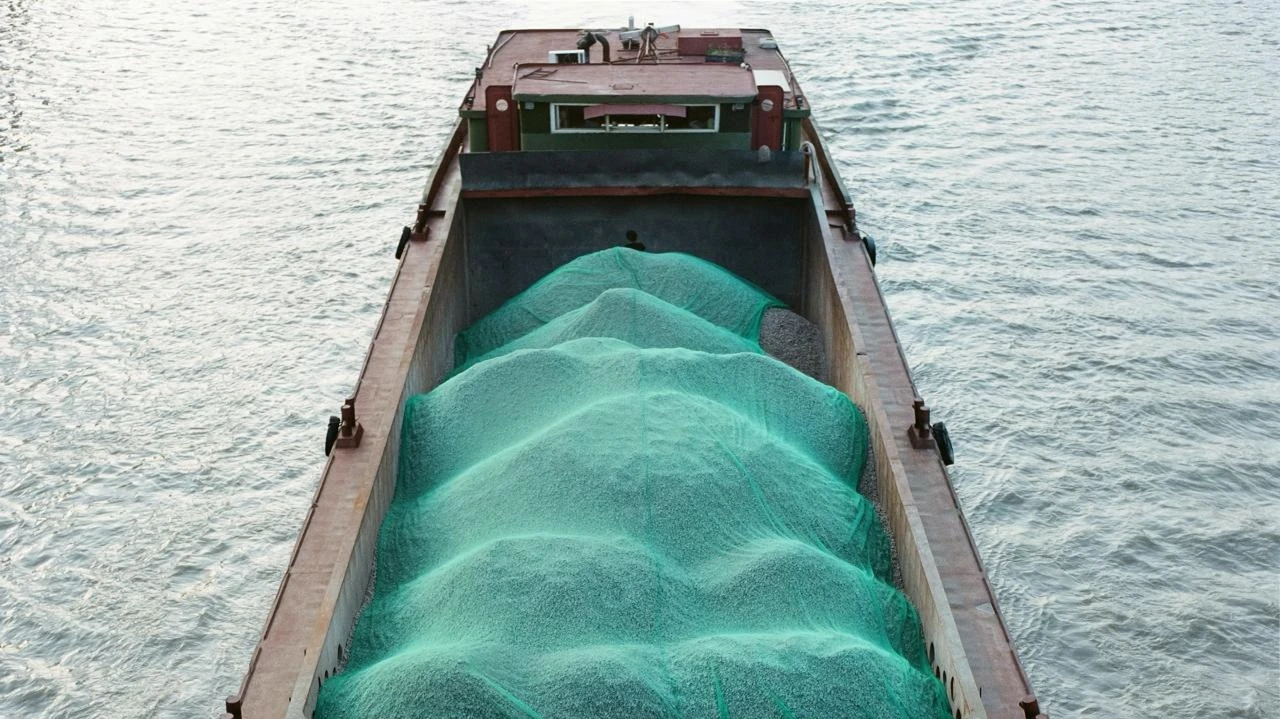
According to the Global Change Data Lab, 48% of the world's population gets their food thanks to nitrogen fertilizer - without it, yields would drop dramatically. Photo: kennyzhang29 / Unsplash.com
The Strait of Hormuz has been de facto closed for 17 days, and this threatens the world economy not only with an energy crisis, but also with a food crisis - about 70% of food for the UAE, Saudi Arabia, Bahrain, Kuwait, Qatar and Iraq is shipped through this route. But this is only a small part of the world's problem: the Middle East is central to the global supply chain. What does this mean for food markets and what risks should investors consider?
Nitrogen-phosphorus shock
About a third of the world's urea exports and about 20% of phosphate fertilizer, key ingredients for global agriculture, pass through the Strait of Hormuz, according to CRU Group data cited by the Financial Times.
About 30% of ammonia and 45% of sulphur - key components in the production of phosphate and nitrogen fertilizers - were shipped through it. According to Kpler, more than 1.1 million tons of fertilizer is now blocked in the Strait of Hormuz - roughly a week's worth of global trade.
Gulf countries - Qatar, Saudi Arabia, Oman, Oman, UAE and Bahrain - are key players in the fertilizer market. Iran exported 5 million metric tons of urea - 10% of global trade.
The problems started from the first day of the war: on February 28, Israel cut off gas supplies to Egypt - which is a key supplier of nitrogen fertilizer to Europe - accounting for about 12% of total imports.
On March 3, Qatar Energy, one of the three largest suppliers of urea, suspended both its urea and ammonia and sulfur production at the QAFCO plant. Six days later, Bahrain's state-owned Bapco Energies declared a force majeure on supplies after an Iranian strike on the Sitra refinery - which was producing about 210,000 tons of sulfur a year.
A Qatar-dependent plant in India, Indian Farmers Fertilizer Cooperative Ltd, has announced production cuts.
India is the world's largest producer and exporter of rice, and the second largest producer of sugar, wheat and cotton.
In Bangladesh, five out of six plants closed. Similar problems have started at European suppliers. Poland's Grupa Azoty SA, one of the largest producers in Europe, announced that it temporarily stopped accepting orders due to higher gas prices, and Slovakia's largest producer Duslo AS said it had reduced ammonia production to a technical minimum.
Worst time for a crisis
The crisis develops at the most inopportune moment: early spring is the start of the fertilizing season in the northern hemisphere. Although most producers have enough fertilizer for the current year, at this time they usually buy stocks for next year. According to Argus, international urea prices have risen by almost 40% since the war began. Futures for delivery FOB Middle East are trading at about $650 per ton, while granular urea from Southeast Asia is trading at about $710 per ton.
Without fertilizer, crop yields go down. And if yields fall, there is less grain, rice or any other food on the market. It can take six to nine months between harvest and putting food on the table. But inflation can be expected to rise sharply around Christmas time
Unlike oil, there is no strategic stockpile of nitrogen fertilizers in case of a prolonged supply disruption.
Even in the most optimistic scenario, in which Iran concludes a ceasefire tomorrow and opens the strait, the resumption of supplies can be expected only in two to three weeks, Bloomberg notes.
Freedom Broker analyst Vitaly Kononov believes that long-term risks for the food industry are minimal - most of the agricultural export industry is concentrated in Brazil, the US, China and the CIS - regions whose trade is hardly affected by the current conflict.
So far, prices for grain, corn, meat and rice have reacted minimally to the geopolitical situation in the Middle East. Prices for the entire food basket are at historically low levels, Kononov said.
Inflation-adjusted prices are at historically low levels over the past 40 years, so food for the consumer, especially in developed countries does not create inflationary shocks.
Fertilizer crisis: could it be worse than the shock after the war in Ukraine
The last global fertilizer market shock was in 2022 after Russia invaded Ukraine. At that time, urea prices FOB Middle East rose above $900-$1000 per tonne. This time, the consequences could be more serious - back then, importing countries could turn to alternative suppliers such as Saudi Arabia or Egypt. Now, in addition to the physical blockage of supplies, the very infrastructure to produce both fertilizer and LNG needed by producers outside the Gulf has been halted.
The price spike in 2022 was extraordinary, but the market was able to rebuild as supplies from Russia continued to come in
Suppliers from other regions will not be able to compensate for the deficit either. China restricts fertilizer exports, prioritizing the domestic market, and current restrictions will continue until August 2026. Russia, too, has export quotas in place. In addition, Russia is threatened by Ukrainian drone attacks on fertilizer production centers, such as the recent attack on Dorogobuzh.
What about the stock
Commodities analyst Andrew Hecht believes that companies with production facilities in North America could be the beneficiaries of the current situation. In particular, he recalls that the American The Mosaic Company (NYSE: MOS) took the lead during the previous crisis, when in April 2022, the prices of grains and stocks have risen by more than 43% since the beginning of the war. However, Freedom Broker analyst Vitaly Kononov believes that the first half of 2026 could be unprofitable for Mosaic.
We recommend nitrogen fertilizer stocks - CF Industries Holdings, CVR Partners, whose primary input is gas; and non-potash fertilizer stocks - Mosaic, Nutrien, whose primary inputs are ammonia and sulfuric acid - whose prices have reached local records, with potash prices rising relatively little.
Since the war began, shares of CF Industries Holdings are up more than 30% (to close on March 13), while CVR Partners is up 31%.
Mosaic had an increase of over 5%. Nutrien had an increase of almost 13%.
This article was AI-translated and verified by a human editor