The war in Iran has changed the dollar's position. What will happen to it next?
The U.S. currency has once again become a safe haven. But that does not remove questions about its future

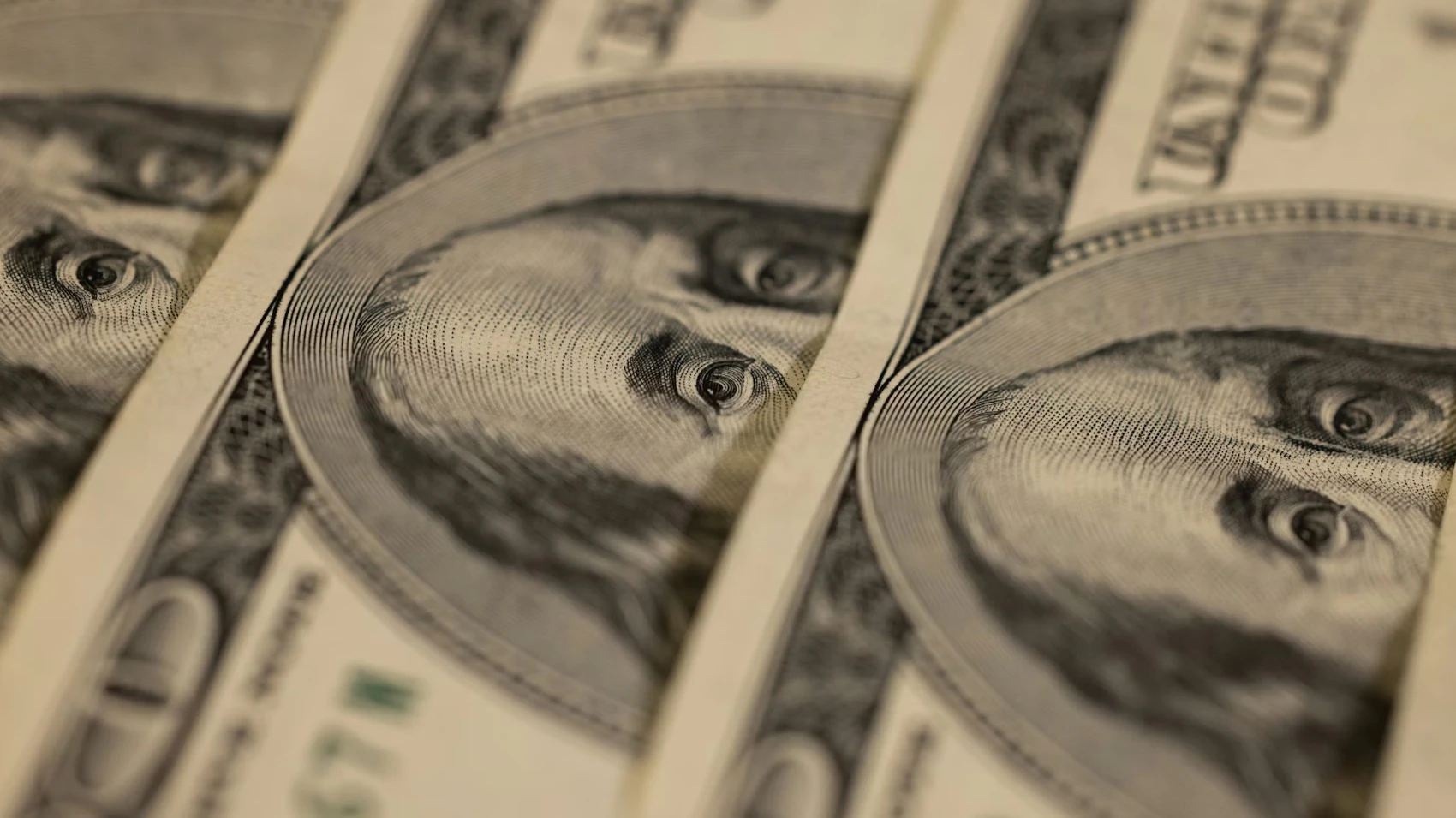
The war in Iran has shown that the world still needs the dollar and the U.S. market in a moment of stress. But investors quickly reduce the protective premium on the US currency as soon as there is a hint of peace talks. Photo: engin akyurt / Unsplash.com
In recent weeks, two camps have formed on Wall Street: participants of one camp advise shorting the dollar, while the other advises buying the U.S. currency. In the short term, its rate now depends on the news about the war in Iran. But what will influence it on the long horizon? Sergey Romanchuk, a financier and member of the ACI Foreign Exchange Committee, explains. He sees grounds for a weaker dollar in the future.
The dollar debate: a defensive asset or not anymore?
Back in mid-April, the market was almost synchronously discussing whether it was time to bet against the dollar again. George Saravelos from Deutsche Bank spoke about the coming peak of war risks and the possibility of short positions on the U.S. currency. Bloomberg wrote that hedge funds were increasing bearish bets on the dollar during the month up to and including April 10.
But in the morning of April 20, the picture turned around again: after another aggravation in the Middle East, the dollar index rose to a weekly high of 98.47 points. In the morning of April 21, the situation did not change much: the index was at 98.12 points.
The question arises: what will happen to the dollar exchange rate next and is it losing its function as a universal protective asset?
The first thing I think is worth recognizing outright: the war in Iran has confirmed the dollar's status as a defensive asset.
The U.S. currency behaved exactly as a defensive asset should. When the conflict broke out, the dollar index soared more than 3% to 100.64 points. When the market believed in a truce and the possible opening of the Strait of Hormuz, the dollar "gave up" almost the entire war premium and rolled back to 97.62. This is not a refutation of the safe haven function, but its confirmation: on the shock the dollar is bought, on the discharge it is sold.
But it does not follow that the dollar has returned to its old, almost unconditional status as an asset to which the world is willing to pay a constant premium. The distinction here is crucial: tactical safe haven and structural invulnerability are not the same thing.
Reuters wrote back on April 1 that the dollar's military rebound should eventually fade because its broader protective halo has already been undermined by tariff chaos and questions about the Fed's independence. That is, the dollar's shock shelter function is working, but its credibility as an asset that can be held without regard to policy no longer looks as monolithic as it did even a few years ago.
Hence the second conclusion: any confident short-term forecasts on the dollar (for days and weeks) now look extremely unreliable: on such a horizon the exchange rate is a direct consequence of the development of the conflict in the Middle East, and the specific decisions that are made on it depend mostly on the mood of one person in the White House. The usual logic of the development of military conflicts breaks down on the peculiarities of the personality of the US president and the opacity of the internal political situation in Iran.
Dollar forecasts: what theses to rely on now
The war is now in its eighth week, with the Strait of Hormuz opening briefly and then actually being blocked again. On April 19, the U.S. fired on and seized the Iranian-flagged vessel Touska in the Gulf of Oman. Iran threatens to retaliate and does not officially confirm its participation in the new negotiations (although Axios, citing sources, writes that the supreme leader of the Islamic Republic gave them the green light on April 20). European diplomats already fear that even a possible "deal" may turn out to be only a crude framework, leaving the sides in a technical deadlock.
In such a market, the dollar depends not so much on the fair value model as on the next headline about tankers, the blockade, or the next social media post by US President Donald Trump. That is why I would not say that short-term forecasting is impossible in the strict sense of the word, but it has become almost completely dependent on news headlines.
As for the longer-term horizon, the main thesis from my January column about Greenland seems to me rather confirmed.
At the time, I wrote that U.S. politics was becoming a currency factor in its own right and the market was underestimating the political risk to the dollar. That hasn't gone anywhere. The dollar is less and less driven by rate differentials and more by the question of exactly how the White House handles foreign policy, tariffs, and the treatment of its own institutions.
But I would refute another thesis from the same material, that the dollar's function as a safe haven has already been truly broken. The war in Iran showed that it was too early to bury the dollar's safe haven status.
Another important theme for the dollar's long-term position is the Fed's ability to conduct monetary policy independent of the executive branch in the US.
The White House's pressure on the regulator is real, but it is too early to conclude on the Fed's quick capitulation. Powell's term as chairman of the U.S. central bank ends on May 15, 2026, but his mandate as a member of the Board of Governors is valid until January 31, 2028. Paul himself said in January that he would continue to do the job for which he was confirmed by the Senate, and in March he explained that if there is a delay in confirming a successor, he will remain interim chairman because "the law requires it".
Reuters wrote that Trump has already threatened to fire him, but such a move would be unprecedented and would almost certainly stall in the courts. WSJ adds a political layer - Senator Thom Tillis is actually stalling the approval of Kevin Warsh's nomination as Fed chairman, citing an attack on the independence of the U.S. central bank.
Kevin Warsh himself, if he does get confirmed, could also "unpleasantly surprise" Trump, as he is, after all, a professional and unlikely to want to part with his own reputation.
That said, Donald Trump's power is very likely to be limited after this November's midterm elections. As of April 20, Polymarket gives the Democratic Party about 85% to win the House and about 55% to win the Senate, and about 94-95% that Warsh will eventually be confirmed as Fed chief.
The Fed's independence has a chance of surviving a change of head, and after the November election, the space for White House pressure on the Fed could become even narrower if Trump's power is indeed curtailed.
If we move away from the political noise and look at the long-term trend of dollar usage rather than its current price, the situation remains relatively stable. According to the International Monetary Fund, the dollar accounted for 56.77% of global official reserves in the fourth quarter of 2025, compared to 20.25% for the euro and 1.95% for the yuan.
According to SWIFT data as of February 2026, the dollar held a 49.25% share in global payments by value and 57.49% in international payments excluding intra-eurozone transactions. The yuan has only 2.74% and 2.16% there, respectively.
The Bank for International Settlements shows that the dollar is on one side of 89.2% of all global currency transactions.
The fate of the petrodollar
The most interesting dispute now is around the petrodollar. WSJ and FT formulate almost opposite theses. And both are worthy of attention in their own way.
The arguments the WSJ cites are that the war has been a boon to the petrodollar because in a moment of systemic shock, the entire region is drawn to the U.S. financial infrastructure anyway.
By the way, in this regard, the news that the UAE discussed with the US the possibility of providing a dollar swap as an emergency aid mechanism is quite telling: even rich oil monarchies, arguing with Washington and diversifying their ties, still come to the American state and the Fed for dollar insurance in a crisis point.
But Reuters rightly reminds us of something else: the very deal that underpinned the petrodollar agreement, under which OPEC countries pledged to sell oil for dollars and the United States in return promised to provide them with arms and guarantee political stability in the region, is bursting at the seams.
The US is no longer as dependent on Middle East oil as it used to be. Most of the Gulf's oil goes to Asia. The same Saudi Arabia, the largest producer in OPEC, sells about four times as much oil to China as the U.S. does. All six countries in the Gulf Cooperation Council manage more than $6 trillion in assets in bonds, equities, private equity and other instruments with high U.S. participation.
So both sides of this argument, in my view, are right - just on different horizons. In the short cycle, war strengthens the petrodollar because it raises the price of U.S. protection and dollar liquidity. In the long cycle, it undermines it because it pushes the Paul to diversify trade, reserves and alliances.
What does all this mean for the course?
From my point of view, it is possible to sell the dollar as a currency overbought on fear. It is too early to bury the dollar as the basis of the world monetary architecture.
Without real capital outflows from the US, it will be difficult for the dollar to go into a new full-fledged collapse. And the statistics confirms it: foreign investments in Treasuries in February rose to a record $9.49 trillion, and after a brief truce in April, investors' money returned to U.S. stocks - the net inflow amounted to about $28 billion, with the technology and energy sectors again being the drivers.
The stock market is already celebrating almost as if the war is already over, but the room for a quick dovish reassessment by the Fed is limited. This, by the way, is another argument against the all too easy "once the war is over, the dollar exchange rate will immediately go down" scenario. Even on de-escalation, it is hampered by high oil, stubborn inflation and still strong demand for US assets.
The Iranian war did not kill the dollar - it redefined its essence. It showed that in times of stress, the world still needs the dollar and the U.S. market.
But it has also shown that this power is no longer free: investors are increasingly quick to reduce their protection premium as soon as there is even a hint of negotiation. Plus, U.S. political risk can no longer be dismissed out of hand.
For the coming weeks, I would not engage in rate prophecies at all. The most honest thing to say to investors today is that the fate of the dollar in the short-term horizon is determined not by the model, but by the traffic situation in the Strait of Hormuz.
The Iran war could be the event that reverses Trump's usual logic for the conflict: he is trying his best to stay within a time-limited operation, essentially backing down, but Iran, using Trump's political constraints, is pushing for a continuation and may well get it.
In the medium to long term - I still see the case for a weaker dollar (assumes a decline in the DXY index to 90 points and a rise in the euro to the dollar to $1.25) But the distance between "weaker dollar" and "end of the dollar system" is still huge.
This article was AI-translated and verified by a human editor