The war in Iran has shocked commodity markets. But some are taking the hit while others are making money

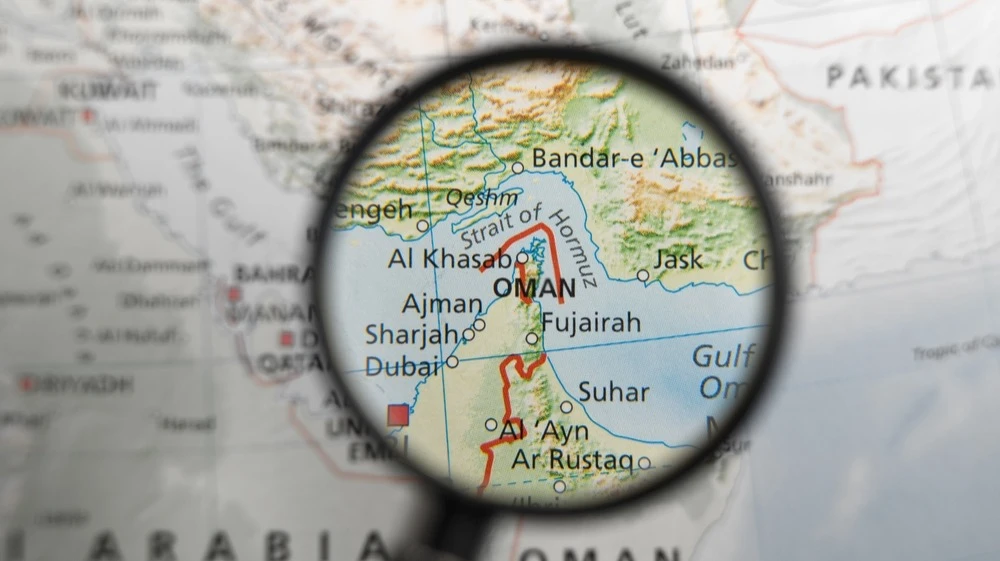
The blockade of the Strait of Hormuz has effectively cut off Asia's and Europe's largest consumers from some of their suppliers of energy, metals and chemicals / Photo: La Terase / Shutterstock.com
In the third week of U.S. and Israeli military action against Iran, commodity markets entered a phase that CNBC compares to the oil crisis of the 1970s. The blockade of the Strait of Hormuz has effectively cut off Asia's and Europe's largest consumers from some of their suppliers of energy, metals and chemicals. Who loses from this and who stands to gain?
Not just oil
After the U.S. and Israeli military action against Iran began on February 28, the price of Brent crude oil, which had been around $72 before the conflict, soared to nearly $120 in March 2026. Traders and buyers so reacted to the risk of blockade of tanker passage through the Strait of Hormuz. JPMorgan analysts in a recent report give a negative forecast: if the blockade drags on until March 20, the world will lose access to 12 million barrels per day from the Middle East. This alone would make triple-digit oil prices a reality by the end of 2026.
However, the shock was not only in the oil market. With the start of the conflict in the Middle East, the aluminum market became the epicenter of volatility.
Prices for this metal had been rising even before the war, due to U.S. duties and concerns about supply cuts. But in the first half of March, aluminum prices on the LME jumped to the highest level since 2022 (about $3.3 thousand per ton), reacting to the threat of supply disruption from the region, which gives up to 10% of global production. Max Leighton, an analyst at Citi, in an interview with the FT allowed for a rise to $4 thousand if the disruptions continue. The same forecast was given by ING.
Gulf countries produce about 6-6.5 million tons of primary aluminum per year, with about 5-5.5 million tons of exports dependent on shipments through the Strait of Hormuz, ING analyst Ava Manthey said in a note. Not all aluminum exports go through, with Oman in particular sending metal directly to the Indian Ocean. However, much of the region's aluminum trade still depends on the strait or nearby sea routes.
Aluminium Bahrain, known as Alba, said on Sunday, March 15, that it has begun shutting down three aluminum smelting lines. This represents 19% of its capacity. On March 4, it declared force majeure. The Qatalum plant in Qatar began halting production on March 3 due to a gas supply interruption, will now operate at 60% of capacity, Reuters writes.
But at the end of last week, March 13, aluminum began to fall in price and lost 2.1% per session as the market was gripped by fears of stagflation. As Bloomberg notes, investors fear that soaring oil prices will kill global economic growth, and the metal in such volumes will simply not be needed.
The already difficult situation on the market was complicated by a technical failure at the LME on March 16, when electronic trading stopped for more than two hours, depriving dealers of the ability to place orders.
On March 17, aluminum futures were trading on the LME at about $3,400 per ton.
The crisis is particularly acute in Asia. According to Bloomberg, Rio Tinto offered Japanese buyers aluminum at an 11-year record premium of $350 per ton for the second quarter of 2026. That's the highest since 2015. Japan is a major importer of aluminum, and the Japanese premium is considered a market benchmark reflecting demand in East Asia.
China, on the contrary, was the winner. Due to the blockade of the Strait of Hormuz, alumina (raw material for aluminum), which could not be brought to the Middle East, began to be "dumped" on the world market. Chinese smelters are buying cheaper raw materials, increasing their margins.
"Alumina is now being sold at dumping prices and Chinese producers are the main beneficiaries of this flow diversion," Zijin Tianfeng Futures analyst Chen Jingmin told Bloomberg.
Unlike aluminum, copper prices are falling. They are now trading more than 11% below the annual maximum of $14.5 thousand per ton. According to Bloomberg, inventories at LME warehouses have jumped to the maximum since September 2019 (more than 330 thousand tons). Sellers are unable to sell cargoes: demand in China is weakening, and the January rally in prices for this metal made many buyers take a pause.
The natural gas (LNG) market in Europe is facing a price spike after Qatar's QatarEnergy announced it was halting LNG production.
About a third of the world's fertilizer trade passes through the Strait of Hormuz. In addition, their production requires high energy costs, as they are highly dependent on natural gas as a raw material. Energy can account for up to 70% of all production costs, Reuters writes. Analysts at BMO Capital Markets warn of a "critical shortage of nitrogen fertilizers." The price of urea futures has already jumped from $350 to $600 per ton.
Plan B for business
For the largest companies, the conflict has become a test of strength.
Auto component manufacturers in Japan are interested in Rusal's aluminum to replace falling supplies from the Middle East
France's Total Energies reported a 15% reduction in current operations.
In Asia, technology companies have been hit. According to Nikkei Asia, Samsung Electronics and TSMC have expressed concern about the risk of inert gas (neon and helium) shortages for lithography (printing of processor boards and memory modules).
Italy's Eni announced plans to accelerate natural gas production in Algeria in an attempt to minimize dependence on the Gulf.
Risks of war
If the blockade of the Strait of Hormuz lasts until the end of June 2026, the world economy will face stagflation. According to Oxford Economics modeling, if a prolonged crisis fixes oil prices in the $140 range in the second quarter, it will lead to a recession in the Eurozone at the beginning of the third quarter.
As Bloomberg notes, China and India will face shortages of 4-5 million barrels of oil per day, which will, among other things, limit energy supplies to factories in Guangdong and Zhejiang provinces, affecting electronics production and shipment chains around the world.
According to Caixin Global, the escalating conflict in the Middle East has paralyzed key fertilizer supply routes, which has already led to a sharp jump in urea and phosphate prices. Experts estimate that the shortage will lead to a 20-25% reduction in fertilizer application to fields in Brazil and India, threatening next season's crop yields. The current supply disruption lays the foundation for a large-scale spike in food prices (primarily for wheat and soybeans) between fall 2026 and spring 2027.
The main unrealized risk of war is the potential expansion of the conflict zone into Saudi Arabian ports, which could turn the current "supply shock" into the structural crisis of the decade.
Who benefits
Goldman Sachs strategists in their analytical review for clients record the transfer of capital to assets far from the conflict zone. The main winners of this process are American producers: shares of oil and gas ExxonMobil and Chevron show a steady growth.
American Alcoa is the beneficiary of the "aluminum rally". Since the beginning of the military operation against Iran, its shares have risen in value by more than 5%.
American companies, including Cheniere Energy, are also leaders in the LNG sector. As Bloomberg notes, gas importers are now looking for alternative sources of supply and many are considering expanding cooperation with the US. At the same time, Occidental Petroleum has also benefited: according to specialized analysts, its record low production costs in the current market conditions turn high prices for raw materials into a source of enormous super-profits.
In the fertilizer sector, investors are betting on CF Industries. Its shares have jumped about 24% since the beginning of the military conflict in Iran, and almost 60% since the beginning of the year. WSJ writes that investors expect that CF will be able to raise prices for its fertilizers to the level of its global competitors, which have to compensate for rising natural gas prices. Mizuho analyst Edlein Rodriguez said the advantage they get is the difference between gas prices in the U.S. and Europe, "The higher the gap, the more favorable it is for them." Bloomberg also names American fertilizer producers The Mosaic Company and Nutrien among the beneficiaries.
This article was AI-translated and verified by a human editor