The world has 45 new AI billionaires amid discussions of a market bubble
Forbes estimates the combined fortune of people who have made money from AI at $2.9 trillion
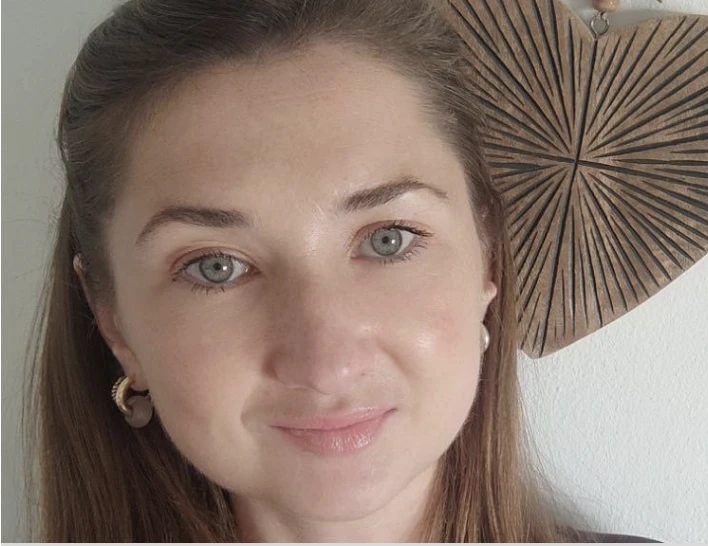

The richest new AI billionaire on Forbes' list is Edwin Chen, founder of the Surge AI neural network training platform / Photo: Koshiro K / Shutterstock
Despite lingering concerns about the overheating of the AI market and the formation of an AI bubble, billion-dollar investment rounds, including by smaller companies, from the AI field have brought 45 new entrants to Forbes' billionaire rankings over the past year, whose fortunes are directly tied to AI technology.
There are a total of 3,428 people on the Forbes-2026 billionaires list - a record number of participants. The capital of at least 86 of them is AI-related. All these people, as Forbes points out, are co-founders, top managers or investors in AI companies. The magazine estimates their total wealth at $2.9 trillion.
Details
- The richest new AI billionaire of the year, according to Forbes, is Edwin Chen(former Google and Metaengineer ), founder of the Surge AI platform. The magazine estimates his fortune at $18 billion. Surge AI specializes in tools for training neural networks, as well as annotating language data (i.e., translating data from text, audio and video formats into data that could be used by machine learning algorithms). The company's services are used by Google and OpenAI, among others, wrote Inc. And while Surge AI is not necessarily much more expensive than its competitors, Chen's success was due to his rejection of traditional venture capital, writes Forbes: the company's founder retained a huge stake - more than 75% of Surge AI's shares. Last July, the company garnered attention for the fact that its annual revenue - without raising outside capital - reached $1 trillion. "I really think that what we're doing is so important to all AI models that without us, AGI [general artificial generality - the technical term for the situation where AI will equal or surpass human capabilities] just won't happen," Chen told Forbes in September.
- The second richest debutant on Forbes' list of AI billionaires was Liu Debing ($9.1 billion), whose company Z.ai - formerly known as Zhipu AI- which develops open source language models and competes with OpenAI, had its IPO in Hong Kong in early January. The company then became the world's first large language model development firm to go public, Yahoo Finance wrote. The listing raised $558 million for the company.
- Third place went to Daniel Nadler ($7.6 billion) of search service OpenEvidence- the company is developing an AI-powered search tool for doctors and other healthcare professionals.
In addition to them, a significant share of the new names on the list are in the segment of "web coding" and assistant developers, including the founders of such startups as Cursor (Michael Truell, Aman Sanger, Souale Asif and Arvid Lunnemark - Forbes estimates the capital of each of them at $1.3 billion) and Lovable (Anton Osik and Fabian Hedin - $1.6 billion each), Forbes writes.Other "new AI billionaires" got rich building basic infrastructure for AI, including data centers, such as Peter Salanki of CoreWeave, Michael Sing of Monolithic Power Systems and Toby Neugebauer of Fermi America, the publication points out.
Who else made it to the Forbes billionaires list
- In January, Chinese language model developer MiniMax went public in Hong Kong (the company raised about $620 million during the offering) and also made its founder and CEO Yan Junjie a billionaire. Forbes estimates his capital at $7.2 billion.
- Nvidia-backed startup Perplexity, which develops AI-powered search solutions, has brought its co-founders Denis Yarats , Aravind Srinivas, Johnny Ho and Andy Konwinski $2.1 billion in capital each. Yarats founded the company in 2024 with partners in the United States - before moving to the States, he worked briefly in Moscow and spent his childhood and youth in Belarus. In September last year, as a result of another investment round, Perplexity's valuation reached $20 bln, the Information publication quoted a source as saying.
- In addition, Forbes' list of billionaires includes the co-founders of Astera Labs, a developer of hardware and software solutions for AI and cloud infrastructure, Jitendra Mohan and Sanjay Gajendra (Forbes estimates the fortune of each of them at about $1 billion). Last fall, Citi analysts called Astera Labs one of the beneficiaries of the deal between AMD and OpenAI - they expected the company's securities to grow by almost 30%.
- In the applied AI sector, Forbes highlights Quasar Younis (capital - $1.5 billion), whose company Applied Intuition implements AI in transportation and military equipment management, among the most notable participants in the ranking.
Context
The current situation is reminiscent of the dot-com era, Forbes writes - just as then every firm became an incredibly valuable technology company - today every business, from consulting firms and research groups to medical companies and weapons manufacturers, is striving to become AI-enabled. However, there is a significant difference: the exorbitant valuations of some AI startups are now being shaped predominantly by private investors rather than the broader market. The real test for the sector will be the expected IPOs of Anthropic and OpenAI - they will show whether the current growth is a sustainable trend or the biggest financial bubble of the decade, states Forbes.
The three richest people in the world, according to the publication, are Elon Musk with a fortune of $837.9 billion, Larry Page ($253.8 billion) and Sergey Brin ($234.2 billion).
This article was AI-translated and verified by a human editor