Three ships instead of a hundred: what is happening in the Strait of Hormuz
A U.S. Navy convoy for tankers passing through the Strait of Hormuz is unlikely to reduce oil traders' concerns about possible supply disruptions, analysts at Bloomberg Economics said

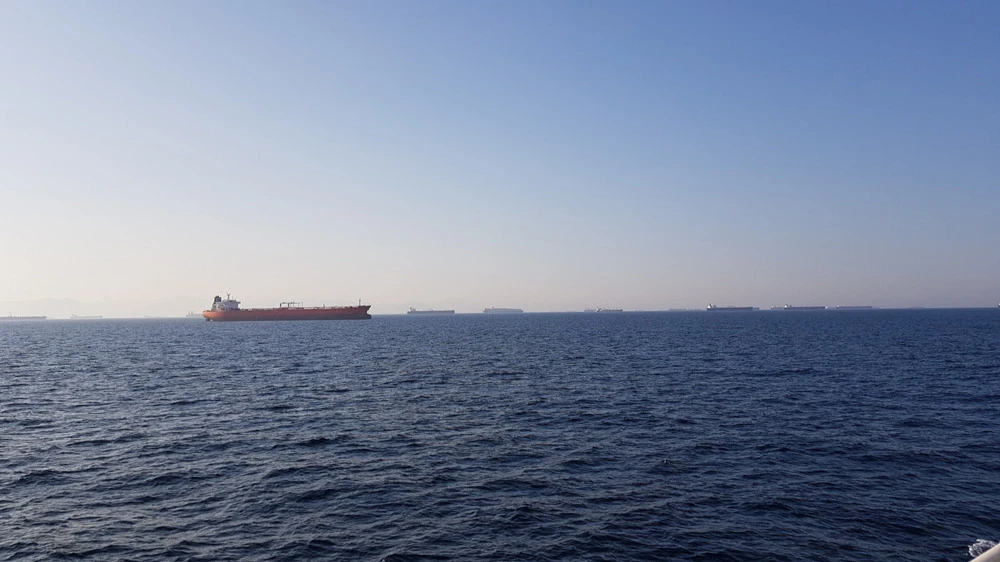
Shipping through the Strait of Hormuz has virtually stopped / Photo: Simone Augstburger / Shutterstock.com
Maritime traffic through the strategically important Strait of Hormuz has almost stopped because of the war between the U.S., Israel and Iran, Bloomberg writes. On Tuesday, only two bulk carriers and a small container ship passed this way. All of them were leaving the Persian Gulf, the agency states. In normal time about 100 ships a day passed through the strait, it is the most important transportation artery on the way of oil tankers from hydrocarbon exporting countries. The actual blockage of the strait has led to an increase in oil and liquefied gas prices.
Details
Traffic through the Strait of Hormuz has been effectively paralyzed since the start of the U.S.-Israeli war with Iran and the threat by Iran's Islamic Revolutionary Guard Corps to open fire on any ship that tries to pass through the corridor.
The strait has plunged into a kind of "digital fog": jamming of signals and mass shutdown of transponders transmitting data on the location of ships have complicated satellite tracking and made monitoring of traffic in the strait as difficult as possible, Bloomberg notes. This is a common practice in conflict zones, the agency explains.
According to available ship tracking data compiled by Bloomberg, traffic through the strait has dropped by more than 95 percent, with large oil tankers and gas carriers avoiding the route. On Friday, before the start of the operation against Iran, more than 100 ships passed through there, on Monday - seven, and on Tuesday - only three, including no tankers, the agency calculated.
Some vessels may have gone undetected if their captains never turned on their transponders, the agency said. For example, Iranian-linked oil tankers often leave the Persian Gulf without transmitting signals until they reach the Strait of Malacca about ten days after passing Fujairah, a port in the UAE on the Gulf of Oman coast.
At least three supertankers that left Asia with plans to load in the Persian Gulf have turned toward the Atlantic basin, Bloomberg data show, with more than 60 empty supertankers either standing still or slowing down as the crisis in the Middle East deepens. The agency describes it as a flotilla stretching thousands of miles south of India.
What makes the Strait of Hormuz so important
The Gulf states play a key role in the global supply of crude oil, refined petroleum products, natural gas and fertilizer feedstocks. Almost all of the region's exports pass through the Strait of Hormuz, making it a narrow bottle neck for about a fifth of the world's oil and LNG shipments, as well as half of the global seaborne sulfur trade, Bloomberg writes.
The virtual closure of this route is already forcing countries like Iraq to cut production. All of this has contributed to a surge in oil prices, with natural gas prices jumping to their highest since February 2022. Traders are looking outside the Middle East for crude to keep global refineries running, and tanker freight rates have soared to historic highs.
At the same time, sulfur traders are hastily seeking alternative sources for the fertilizer and nickel refining industries, Bloomberg reports.
Maersk, one of the world's leading container shipping companies, has suspended most shipping bookings in the region, The Wall Street Journal reported.
Trump's guarantees
U.S. President Donald Trump promised on March 3 that the United States would ensure the movement of tankers through the Strait of Hormuz, and did not rule out that the U.S. Navy could be used for this purpose. Trump also ordered the U.S. development bank DFC to provide financial security guarantees for all shipping in the Persian Gulf. Earlier, international insurers refused to insure ships traveling through the Strait of Hormuz.
U.S. Treasury Secretary Scott Bessent said on March 4 that Washington is preparing a series of measures aimed at stabilizing oil supplies and will soon make a number of statements, CNBC reported . The White House spokeswoman declined to give a timeline for when the strait would become safe again.
Trump's proposal to provide tankers passing through the Strait of Hormuz with warship escorts and insurance guarantees is unlikely to reduce fears of possible supply disruptions, analysts at Bloomberg Economics say. Threats from Iran and occasional attacks have virtually paralyzed shipping, and further escalation could completely block this waterway, the agency says. It suggests that the U.S. military is able to unblock the strait, but it would be a costly and risky operation. At the same time, Iran may again try to close the navigation.
What's the prognosis
If oil supplies through the Strait of Hormuz remain at current levels for another five weeks, the price of Brent could rise to $100 a barrel, according to Goldman Sachs analysts led by Daan Struyven, co-head of global commodities research. "Price increases could be even more non-linear as the duration of disruptions increases than our estimates suggest, as longer supply disruptions could increase the time needed between restart and production reaching full capacity," Goldman said in a note Wednesday.
This article was AI-translated and verified by a human editor