Tankers avoid the strait off the coast of Iran. 25% of all oil shipments pass through it
The passage is now "practically" closed, Iran's Tasnim news agency reported


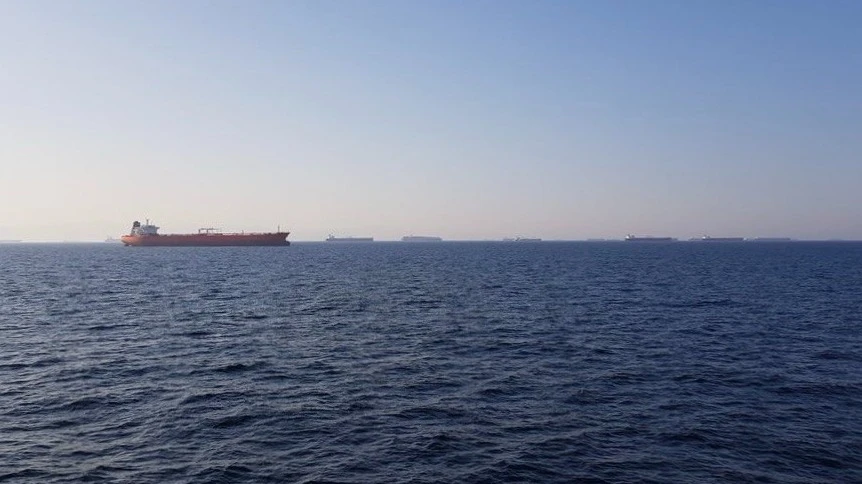
Photo: Shutterstock.com
After the U.S. and Israeli bombardment of Iran, oil and gas tankers are increasingly avoiding the Strait of Hormuz, which connects the Persian Gulf with the open sea, Bloomberg writes. Some ships, which were supposed to follow the route on February 28, are keeping outside this waterway; others - who have already started the crossing - have turned back, the agency points out.
What's happening at the Strait of Hormuz
Ships that are approaching the Strait of Hormuz, receive a signal from representatives of the Iranian Revolutionary Guard, "prohibiting passage through the strait," an employee of the EU naval mission "Aspides" (this mission was created to protect shipping in the Red Sea from attacks by the Houthis) told Reuters. Bloomberg also reports that the ships heard a corresponding radio broadcast, which, presumably, came from the Iranian Navy.
Iran's Tasnim news agency later reported that the passage is now "practically" closed, with the Islamic Revolutionary Guard Corps warning ships that it is unsafe to travel through the Strait of Hormuz.
Iran has not officially confirmed the existence of an order to close shipping through the strait, said the Bloomberg interlocutor. Earlier, ship owners and U.S. captains were warned to keep a distance of 30 nautical miles (about 55 kilometers) from military facilities in the Middle East, the agency points out. Against this background, Japanese giant Nippon Yusen KK instructed its fleet not to pass the Strait of Hormuz, and Greece urged its merchant ships to reconsider routes. One of the shipowners told Bloomberg that he interpreted the U.S. recommendation as a de facto closure of the waterway.
As a result, according to tracking data cited by Bloomberg, some tankers turned around before passing the Strait of Hormuz. Another agency source familiar with the situation said that at least one shipowner decided not to send a tanker through the crossing.
However, some ships do continue to pass through the strait, Bloomberg writes - tracking data shows that at least seven ships have been seen leaving the Strait of Hormuz since the warnings were announced, while six have been seen entering.
What is the restriction of navigation in the Strait of Hormuz?
Tehran has threatened for years to block the Hormuz crossing in response to any attack, but has never fully carried out its threats or blocked the waterway entirely. The strait in question is the world's most important oil export route, connecting major Persian Gulf producers such as Saudi Arabia, Iran, Iraq and the United Arab Emirates to the Gulf of Oman and the Arabian Sea. One-fifth - 25% - of the world's daily marine supply of oil and liquefied natural gas passes through the Strait of Hormuz.
Even a small restriction of shipping through the strait could lead to a 50 percent drop in tanker traffic, Bridget Paine, head of energy forecasting at Oxford Economics, explained in a conversation with The Wall Street Journal. Such a situation could raise oil prices to $84 per barrel, she noted, emphasizing that a complete shutdown of transit through the crossing for a week could lead to a jump in oil prices to $140 per barrel.
What could be affected by ships bypassing the Strait of Hormuz
The drop in cargo traffic through the Strait of Hormuz is the first sign of disruptions in commodity markets caused by the U.S. decision to attack Iran, Bloomberg notes, emphasizing, however, that it is still unclear how long the escalation of the conflict will last.
On Monday, March 2, after the opening of markets, traders are likely to buy oil, which will lead to higher prices, Bloomberg pointed out. But how long this trend will last will depend on the events of the next 24 hours, the agency noted. At the close of trading on Friday, February 27, prices for oil Mark Brent exceeded $73 per barrel.
This article was AI-translated and verified by a human editor