Goldman Sachs and UBS have raised their oil price forecasts. Why could it reach $100?
On Wednesday, Brent and WTI crude oil prices pulled back slightly from the highs reached on Tuesday

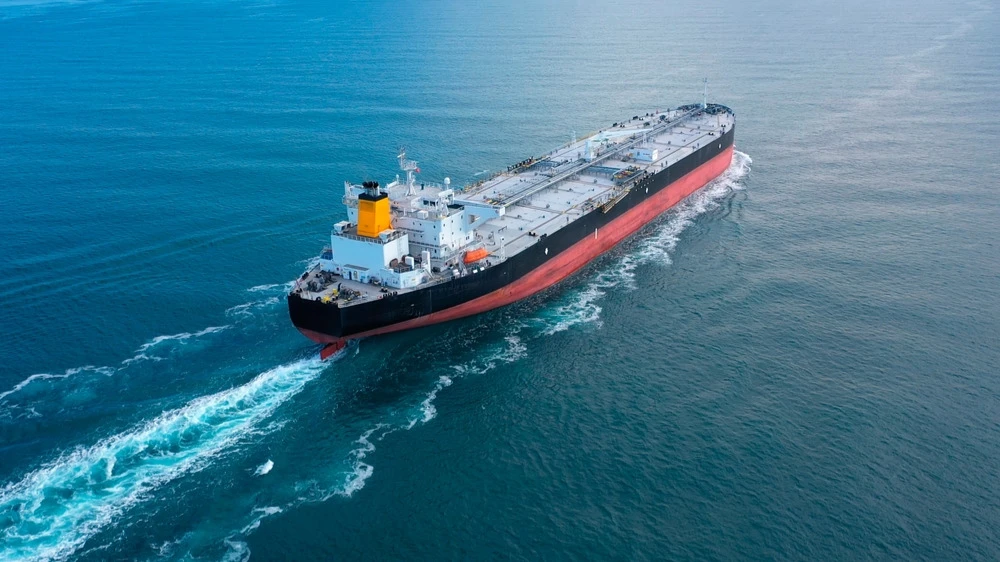
Because of the blockage of the Strait of Hormuz, the price of Brent crude oil could rise to 100 per barrel, analysts say / Photo: Faraways / Shutterstock.com
Goldman Sachs forecasts that due to Iran's blockage of the Strait of Hormuz, the price of Brent oil could rise to 100 per barrel. The bank also increased its forecast for the average Brent price in the second quarter of the year by $10. And UBS raised expectations for the average price of Brent in the first quarter and for the year as a whole. The banks revised their expectations of the market on the fifth day of the Israeli and U.S. bombing of Iran, as oil prices slowed their rally.
Goldman Forecast
If the volume of oil supplies through the Strait of Hormuz remain at the current level for another five weeks, the price of Brent could rise to $100 per barrel, according to analysts at Goldman Sachs, led by co-head of global commodity markets research Daan Struyven, writes MarketWatch. The bank's strategists wrote that an oil price at $100 would have prevented stocks in the Organization for Economic Cooperation and Development (OECD, which includes 38 countries, including the U.S., Canada, European countries, Japan, South Korea and Australia) from falling to "critically low levels," which they define as about 2.6 million barrels. This is the lowest commercial oil reserves reached in 2022, the publication notes.
"Price increases may be even more non-linear as the duration of outages increases than our estimates suggest, as longer supply disruptions may increase the time required between restarting operations and production reaching full capacity," the note said.
Goldman Sachs raised its forecast for the average price of Brent in the second quarter by $10 to $76 per barrel, and for West Texas Intermediate by $9 to $71. The bank also revised its forecasts for the fourth quarter of 2026 to $66 per barrel for Brent and $62 for WTI, and for 2027 to $70 and $66, respectively. Goldman also noted the likelihood of lower prices in case of a faster recovery of oil flows through the Strait of Hormuz, emphasizes Reuters.
UBS forecast
UBS expects Brent to average $71 a barrel in the first quarter, implying a level around $80 in March, and to average $72 a barrel for 2026. This is $10 higher than the previous forecast, writes Reuters. At the same time, the investment bank has not yet changed estimates for the following years: $70 per barrel in 2027 and $75 in 2028, the agency notes. However, according to the bank, the risks to these forecasts are shifted upward.
UBS notes that strikes on energy infrastructure in the Middle East, such as LNG export facilities in Qatar, could push the Brent price above $90 a barrel, while a prolonged closure of the Strait of Hormuz could push prices above $100.
While short-term de-escalation may remove some of the geopolitical premium from prices, the bank believes it is unlikely that quotes will return to the near $60 per barrel levels seen in early 2026.
What about the prices
At the time of publication of this text, Brent crude was trading at around $81.6 per barrel - adding around 0.3%. The US West Texas Intermediate crude oil cost about $73.9 per barrel.
A day earlier, Brent exceeded $85 a barrel for the first time since July 2024.
Can oil get to $120 a barrel?
On Monday, JPMorgan said that the price of Brent could rise to $120 per barrel. This forecast was made even before an Iranian drone attacked the Ras Tanura refinery in Saudi Arabia. The facility was struck again on Wednesday, MarketWatch notes.
"According to our estimates, if the conflict lasts for more than three weeks, oil producers in the Gulf will exhaust storage capacity and will be forced to stop production. In such a scenario, Brent could trade in the $100-$120 range. Given the uncertainty of the timing of developments, we are not changing our current price forecast," JPMorgan strategists wrote.
This article was AI-translated and verified by a human editor