Transit Demand and the “New Normal”: How Air Astana Turned a Profit This Quarter

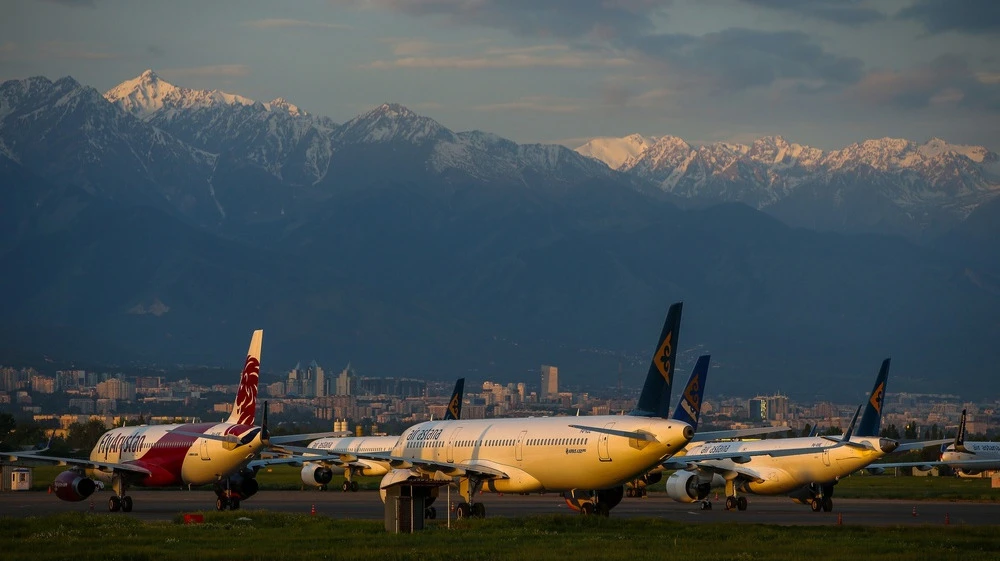
To achieve its targets, Air Astana needs to continue its upward trajectory. Photo: Pavel Mikheyev/Shutterstock.com
Air Astana reported a net profit of $18.5 million in the third quarter of 2026, following a loss of $0.1 million in the second quarter and a loss of $21.1 million in the first quarter. The company has increased its carrying capacity, expanded its international route network, and is gradually resuming flight operations. The results are still weaker than last year’s, and the nine-month total remains negative, but Air Astana’s management states that its previous commitments remain in effect.
Positive result
The group's revenue and other income for July–September totaled $529.1 million, compared with $433 million in the previous quarter. Growth compared with the same period last year was 20.6%—also an increase from the previous quarter (18.3%).
Earnings before interest, taxes, depreciation, amortization, and lease payments (EBITDAR) rose from $93.6 million to $105.6 million compared with the second quarter. Compared to the third quarter of last year, growth was only 0.4%—but this represents an improvement following a 3.7% decline in the second quarter.
At the same time, the growth in absolute profit and revenue did not signal a return to previous profitability levels: the relative EBITDAR margin declined again—from 21.6% to 20%.
One of the factors contributing to this improvement is an increase in available capacity. Available passenger-kilometers (APK), that is, the number of available seats on completed flights, adjusted for flight distance, rose by 4% year-over-year in the third quarter to 7.07 billion—whereas in the second quarter, the figure had declined by 0.2%. Passenger traffic in July–September also increased by 0.9%, to 3.05 million passengers, following a 1.7% decline in the second quarter. The seat load factor rose from 81.6% to 83.4%.
The company attributes the revenue growth primarily to the reallocation of capacity to more profitable international routes. In the third quarter, capacity on routes to China increased by 99% compared to last year, and to India by 23%. International transit passenger traffic through Kazakhstan increased by 75%, which, according to Air Astana, demonstrates the “countercyclical nature of the airline’s operations under the ‘new normal.’” In 2026, the company launched 24 new routes. ““Despite ongoing instability in the Persian Gulf region, the flexibility of both airlines’ route networks has allowed us to capitalize on the growing demand for transit travel between the East and West via Kazakhstan and to continue expanding our international route network,” according to a press release from Air Astana.
The improvement in the performance of FlyArystan, a discount retailer that is part of the group, was particularly notable. Its EBITDAR in the third quarter increased by 33.9% year-over-year, and its EBITDAR margin rose by 3.1 percentage points.
<b>Profit growth is still insufficient</b>
Despite returning to profitability, the financial results for the third quarter are still worse than those for the comparable period in 2025. At that time, Air Astana posted a net profit of $20.6 million—10.3% more than it did this time. The EBITDAR margin was 24%, which is 4 percentage points higher. The passenger load factor was 85%
compared to the current 83.4%.
From January through September, the group generated $1.29 billion in revenue and other income, up 17.9% from the previous year. However, EBITDAR for this period fell by 5.7% to $247.3 million, and the EBITDAR margin declined from 23.9% to 19.1%. In total, the group carried 7.44 million passengers over the nine-month period, down 1.1% from last year.
In the third quarter, revenue per passenger-kilometer increased 16% year-over-year to 7.48 cents, while expenses rose 20% to 6.95 cents. The positive margin was 0.53 cents, compared with 0.66 cents a year earlier. However, the margin was 0.49 cents in the previous quarter, so the trend is positive.
The nine-month result so far remains a net loss of $2.7 million, compared with a profit of $31.2 million a year earlier. During a conference call regarding the release of the financial results, the group’s CFO, Gonçalo Pires, acknowledged that the targeted profitability level had not been achieved and attributed the further recovery of margins to increased utilization of the fleet.
<b>Engine Problems and Fuel Costs</b>
One of the key issues is defects in the Pratt & Whitney engines installed on Airbus A320neo aircraft. Their discovery in 2023 necessitated accelerated
inspections and unscheduled repairs, affecting airlines around the world. According to Air Astana, in early 2026, the average downtime for faulty engines was 18 months. During a conference call, Air Astana CEO Ibrahim Zhanlyel reported that lengthy negotiations with Pratt & Whitney had concluded with an agreement to expedite engine deliveries and replacements. In the third quarter, aircraft downtime due to engine issues decreased by 60% compared to last year.
In August, Freedom Finance analyst Daniyar Orazbaev cited the improvement in the engine situation as the main positive factor in Air Astana’s valuation: The company has tripled the number of available maintenance slots for 2026, and in the first half of the year, it contracted for an additional 11 spare engines, bringing its reserve to 26. It has now
has confirmed its expectation that the rate of engine deliveries will more than triple in 2026 compared to 2025 and intends to completely eliminate aircraft downtime due to this issue during the peak summer season of 2027.
A second factor putting pressure on financial performance is jet fuel prices. According to Air Astana, the average price at international airports in the third quarter was 47% higher than last year. Over the quarter, the company was able to increase the share of refueling in Kazakhstan to 75%, up from 71% a year ago. During the conference call, the company also announced the purchase of additional fuel volumes. However, Ibrahim Zhanlyel also acknowledged that, as a result, the company incurred additional expenses due to the strengthening of the tenge.
<b>The forecasts remain in effect</b>
Air Astana’s medium-term financial targets remain unchanged. The company expects to increase its EBITDAR margin to a “mid-to-high 20% range” over the medium term, maintain a liquidity ratio above 25%, a net debt-to-EBITDAR ratio below 3, and a seat load factor of 80–85%.
As of the end of September, the key balance sheet ratios, with the exception of profitability, remained within the limits set by the group: the liquidity ratio was 31%, and the net debt-to-EBITDAR ratio was 1.9.
The company expects to continue improving its performance, primarily through growth in international traffic. Since the end of September, Air Astana has expanded its fleet from 63 to 65 aircraft. By the end of 2030, the group plans to expand it to 86 aircraft, including three Boeing 787-9 Dreamliners, which are set to replace the Boeing 767s. In October, Air Astana signed a strategic partnership agreement with China Southern Airlines: the carriers intend to coordinate schedules, expand code-sharing, and conduct joint marketing campaigns.
"Judging by the pace of profit recovery over the past two quarters, the company will likely end the current year in the black," according to a commentary by Halyk Finance.
At the close of trading on November 12, 2026, Air Astana shares on the KASE rose 0.29% to 669.52 tenge ($1.51 at the current exchange rate of the National Bank of Kazakhstan). On the AIX, by 7:30 p.m. Astana time, they had fallen 1.62% to 667 tenge ($1.50). On the LSE, the company’s depositary receipts were trading at $6.
This article was AI-translated and verified by a human editor