'The Don has fallen': Michael Burry on what's next for Nvidia
The famed short seller is urging Nvidia shareholders to use what he expects will be strong earnings as a chance to sell

Burry says Nvidia’s real problems are still ahead / Photo: Mariia Berezovsky / Unsplash.com
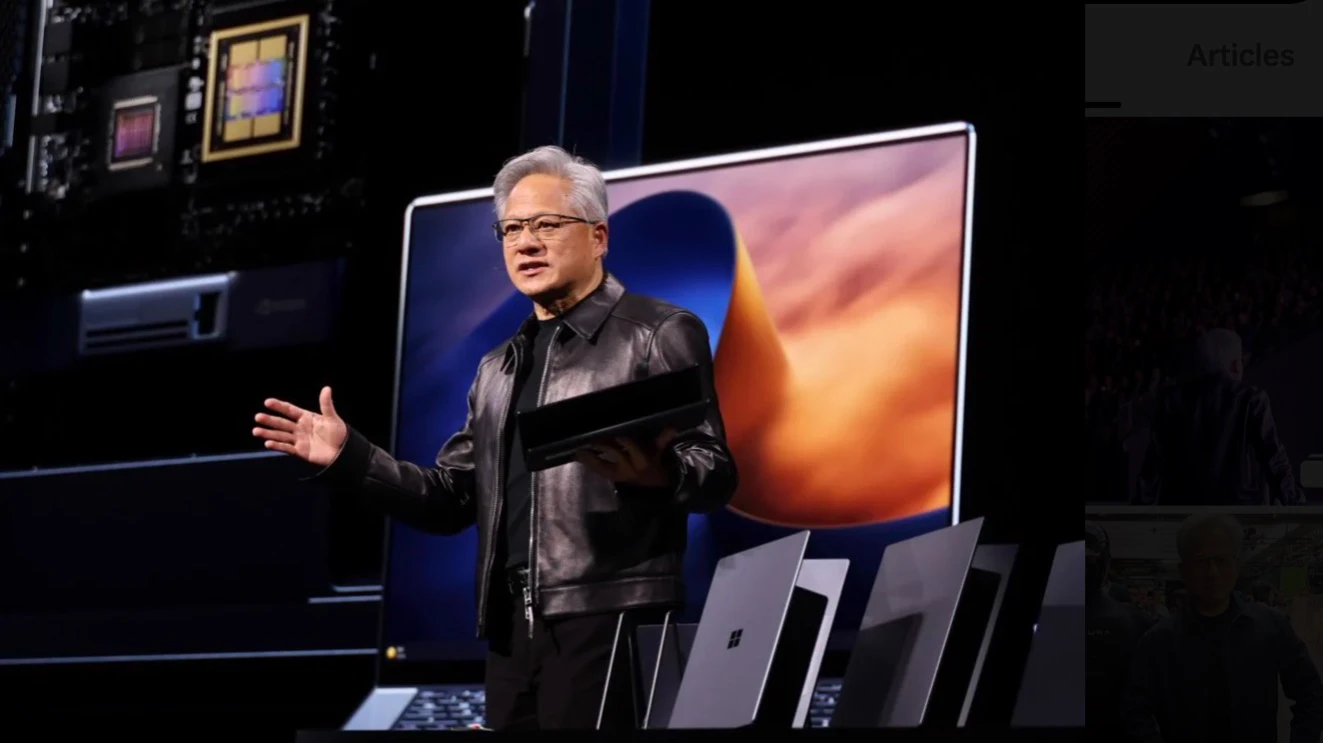
“The Don has fallen,” short seller Michael Burry writes in a new blog post, warning that Nvidia could pay the price for relying too heavily on CEO Jensen Huang. Huang kept tight control of the company and delegated little, which leaves Burry to wonder whether anyone else at Nvidia knows the business in its entirety.
I do not see Colette (Nvidia CFO Colette Kress) or any new CEO replacing the Don seamlessly. The Don was the Enforcer. NVIDIA is losing both.
For Nvidia, the fallout from Huang’s departure could go well beyond the loss of its CEO. Burry says Nvidia owed its success both to its cutting-edge technology and to the sales and financing arrangements Huang built to sustain rapid growth and high margins. Those arrangements could unravel now that Huang is gone. Burry expects a strong quarterly report next week to give Nvidia shareholders another chance to sell, and he urges them to take it.
A house of cards
Burry takes aim at Nvidia’s circular financing. He says the company bought $42.4 billion in equity securities in the first half of this year alone. At that pace, Burry calculates, Nvidia is effectively putting about 30 cents of every dollar in revenue back into the AI infrastructure buildout.
Nvidia’s own money is only one source of funding for purchases of its chips, Burry explains. Those purchases also rely on a network involving some of the biggest names in finance, including Apollo, BlackRock, Blackstone, KKR, Brookfield, Morgan Stanley, and Goldman Sachs. The money comes from pension funds, insurers, sovereign wealth funds, and even household savings. The financing is structured to keep the purchase obligations off balance sheets.
There is tremendous leverage through the system – I have found upwards of 76 times. The Don orchestrated all of it. But now the Don is gone, and the Board in crisis will look to rein in risk. The threat for NVIDIA and its AI ecosystem is that the cash may cease to flow. New investments will be more tentative, if at all. There may even be write-offs.
Pressure on customers to buy chips
Burry also alleges that Nvidia is artificially boosting sales. At a minimum, he says, the company pressures customers to buy chips they cannot yet use by threatening to cut their future allocations. The chips then sit in warehouses, where they are booked as construction in progress and do not depreciate for accounting purposes.
The Don's fall gives customers cover to slow down deals, push back, renegotiate terms, or simply walk to a competitor without fear of offending an NVIDIA Alpha. Customers will be free to operate in their own interest.
If Nvidia keeps trying to dictate terms to customers, it could invite antitrust scrutiny and complicate the board’s efforts to manage the crisis, Burry reckons. The U.S. Justice Department is already investigating the company.
The price of absolute power
Another risk Burry sees for Nvidia is a possible congressional investigation. Lawmakers could scrutinize Megaspeed’s purchase of Nvidia chips just weeks before U.S. export controls took effect. Burry finds the timing suspicious.
Megaspeed employed Jensen's mistress even as Jensen was palling around with Trump. If there is evidence here, it will not stay hidden. Nor will the absence of evidence prevent headlines and allegations. And as it turns out, this seems to be the way key-man risk manifests in this day and age.
Burry expects the episode to prompt boards across the U.S. to pay closer attention to the risks of concentrating too much power in one executive.
Time to exit
Burry expects Nvidia’s business to endure, though growth could slow and margins could shrink. The main problem, he argues, is that Nvidia releases new chips faster than its customers can build the data centers to run them. So far, Nvidia has been able to sustain sales through circular financing, forced purchases, and pressure on customers. If Nvidia loses those tools, Burry warns, the gap between how much it sells and how much its customers are ready to use will become apparent, to the company’s detriment.
The terms of trade and the architecture of financing were the secret sauce that supercharged an already-dominant technology. Yet those terms and that architecture are what I and a few others have been saying is the real problem here. Without all that, the company, with its software and hardware two-headed dragon, would be relatively fortified against a CEO’s transgressions.
Even so, Burry expects strong quarterly results when Nvidia reports on November 17. Its fiscal-2027 third-quarter quarter is already in the books, and the old sales and financing arrangements were still in place throughout the period. Burry says it will take time for those arrangements to start unraveling.