Truce or escalation: four actions under two scenarios for US-Iran talks

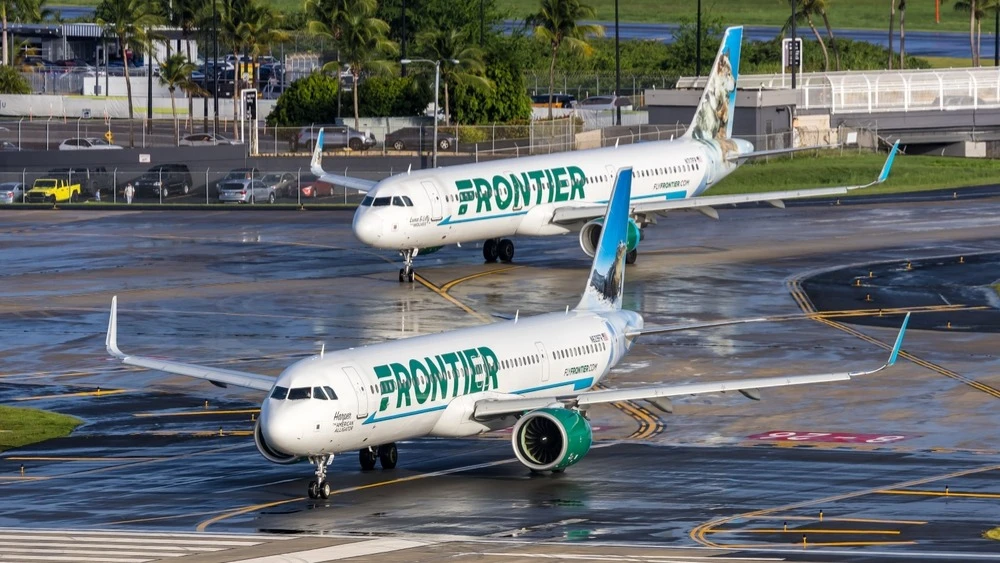
Frontier's high fuel share of costs makes profits sensitive to kerosene price fluctuations: lower prices quickly improve its margins / Photo: Markus Mainka / Shutterstock.com
Since the beginning of the year, the Russell 2000 Index, a benchmark for small and mid-cap companies, has gained nearly 11.5% - despite a drawdown in March, when it lost more than 10% from its January peak. This volatility is also due to the scale of the conflict in the Middle East and its impact on commodity flows. The closure of the Strait of Hormuz was the trigger that pushed Brent to $120 per barrel, and small-cap companies are particularly sensitive to fuel costs and consumer sentiment.
Negotiations in Islamabad on April 11-12 ended inconclusively, and US President Donald Trump announced the introduction of a naval blockade of Iran from April 13. Nevertheless, the market almost immediately began to reassess the risks. If by mid-April investors were still betting on the imminent resumption of negotiations and the opening of the Omurz Strait, now the second round of talks remains in doubt. On Tuesday, April 21, Trump extended the two-week ceasefire: Iran refused to participate in new meetings and the talks stalled. On the social network Truth Social, Trump wrote that the government in Tehran is "seriously divided" without outlining a new deadline.
Against this background, the geopolitical premium of oil does not disappear and Brent is still trading around $100 per barrel. The situation is still fluid, and further market dynamics is actually reduced to a fork of two scenarios: we described them and selected four companies that can win depending on the development of the conflict in the Middle East.
Stabilization scenario: betting on demand recovery
If the parties reach an agreement and traffic through the Strait of Hormuz starts to recover steadily, the result will be a rather brisk correction. Brent oil in such a scenario may well fall back to the range of $80-90 per barrel. Further - more: as the geopolitical premium decreases, quotations may shift to the more familiar $60-70 by the end of the year. Stocks that sagged on the fuel shock will get an impetus to recover. Ultra-budget airlines and cargo carriers look like the "cleanest" beneficiaries here. It is they who lost the most due to the jump in diesel and kerosene prices.
Frontier Group Holdings (ULCC)
Ultra low-cost carrier with a fleet of 176 Airbus aircraft. In the fourth quarter of 2025, the company's revenue was nearly flat year-over-year (minus 0.5%) at $997 million, while net income declined 1.9% to $53 million ($0.23 per share). At the same time, compared to the third quarter of 2025, revenue grew by 12.5%, in addition, the company moved to profit against a net loss of $77 million in the third quarter.
Frontier is one of the most fuel-efficient airlines in the U.S., so lower kerosene prices are rapidly improving its margins. At the same time, the high share of fuel in costs makes the business sensitive to price fluctuations. The average price of jet fuel in the U.S. is still at high levels, $3.87 per gallon, according to the Argus US Jet Fuel Index as of April 20. By comparison, before the war began, on Feb. 27, it was $2.5, .
Between February 27 (the last trading day before the conflict began) and March 18 (the point of maximum drawdown in the stock), Frontier Group securities fell about 30% to $3.1 and rose to $4.7 by April 20. According to MarketWatch, nine Wall Street analysts advise holding Frontier shares, three advise selling. The average target of $4.4 is nearly 5% higher than their current value.
Covenant Logistics (CVLG)
A freight carrier specializing in forwarded and dedicated transportation, as well as warehouse logistics. In the fourth quarter of 2025, Covenant Logistics' revenue increased by 6.5% year-on-year to $295.4 mln. Adjusted net income decreased by 41% to $8 mln. The company is trying to diversify its business towards less cyclical segments (dedicated contracts, warehouse logistics), which reduces dependence on spot rates.
From February 27 to March 15, Covenant Logistics shares lost about 16% of their value - on the back of the diesel surge - but started to recover afterwards. Since the beginning of the year their value has grown almost 42%. Analysts at Stephens & Co. in early February maintained an "above market" recommendation for the company's securities with a target price of $30, since then they have risen almost 10%. According to MarketWatch, three analysts advise to buy the company's shares, one - to hold. The average target of $31.7 almost corresponds to the current share price.
Conflict Escalation Scenario: Metals as Protective Assets
If negotiations break down and the sea blockade drags on, sending oil over the $100 mark, investors will have to urgently switch to "defensive" scenarios. Traditionally, in such moments everyone looks at gold, but in the current conflict, aluminum also creates an interesting opportunity. The March 28 strikes on the facilities of the giants EGA (UAE) and Alba (Bahrain) actually "turned off" about 3.2 million tons of annual production from the global system. This is almost half of the entire output of the Middle East.
The market reaction was immediate: the price of aluminum on the LME (London Metal Exchange) broke through a four-year high, flying above $3,500 per ton. The situation is becoming critical for the U.S., where imports cover 85% of all aluminum needs, needed everywhere from aircraft construction to the production of soda cans.
Kaiser Aluminum (KALU)
A processor of high value-added aluminum products for the aircraft, packaging and auto industries. So it's not a direct bet on rising exchange-traded aluminum prices, but the company could benefit from regional metal shortages and rising premiums in the North American market if supply disruptions strengthen demand for domestic refining and support profitability.
For 2025, Kaiser Aluminum's revenue grew 12% year-over-year to $3.37 billion, with net income rising to $113 million from $66 million a year earlier. The company also reported record EBITDA of $310 million, more than 28% ahead of 2024. In the current year, management expects revenue growth of 5-10% and EBITDA growth of 5-15% for the core refining business.
Over the past 12 months, the company's quotes have soared 160%, and since the beginning of the year, they have risen by almost 33.5%. Currently, Kaiser Aluminum shares are advised to hold by two analysts, and to buy by one. The average target price is $143.7, about 6% less than their current value.
Hecla Mining (HL)
Calls itself the largest silver producer and leading producer of critical minerals in the U.S. with assets in Idaho, Alaska and Canada. At year-end 2025, Hecla Mining's revenue grew 53% year-over-year to $1.42 billion, while net income soared 811% to $321 million.
The company's debt burden demonstrates a strong downward trend: the net debt/EBITDA ratio decreased from 0.7x to 0.3x. Operating results for the fourth quarter of 2025 also confirm the positive trend: silver production increased by 2% quarter-on-quarter to 4.6 million ounces. At the same time, the average realized price of silver soared 45% year-on-year and gold 39%. On the back of such strong results, the company's capitalization has increased by more than 200% over the last 12 months.
An important nuance: during the current conflict precious metals behaved atypically - in the moments of panic sell-offs they fell together with the market due to investors' search for liquidity. However, in the conditions of prolonged inflation and a weak dollar, gold and silver have historically won. In this context, Hecla Mining provides investors with strong operating leverage due to low production costs at its key Greens Creek and Lucky Friday deposits.
Six Wall Street analysts now advise to hold Hecla Mining shares, three advise to buy, one advises to sell. The average target is $25.8, with a potential upside of almost 42.5% to the closing price on April 21.
What is important for an investor
In both scenarios, oil prices and the general level of geopolitical tension remain the determining factors. There is a clear inverse correlation here: companies benefiting from de-escalation will inevitably come under pressure if the conflict continues - and vice versa.
For an investor with a moderate risk appetite, a rational strategy would be to form positions from both "baskets" to effectively hedge uncertainty. Now the market is extremely sensitive to the news background and literally lives in expectation of the next headline. In this situation, it is important to remember that small-cap securities are very volatile by nature, and geopolitical triggers can reverse their dynamics in a matter of hours.
Does not constitute individualized investment advice.
