Trump signed new executive orders restricting the right to citizenship by birth
The U.S. President Persists Despite the Setback in the Supreme Court

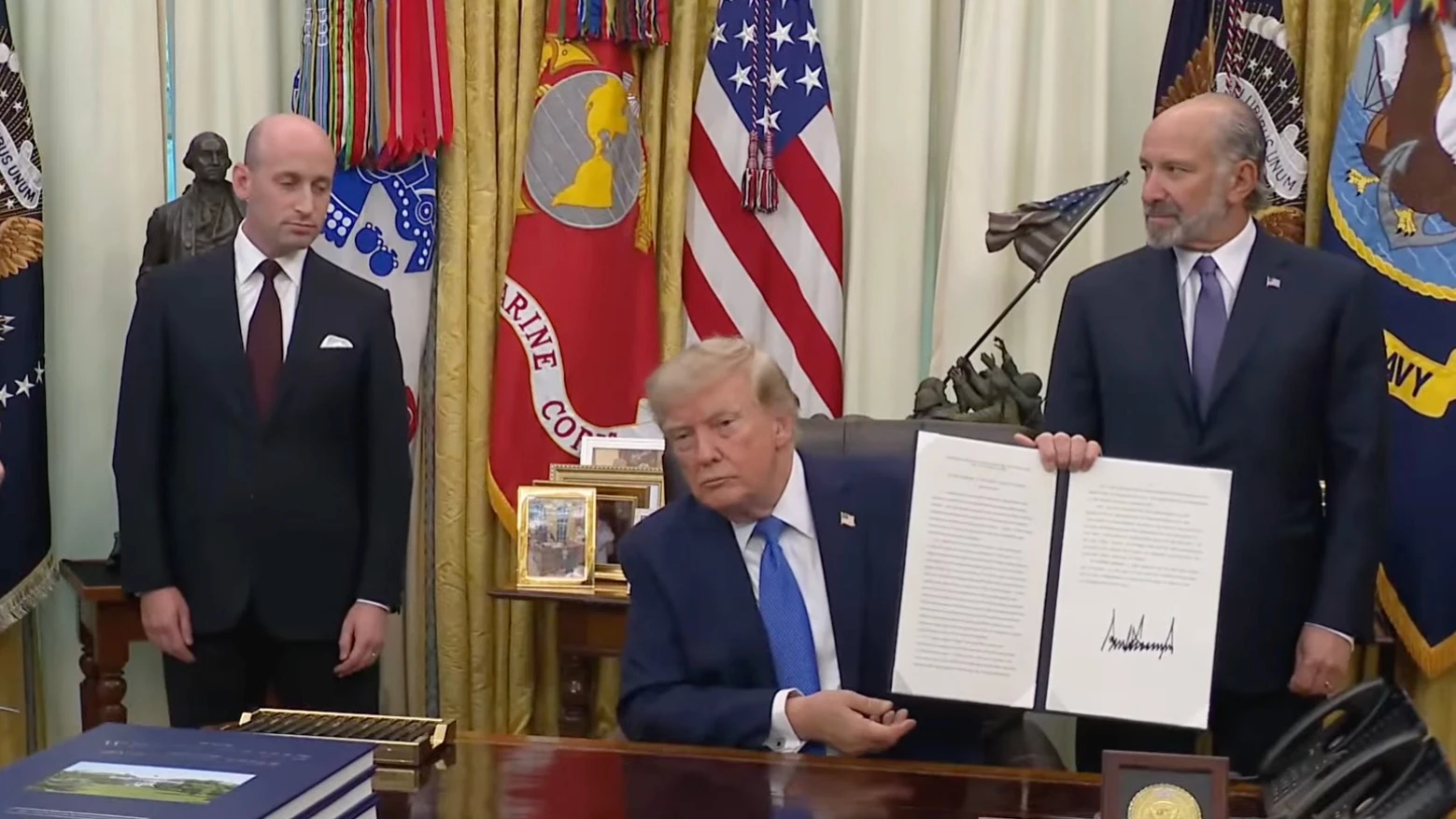
Donald Trump signed executive orders on the right to citizenship on August 6 / Photo: YouTube/The White House
U.S. President Donald Trump has signed two executive orders aimed at restricting the right to U.S. citizenship by birth, according to a statement on the White House website. This is his second attempt to limit the automatic granting of citizenship to children born on U.S. soil, after the U.S. Supreme Court blocked his previous effort in June.
Details
The first executive order expands the categories of children of foreign nationals who are ineligible for citizenship by birth on U.S. soil. The White House stated that the Trump administration took into account the “historical exceptions” established by the Supreme Court.
The second executive order delegates presidential powers to the Secretary of State and the Secretary of Homeland Security and directs them to put an end to “birth tourism.” Specifically, mothers who attempt to enter the country solely to give birth there may be denied visas, barred from entry, or deported upon arrival, Bloomberg explained.
Bloomberg and The Wall Street Journal speculated that Trump's new executive orders are also likely to be challenged in court.
Context
On the day of his inauguration, January 20, 2025, Trump signed an executive order revoking the right to citizenship by birth for the children of those who were living in the country illegally or visiting on temporary visas. This executive order was quickly blocked by lower courts, and on June 30, 2026, the Supreme Court, by a vote of six to three, ruled that it was unconstitutional. The Trump administration subsequently stated that the court’s decision left room to restrict the right to citizenship for certain categories of children and to implement measures to combat “birth tourism,” according to the WSJ.
In February, the Supreme Court similarly struck down most of the import tariffs that Trump had imposed after returning to the White House in 2025. By a vote of six to three, the court ruled that Trump had exceeded his authority.
This article was AI-translated and verified by a human editor