Trump thinks about seizing uranium, Iran's new leader, a 'nightmare' for the market: day 9 of the war

The ninth day of the war in the Middle East. The main thing about the current events - in this material.
Updated
- US President Donald Trump is considering deploying special forces to Iran to seize uranium suitable for weapons production, sources told Bloomberg. Depriving Iran of the ability to produce nuclear weapons was one of the stated goals of the military campaign. According to the agency's interlocutors, there is growing concern in the administration that Tehran may have moved uranium stockpiles from storage facilities known to the West. This, in particular, may be indicated by IAEA data - a few weeks before the war, its observers detected suspicious activity near Isfahan, one of Iran's key nuclear sites, which was subjected to U.S. airstrikes in June 2025.
That the US and Israel were discussing the possibility of sending special forces to Iran was previously reported by Axios, citing sources. Trump himself told reporters that the US needs a "very good reason" to send ground troops to Iran. According to him, if it comes to that, by then Iran should be so "defeated that it will not be able to fight on the ground."
- Vessel traffic through the Strait of Hormuz, critical to oil supplies, remains effectively suspended, with only one Iranian-linked bulk carrier leaving the Persian Gulf in the past 24 hours, with apparently no ships in the opposite direction, Bloomberg wrote, citing tanker tracking data.
- Saudi Arabia has increased oil supplies from the port of Yanbu on the Red Sea to a record level. According to Bloomberg, shipments from Yanbu reached about 2.3 million barrels per day in March - that's 50% more than usual. However, this is not enough to compensate for the decline in exports from Saudi oil terminals in the Persian Gulf - in recent months, 6 million barrels per day were exported from there, the agency writes.
- The worst-case scenario for the global energy market has not yet materialized, despite the rise in the cost of oil above $90, said Daniel Yergin, vice president of S&P Global.
"The nightmare scenario would be a war that drags on for a long time and supply disruptions that also last for a long time. Prices would skyrocket - $90 is high, but not sky-high - and this would have serious consequences for financial markets and ultimately lead to the world economy slipping into recession," he said.
- Bitcoin was cheaper by less than 0.5% on the evening of March 8, trading around $66,800.
- Iran has elected a new supreme leader to replace Ali Khamenei, who was killed in airstrikes on February 28, Bloomberg reports citing a report by the local Mehr news agency.
"The supreme leader has been determined," said Ahmad Alamolhodou, one of the members of the assembly of experts, a council of 88 clerics tasked with holding the election. Who has been chosen as Iran's new leader has not yet been disclosed. One of the favorites for the post was considered Ali Khamenei's son Mojtaba. Trump called him an unacceptable candidate for the US.
- Iran launched 17 missiles at the UAE on Sunday, 16 of which were intercepted and one fell into the sea, the Emirates' defense ministry said. Most of the Iranian drones were also intercepted, but four fell inside the country, the Associated Press reported.
According to the agency, a missile attack alert was sounded in Dubai on the morning of March 8. Authorities in the emirate reported an interception, but the driver, a Pakistani national, was killed when debris fell on the vehicle.
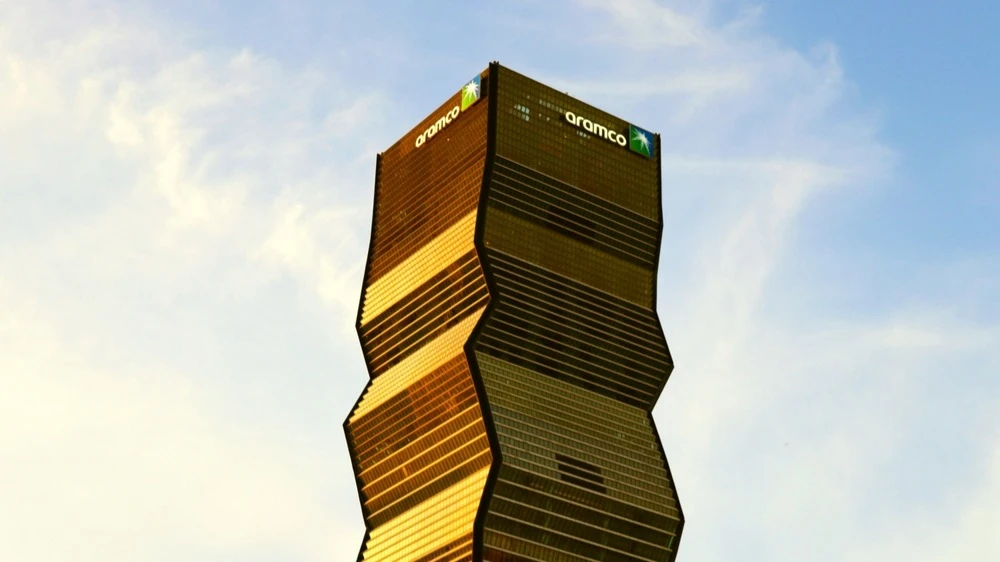
- Shares of oil giant Saudi Aramco rose 4.9 percent in early trading in Saudi Arabia on Sunday. This is the sharpest growth in three years, notes Bloomberg.
Traders are reacting to the rising cost of oil - Brent closed trading at $92.7 on Friday. Over the weekend, Kuwait and the UAE began cutting production, which is also expected to boost prices after the opening of trading on Monday.
- Bahrain says an Iranian drone attack caused "material damage" to a desalination plant. This is the first time an Arab country has accused Iran of targeting a desalination plant since the war began, AP notes. Gulf countries rely heavily on these plants for drinking water.
- Iran struck Kuwait's main airport overnight, the second time since the conflict began, KUNA news agency reported. Two fuel storage facilities were damaged. The building of the national pension fund was also attacked, where a fire broke out.
- Saudi Arabia has conveyed to Tehran that continued attacks on the kingdom could prompt Riyadh to retaliate, four sources told Reuters. They said Saudi Arabia warned that it would be forced to allow U.S. troops to use its bases in the country for military operations if Iran continued to shell its territory or critical energy infrastructure.
- Trump has said he has no interest in negotiating with Iran, sparking speculation that the war will only end when Tehran no longer has a functioning army and its leadership is completely eliminated, Reuters writes. "At some point, I think there will be no one left there to say, 'We surrender,'" Trump told reporters aboard Air Force One.
- China's top diplomat has sharply criticized U.S. military action in the Middle East. "This war should not have happened," Chinese Foreign Minister Wang Yi said. At the same time, he made it clear that Beijing prioritizes stabilizing relations with Washington. "When both sides treat each other sincerely and in good faith, 2026 can be a landmark year of healthy, stable and sustainable development of China-US relations," Bloomberg quoted him as saying.
- Polymarket founder and CEO Shane Coplan responded to criticism about the ethics of betting on military conflicts. He said prediction markets have practical value in real-world, high-risk situations. "When people from the Middle East write to me and say, 'We're checking Polymarket to decide whether to sleep next to a bomb shelter, we check it every day,' I think, 'Is it really that popular over there?"' - Coplan said. - It's very powerful. It's an undeniable value proposition that didn't exist before."
Iran-related bets contributed to a record volume of geopolitics contracts on Polymarket. According to data from users of the Dune Analytics platform, traders on Polymarket bet $425.4 million on geopolitical issues in the week ended March 1, compared to $163.9 million a week earlier.
This article was AI-translated and verified by a human editor