'Turning point': analysts warn of new energy shock over war
"We're moving from a supply chain problem to a potential supply problem itself - that's a big difference," Pickering Energy Partners said

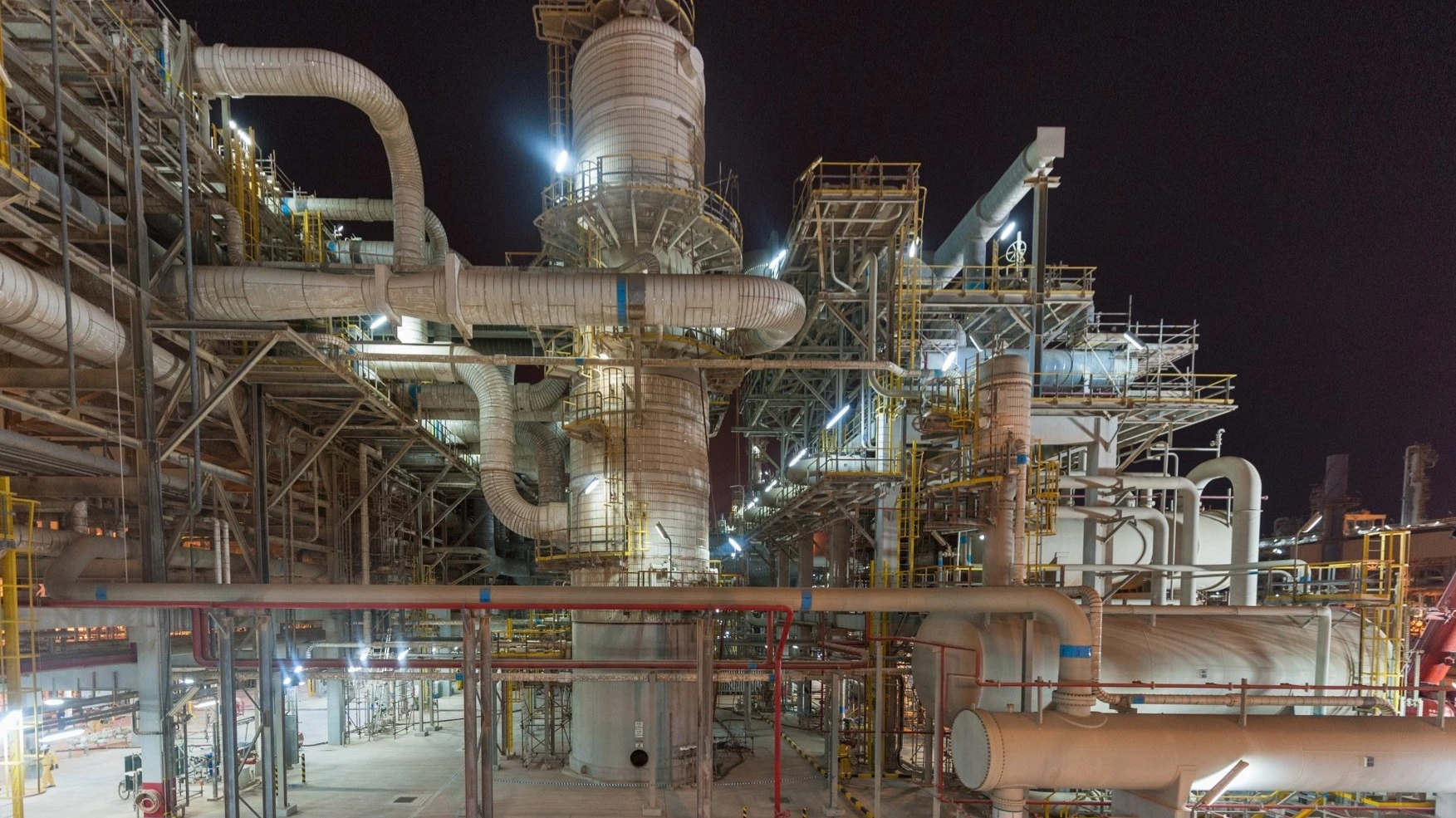
Analysts warn of a new shock to the oil and gas market after Iran's strikes on energy infrastructure in the Persian Gulf / Photo: Qatarenergylng.qa
European natural gas prices jumped by 35% at the moment on March 19, more than doubling the level before the war in the Middle East, Bloomberg writes. Such dynamics they demonstrated after Iranian missile strikes on Thursday damaged the world's largest liquefied natural gas export plant in Qatar. Analysts amid the escalation of the conflict warn of the risk of a prolonged shortage of energy resources and further growth of their prices. The market is preparing for a "protracted strike" on a key LNG hub, which provides about a fifth of the world's supplies, Bloomberg notes.
Details
Qatar is the world's second-largest LNG exporter after the U.S. - it accounts for nearly a fifth of global supply, according to Kpler, CNBC points out. And while there is no complete data yet on the extent of the damage and the timeline for the Qatari LNG plant's restoration, any prolonged supply disruption would reduce the global supply balance - keeping prices elevated around the world, Bloomberg writes, noting that the bulk of LNG from the Middle East is sent to Asian countries.
At the time of publication, the nearest gas contract at the Dutch Title Transfer Facility (TTF), the European benchmark for natural gas trading, was up 19% to €65 per megawatt hour, partially reversing earlier gains. Oil prices also hit an intraday high of $119 per barrel on March 19 (plus 10% from the last close), but then slowed slightly, with Brent trading at $112 per barrel at the time of publication. The oil market, among other things, is reacting to Iran's strike on Saudi Aramco's refinery.
What the analysts are saying
- "This could be a watershed moment for the LNG industry - comparable to the attack on Nord Stream or something even more serious. It's a sudden disruption, and there's no indication that [the LNG export plant] in Qatar will be able to restart anytime soon," Bloomberg quoted Susan Sakmar, a visiting assistant professor at the University of Houston Law Center, as saying .
- Markets could go into "all bets are off" mode if the conflict moves beyond the Persian Gulf and begins to affect energy infrastructure in other regions, such as Europe or the United States, warned Gulf Oil senior energy advisor Tom Kloza. His opinion is published by CNBC. "Can you imagine the world's reaction if [Iran] were to strike outside the Gulf - at a refinery in Rotterdam or a facility somewhere in the US? Then all bets would be off and [energy] prices [could] become truly apocalyptic," he said.
Such a scenario would mean a shift from localized geopolitical risk to a global supply shock, in which traditional pricing and risk assessment models would no longer work, the channel explains. In this environment, fears of large-scale disruptions in fuel refining and distribution could cause extreme volatility: oil and gas prices would rise sharply as traders would build worst-case scenarios into quotations.
- "We're moving from a supply chain problem to a potential problem with the supply itself. That's a big difference. Supply chain problems are fixed quickly. But if the very ability to produce - whether it's LNG or oil - starts to change and suddenly it becomes impossible to move the same volumes because those volumes just aren't there ... That's an escalation," CNBC quoted Dan Pickering, founder and chief investment officer of Pickering Energy Partners, as saying.
- "The war has clearly moved into a phase where energy infrastructure becomes a direct target. This is a new escalation and signals further upward pressure on energy prices in the coming days," Bloomberg quoted Arne Lohmann Rasmussen, chief analyst at A/S Global Risk Management, as saying.
- "The pressure around the Strait of Hormuz (through which up to 25% of the world's offshore oil supply and a significant volume of LNG passes in peacetime. - Oninvest note) means that [US] President [Donald Trump] cannot simply declare victory [in the war against Iran] and walk away, as that would not solve the underlying problem. Many of the options Trump has for increasing pressure on Iran will lead to even higher energy prices, including an attempt to seize Kharq Island or strikes on Iran's energy infrastructure," Bloomberg quoted Will Todman, senior fellow in the Middle East program at the Center for Strategic and International Studies, as saying.
- RBC Capital Markets estimates that the US may consider imposing a duty on oil exports or even banning them to curb the rise in energy prices caused by the war in the Middle East, the agency writes.
- In addition, traders told Bloomberg, citing S&P Global Energy's indicative prices, LNG prices in Asia in the second half of April and first half of June may jump above $26 per million British thermal units. That's above the levels spot prices reached in the week after the conflict in the Middle East began, Bloomberg notes. At the time of publication, LNG in Asia is trading within $20.
With the Qatar gas plant already shut down, the effect could be spread across the entire futures curve. Short-term gas contracts are already rising, but a prolonged downtime will increase pressure on prices in the summer, winter and probably next year, Bloomberg writes, citing traders.
- Gas prices in Europe may also rise significantly this winter, according to Bloomberg Intelligence. Gas quotations, according to the agency, can test the level of €90 per megawatt-hour, as Iran's strikes on the Ras Laffan complex in Qatar increase the risk of a long-term disruption in about 20% of global LNG supplies. By comparison, gas prices in Europe are now around €65, Bloomberg reports. Bloomberg Intelligence believes that "disruptions could last for months, even with rapid de-escalation of the conflict in the Middle East, which would tighten the global balance and increase competition with Asia amid low gas reserves in Europe".
This article was AI-translated and verified by a human editor