U.S. airlines are recording strong demand despite the war. Their stocks are rising
Contrary to rising jet fuel costs, Delta Air Lines, American Airlines, JetBlue and Frontier Airlines have all raised their revenue forecasts for the first quarter of 2026

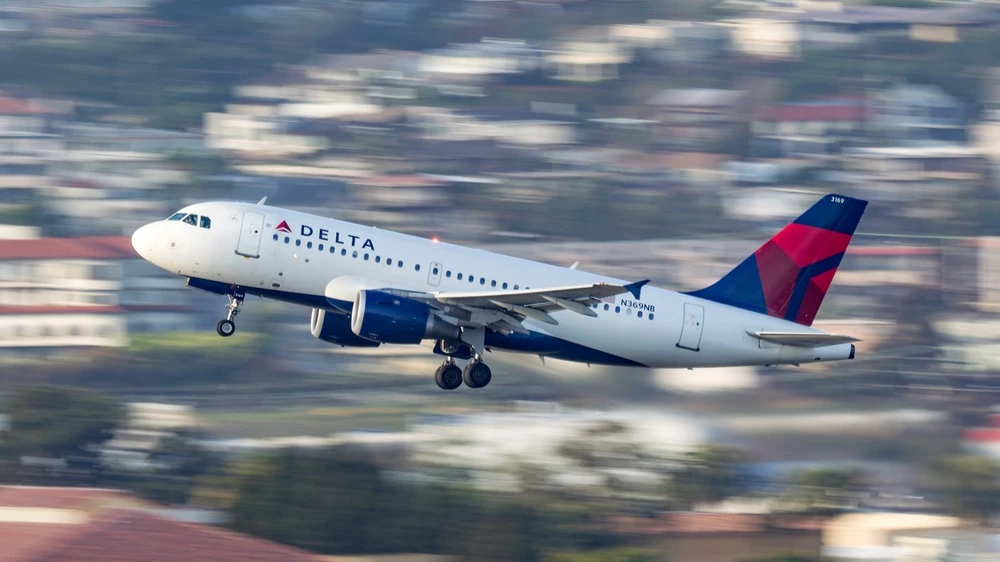
Despite the war in Iran, Delta captures demand growth and raises forecast / Photo: Ryan Fletcher / Shutterstock
Air carrier Delta Air Lines said that the conflict in the Middle East has not hit the demand for its air transportation, writes The Wall Street Journal (WSJ) - according to the airline, demand is now, on the contrary , "very, very high". The company raised its revenue forecast for the first quarter of 2026, which supported its shares - quotes of Delta in trading on March 17 jumped by 4.2%.
Other US airlines also raised their forecasts for the first three months of the year: their securities are also growing. In the first two weeks of March, the U.S. airline sector declined amid the escalating conflict in the Middle East before partially recovering on Monday, March 16.
Details
Delta Air Lines has raised its revenue outlook for the first quarter of 2026, citing strong demand for both business and leisure travel domestically and internationally. The company now expects revenue for the first three months of 2026 in the range of $15-15.3 billion versus $16 billion in the previous quarter. That's up 6.8-9% from $14.04 billion a year earlier, the company said in a presentation. Earlier Delta forecasted revenue growth of 5-7% in annualized terms.
"We're seeing growth in all the markets we track," the WSJ quoted CEO Ed Bastian as saying at the JPMorgan Industrials conference on March 17. "Revenue growth will offset not only [increased fuel costs amid the Iran war], but also the impact of a challenging winter season with severe storms. In aggregate, we expect to meet our original EPS guidance of $0.5 to $0.9," Bastian told CNBC.
Jet fuel prices, the CEO admitted, have "nearly doubled since the beginning of the year," noting a $400 million increase in this expense item in March alone, Reuters reports. However, the bulk of Delta's revenue comes from corporate customers and affluent clients who continue to travel extensively despite disruptions caused by military action in the Middle East, Bastian added. "This quarter, we recorded eight of our ten best sales days in our history, with five of those days occurring in the last two weeks of Ma. Despite the war, our revenue and bookings were up 25% year-on-year," he said.
However, last quarter's booking figures may be an understated basis for comparison, as airlines then faced lower demand amid concerns over U.S. President Donald Trump's duties, CNBC noted.
What other airlines have reported
American Airlines, JetBlue Airways and Frontier Airlines also raised their revenue forecasts for the first quarter of 2026 on March 17, according to documents they filed March 17 with the U.S. Securities and Exchange Commission. The companies said rising demand and revenue helped offset pressure from higher fuel prices. American Airlines, in particular, now expects total revenue for the current quarter to grow by more than 10% versus its previous forecast of 7-10%.
"American's revenue growth in the first quarter [will be] extremely strong, and we expect that momentum to continue throughout the year," CEO Robert Isom said at a JPMorgan conference on Tuesday, March 17. That said, American will face about $400 million in additional costs in the first quarter, including due to higher fuel costs, he acknowledged, CNBC writes. "With all the turbulence in the industry, we are doing everything we can to execute our plans regardless of the external environment," Iceom added.
Shares of American rose 2.8% in trading on March 17, Frontier Airlines added 2.6%, and JetBlue shares fell 1.2% after rising earlier in the session.
Context
Aviation fuel prices have risen by more than 50% since the escalation of conflict in the Middle East in late February, Reuters writes. This has increased costs in an industry where fuel costs are second only to personnel costs - and typically account for about 20-25% of operating expenses.
Jet fuel prices have recently fluctuated in the $150-200 per barrel range, compared to around $100 before the conflict. Disruptions in the key oil-producing region - the Middle East - and the closure of important sea routes have heightened supply concerns and increased volatility in the market, Reuters points out.
This article was AI-translated and verified by a human editor