Uber has struck a $1.25 billion deal with Rivian to create a fleet of unmanned robot cabs
Tesla competitor's stock rises

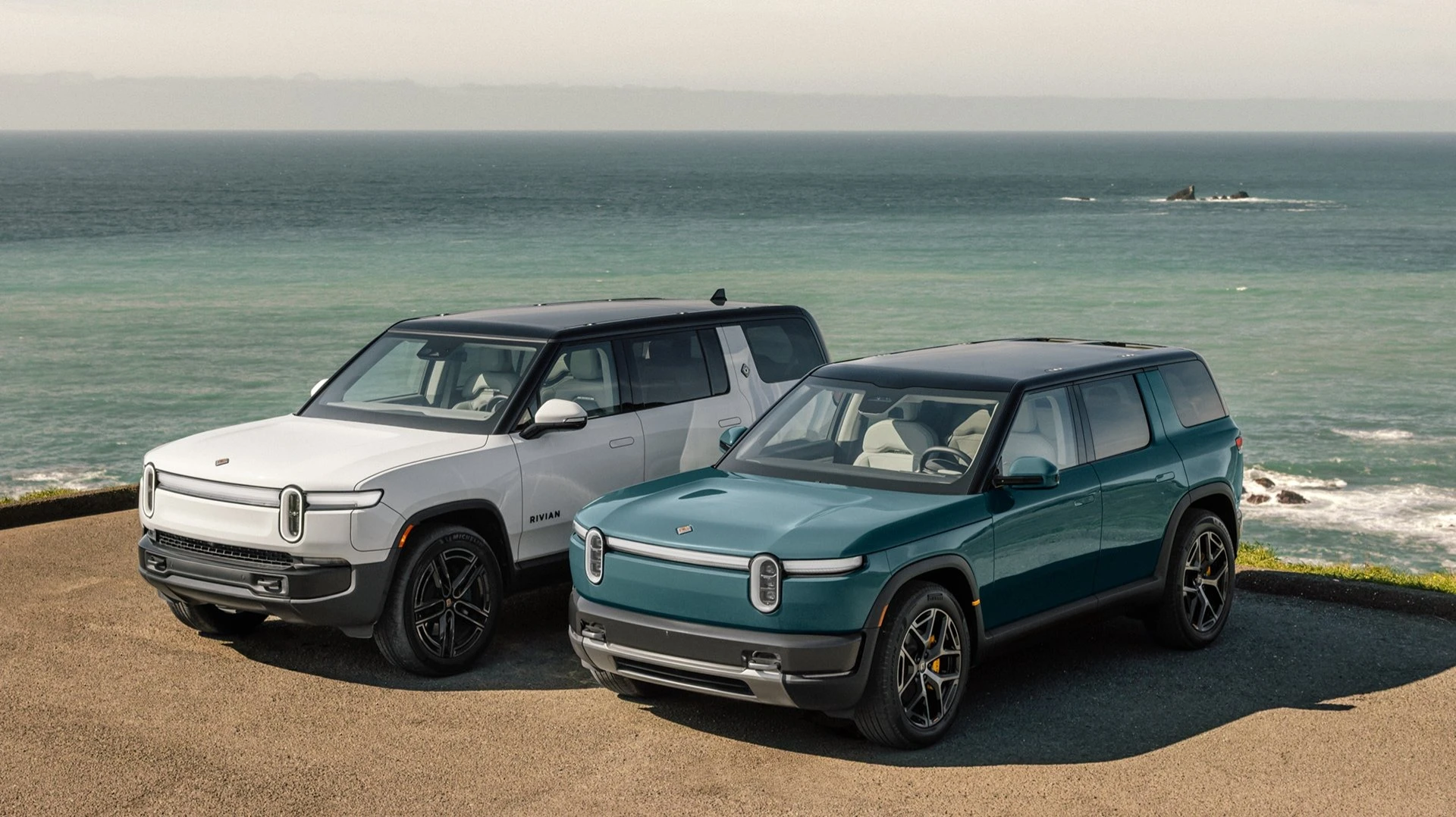
Uber and Rivian have entered into an agreement, up to 2031, worth up to $1.25 billion - the deal calls for Uber to create an entire fleet of autonomous cabs based on the new Rivian SUV / Photo: x.com / Rivian
Uber plans to invest up to $1.25 billion in Rivian Automotive as part of a partnership to deploy a fleet of autonomous robot cabs of up to 50,000 vehicles by 2031.
Details
Cab aggregator Uber and electric vehicle manufacturer Rivian have announced an agreement to create a large-scale fleet of autonomous electric vehicles based on Rivian's upcoming R2 SUV model, which will form the basis for Uber's robotaxi service in North America and Europe.
Uber's initial investment in Rivian will be $300 million, subject to regulatory approval, the companies said in a joint release. In total, Uber plans to invest up to $1.25 billion in Rivian through 2031 if the automaker succeeds in achieving the necessary milestones in developing an autonomous electric car. In addition, Uber will pay Rivian license fees for the use of the company's autonomous driving software.
In total, according to a statement from Uber and Rivian, Uber or its fleet partners plan to purchase 10,000 autonomous versions of the Rivian R2, with the option to increase the order by another 40,000 vehicles starting in 2030. The robotaxis will be available to users exclusively through the Uber platform.
The company's autonomous cab service is scheduled to launch in 2028 in 25 cities in the United States, Canada and Europe. The first markets will be San Francisco and Miami.
Uber CEO Dara Khosrowshahi said that the company relies on Rivian's vertically integrated approach that combines car development, software and autonomous driving platform. Rivian CEO R.J. Scaringe, in turn, noted that the development of AI and new semiconductors is accelerating progress in the development of autonomous driving systems, and the company's own technologies create a basis for scaling the robotaxi service.
At trading on March 19, Rivian's shares were growing by 10% at the moment, but at the time of publication they slowed down and are trading in plus against the previous close by a little more than 1%. Meanwhile, Uber shares are losing 1.67%.
Context
Developing a fully autonomous car would be a major technological leap for Rivian, which only last year introduced an autonomous driving system in its vehicles that requires close monitoring by the driver, notes the Wall Street Journal. Rivian went public in 2021 in what was then one of the largest IPOs in U.S. history. The company was seen as a potential competitor to Tesla, ahead of older automakers in launching full-size electric pickup trucks and SUVs.
Rivian recorded a net loss of $3.6 billion for 2025 and now, despite the decline of the electric vehicle market in the U.S., expects to achieve long-term profitability through strong sales of the R2, according to The Wall Street Journal. The SUV will debut in the U.S. market in 2026 in a $57,990 version, while the company also plans to market more affordable versions, including a $45,000 variant that should go on sale in the U.S. late next year.
In addition, in December 2025, it was revealed that Rivian had developed its own AI chip to allow its cars to quickly process data from the road and feed it to the artificial intelligence model that underpins its autonomous driving system. As more Rivian cars with autonomous driving systems hit the roads, more real-world data will be generated to train its AI model, Scaringe said, The Wall Street Journal noted.
Rivian has a $5.8 billion agreement with Volkswagen to create a joint venture to develop electric vehicles in late 2024, and Uber has been expanding partnerships in autonomous transportation in recent months, including working with Lucid Motors to supply 20,000 robotaxis, with Nvidia - to use the company's software in 100,000 vehicles - and with Amazon's Zoox subsidiary to begin using the company's robotaxis as early as 2026 in the United States.
This article was AI-translated and verified by a human editor