Venezuela as a contract: what Trump's plan means for investors

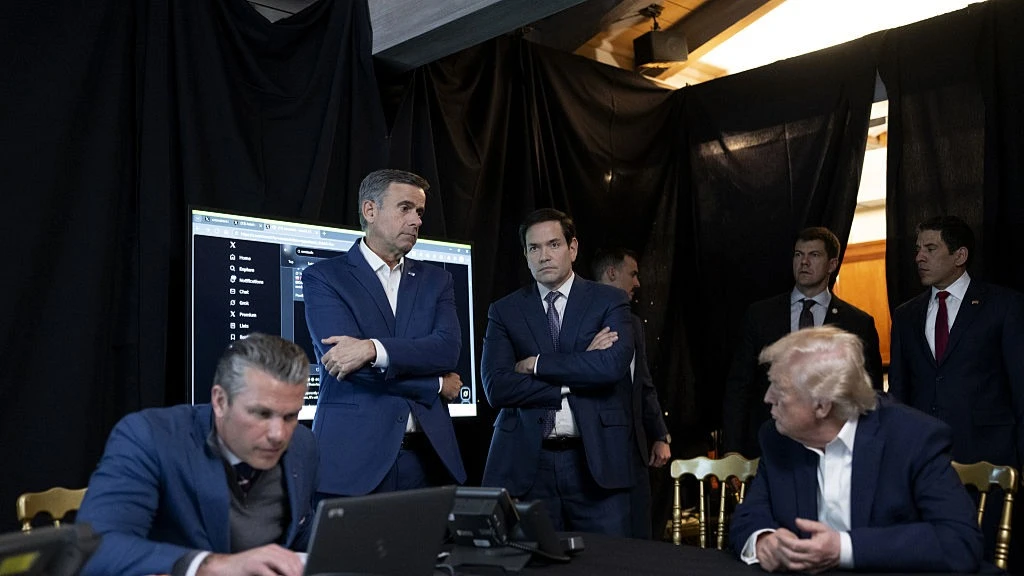
US President Donald Trump has stated that Washington will take control of Venezuela after the overthrow of Nicolás Maduro. Political commentator Petr Kiryan believes that for investors, this could mean a repeat of the Iraq scenario.
Transit of power
After a lightning operation to capture Venezuelan President Maduro and his wife, power in the country passed to Vice President Delcy Rodríguez.
She is considered a pragmatic politician and was responsible for the economic bloc under Maduro. In her words, Rodríguez remains loyal to her boss, stating that there is only one president in the country—Nicolás Maduro.
We will not be anyone's colony. What is happening to Venezuela is barbaric.
A few hours later, President Trump warned Rodríguez that if she refused to cooperate, the US would launch a second strike — and the situation for Rodríguez would be worse than for Maduro. Interestingly, Washington did not promote opposition leaders. Maria Machado remained with her Nobel Prize but without power — at least for now. Edmundo Gonzalez, whom the US authorities recognized as the winner of the presidential election in Venezuela, said that the opposition was ready to take power, but no action was taken by Washington.
Oil infrastructure — the first asset under control
The Trump administration's plan for Venezuela includes rebuilding the country's oil infrastructure. According to the US president, oil companies will pay for it, but their expenses will be reimbursed.
We will send our very large American oil companies there—the largest in the world. They will invest billions of dollars, rebuild the severely damaged infrastructure, primarily oil infrastructure, and start making money for the country.
Venezuela accounts for approximately one-fifth of the world's proven oil reserves. Trump plans to sell this oil to other countries.
Post-Saddam experience: betting on contractors
US companies often act as contractors in government projects or defense department orders abroad, and some of them are listed on the stock exchange. Based on the experience of past peacekeeping operations, we can talk about the directions of the state's foreign policy agenda. The easiest way to trace this is through the example of Iraq.
After Saddam Hussein's execution on December 30, 2006, a so-called war back office was formed in Iraq. It included companies responsible for food, fuel, transportation, communications, base maintenance, and training local security forces. Public companies traded in the US played a prominent role in this ecosystem: KBR (formerly a division of Halliburton) in the engineering and technical services sector, Fluor in construction and engineering (EPC), Raytheon (now part of RTX Corporation) in aerospace and defense, and AECOM in infrastructure consulting and engineering.
Industrial companies such as KBR and Fluor played a key role in logistics and life support for military contingents. They operate on a model where the state customer purchases not a single item, but a continuous service: base operation, infrastructure maintenance, equipment supply, and repair.
Control and communications technologies were a separate block in Iraq. Raytheon, with its experience in defense and aerospace, was awarded a contract to provide secure networks, IT infrastructure, and command system support, without which operational coordination in the conflict zone would be impossible. This segment usually has fewer contractors, and only those who have been registered or certified for security and compatibility with military systems can earn money.
The third area is infrastructure and program budget management, where control, reporting, and coordination of multiple contractors are important. AECOM operates in this area: design, construction and supply management, and support for large programs. The more complex the chain of contracts, the higher the risks of cost overruns and quality disputes, which is why independent supervision and external auditing are critical for such contracts.
Shares of companies that received government contracts under the Civil Logistics Support Program rose by 1%–4.4% on the day the news was published.
Latin American Rally
In the coming trading sessions, investors will focus on US companies potentially involved in government contracts related to the management of Venezuela. This primarily concerns contractors working with US federal agencies, as well as oil service groups for which production recovery is impossible without external technical assistance. Among them is the aforementioned Halliburton, which specializes in engineering and services for the oil industry. However, knowing Donald Trump's character and his tendency to quickly shift his attention from one task to another, the rise and fall of such companies' stock prices may be speculative and short-term in nature.
Not an investment recommendation
This article was AI-translated and verified by a human editor