War in the Middle East: Can Kazakhstan capitalize on it?

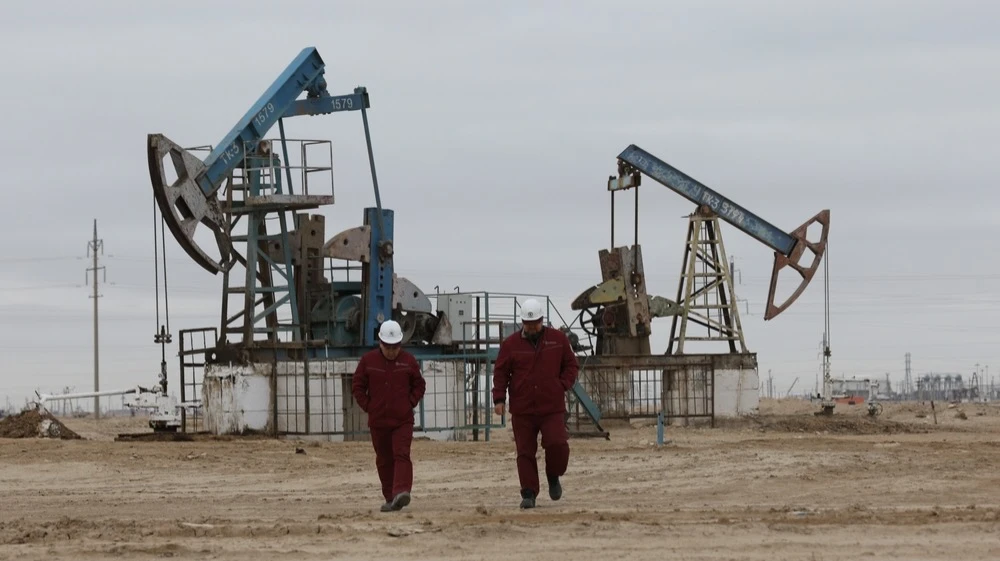
The war in the Middle East has led to volatility in the oil market, which is a negative factor for Kazakhstan's economy / Photo: Pavel Mikheyev / Shutterstock.com
The war in the Middle East has led to a sharp rise in energy prices in the world. Olga Moshkina, Junior Director for Corporate Ratings at Expert RA Agency, argues whether this conflict is beneficial for Kazakhstan's economy, which depends on oil revenues.
Kazakhstan and OPEC+: debt repayment
In 2025, exports of oil and oil products generated about half of Kazakhstan's total export revenues.
It is logical to assume that this country will be one of the beneficiaries of rising oil prices and limiting oil supply in the world. But will it be able to take advantage of the situation?
Kazakhstan has been a member of OPEC+ since 2016. Already on March 1, the day after the start of the US and Israeli operation against Iran, eight OPEC+ countries (Kazakhstan among them) decided to increase production in April - by 206 thousand barrels per day.
But the case of Kazakhstan is special. Previously, the country did not always strictly follow the restrictions imposed by the cartel (last year, for example, the country produced 1.74 million barrels per day against a quota of 1.51 million barrels per day). And in 2026 it has to compensate for overproduction to OPEC+. This means that Kazakhstan will have to adhere to tighter production limits.
Oil price spike: exchange rate volatility and nervousness
The rise in oil prices amid the conflict positively affected the stock prices of KazMunaiGas and oil pipeline operator KazTransOil - stock prices jumped for a week of war in the Middle East by 9% and 12% respectively (through March 6).
But the oil market is feverish - at the beginning of this week the price of Mark Brent crude oil rose to $119, and already on Tuesday, March 10, the May futures for delivery of this grade cost about $92.
And Kazakhstan's Deputy Prime Minister and Minister of National Economy Serik Zhumangarin, although he said that his country does not intend to curtail trade with Middle Eastern countries because of the escalation in the region, has already warned of the negative consequences for the economy from the oil price hike.
"If oil goes up, the tenge usually strengthens on the contrary, rather than falling. The question is not whether it strengthens or falls. The question is about volatility. Volatility always implies nervousness. We need stability [of the tenge exchange rate]," he said and added that the potential impact of oil prices on the currency market will be analyzed by the government and the National Bank.
Prospects on the Chinese direction
It is also worth noting that the main destination for Kazakhstani oil is the markets of Western Europe. Currently, the main export route is the Caspian Pipeline Consortium (CPC) to the terminal in the Black Sea.
The CPC accounts for more than 80% of the pipeline's oil volumes from Kazakhstan. Oil is then transported by sea to ports in the Mediterranean Sea. Therefore, this military conflict has no direct impact on logistics flows.
However, any escalation in the Black Sea region could adversely affect supply, and general geopolitical concerns around the world could pose risks to tanker transportation, including higher freight costs and rising insurance costs.
The closure of the Strait of Hormuz, through which 20% of the world's sea oil supply passes, has led Saudi Arabia, the world's largest oil exporter, to cut production. The UAE, Bahrain, Iraq and Kuwait have also taken this step. One of the main consumers of oil produced by the Gulf countries is China.
The escalating conflict is forcing Beijing to look for alternative ways to procure oil.
The Kazakhstan-China oil pipeline runs from Kazakhstan to the northwestern regions of China, which allows direct import of oil from Central Asia. Initially, oil from the fields of Aktobe region and Kumkol oil field was supplied through it. In December 2025, Kazakhstan sent oil to China for the first time from Kashagan, one of its flagship fields. The pipeline is also used to transport Russian oil from Western Siberia.
The potential increase in direct oil supplies to China will have a positive impact on Kazakhstan's revenues, both in terms of increased sales volumes and oil transit revenues.
However, the main limiting factor is the throughput capacity of the pipeline - up to 20 million tons per year. For comparison, the Caspian Pipeline Consortium has a capacity of about 70 million tons.
As a result, it cannot be definitively said that the current escalation of the conflict is unambiguously in Kazakhstan's favor. And in case of further escalation, there may be secondary effects, which are difficult to assess at the moment.
This article was AI-translated and verified by a human editor