Washington Liaison: the story of Carlyle, the buyer of Lukoil's foreign assets
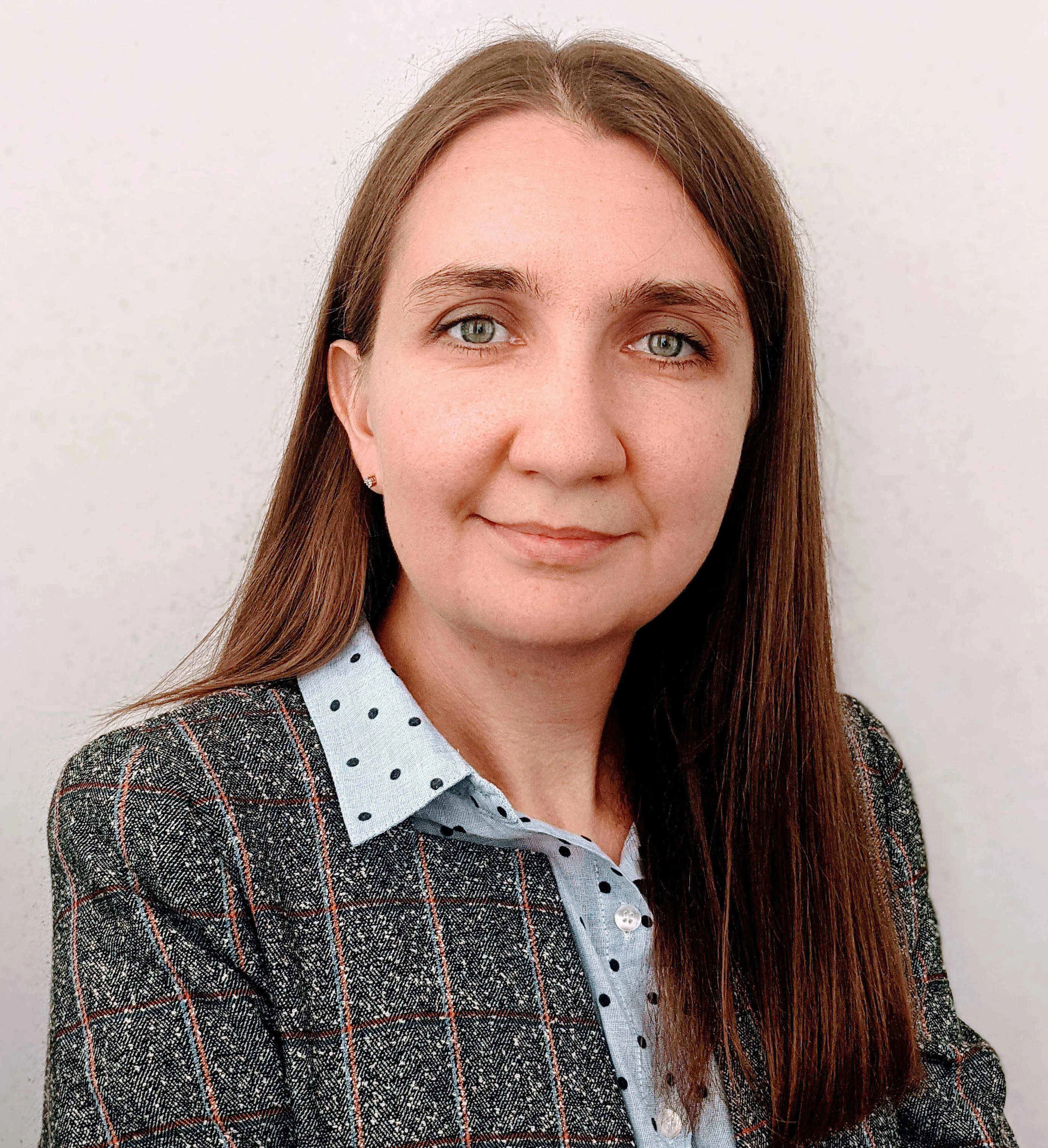
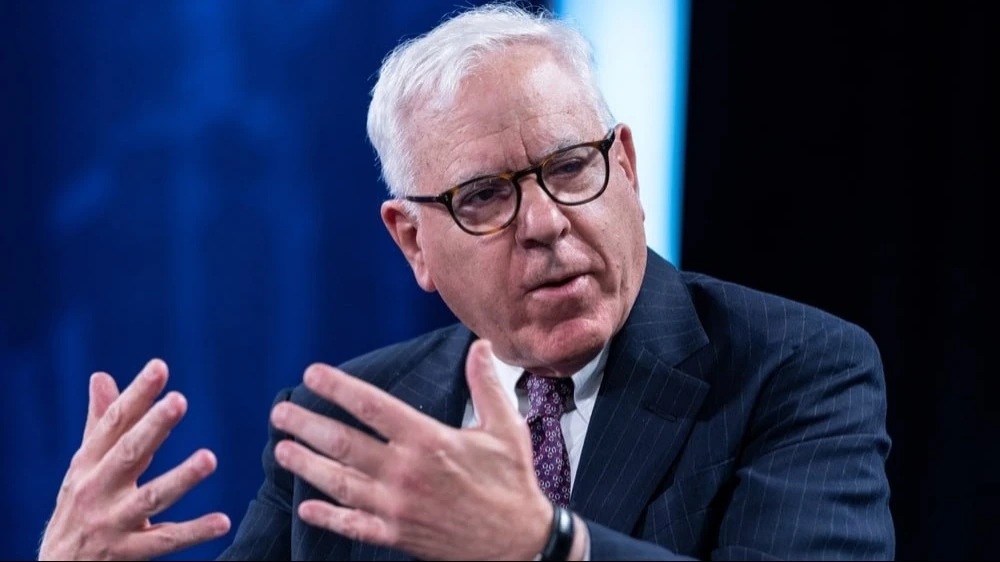
Carlyle financier and co-founder David Rubinstein is considered one of the authors of the "Great Eskimo Tax Scam" - a scheme that allowed Carlyle to make its first millions from gaps in tax law. Photo: lev radin / Shutterstock.com
Russian oil company Lukoil has found a buyer for its foreign assets that may finally satisfy OFAC. This is the American Carlyle, an investment company with big connections in US political circles. What is it known for?
The long search for a buyer
"Lukoil" was forced to look for a buyer for its foreign assets, as it has been under U.S. sanctions since October 22. On January 29, the company announced that it had agreed on a sale with the U.S. investment company Carlyle, which has $474 billion of assets under management. So far, the parties have only signed a sale agreement. It is not exclusive, negotiations with other potential buyers are ongoing, Lukoil said. For the transaction to take place, it must be approved by the Office of Foreign Assets Control of the U.S. Treasury (OFAC). OFAC issued Lukoil a temporary license to search for bidders and negotiations. It has been extended several times and now expires on February 28, 2026.
Carlyle plans to acquire 100% of LUKOIL International GmbH, an Austrian-registered subsidiary of Lukoil, which has foreign assets on its balance sheet. These include large oil and gas fields in Iraq, Kazakhstan, Azerbaijan, Uzbekistan, Mexico, UAE, Egypt, Ghana, Cameroon and Congo. In addition, Lukoil has refineries in Bulgaria, Romania, the Netherlands and a network of filling stations in the EU and the USA, as well as oil production and storage facilities in several countries.
The message says that the sale deal will not include projects in Kazakhstan. The estimated amount of the sale and other financial parameters were not disclosed by the parties. According to Sberbank CIB, the fair value of all foreign assets of the company in 2025 was $12 bln. The equity of the company, which manages Lukoil's foreign projects, amounted to $22 bln at the end of 2024.
In late January, Kazakhstan itself applied to OFAC for permission to buy out Lukoil's stakes in energy projects on its territory. It is also unclear whether Carlyle will receive Lukoil's stake in the West Qurna 2 project in Iraq, Bloomberg notes. American companies Exxon and Chevron showed interest in this field with initial recoverable reserves of 14 billion barrels.
Carlyle's main competitive advantage
Carlyle was not the only company interested in Lukoil's assets. There was a whole line of bidders after its assets. Among them were Exxon Mobil and Chevron, the state-owned Abu Dhabi National Oil Co and IHC Holding from the UAE, Midad Energy from Saudi Arabia, a consortium of Azerbaijan's Socar and Turkey's Cengiz Holding, Hungary's MOL, and the American investment bank Xtellus.
Lukoil itself officially reported an agreement with only one potential buyer - Swiss oil trader Gunvor, whose co-owner until 2014 was Gennady Timchenko, a Russian billionaire and friend of Russian President Vladimir Putin. Like Carlyle, Gunvor had hoped to buy Lukoil's foreign portfolio in a single lot. But OFAC criticized the idea, calling the buyer "a Kremlin puppet that will never get a license."
Unlike Gunvor, OFAC may look favorably on Carlyle's candidacy. The point is that her ties to the US political, business and military elite are so strong that American investigative journalist Dan Briody calls Carlyle a "Republican administration in exile" and the Financial Times calls her a "club of former presidents.
Carlyle was founded in 1987 in Washington by Bill Conway, Daniel D'Agnello and David Rubinstein. The latter was an advisor in the White House under President Jimmy Carter. At one time posts in the investment company were held by former U.S. Secretary of State James Baker, former U.S. Secretary of Defense Frank Carlucci, former U.S. President George Bush Jr. And his father, also a former US president, George Bush Sr. was a Carlyle advisor, as was former US Secretary of State Colin Powell and former SEC chief Arthur Levitt. In addition, former British Prime Minister John Major and a number of other top officials were once among Carlyle's advisers, while businessman George Soros and Saudi Prince Al-Waleed bin Talal were among major investors.
Carlyle is headquartered in Washington, D.C., near the White House.
In his book The Iron Triangle: Inside the Secret World of the Carlyle Group, Briody notes that the company was often caught up in dubious stories. Such as the Great Eskimo Tax Scam: in the 1980s, Carlyle's top managers noticed a loophole in U.S. tax law that allowed corporations to cheaply buy the debts of companies founded by Alaska Natives and then write them off as losses, reducing their own tax base. The IRS investigation resulted in no legal consequences for Carlyle, but Congress had to cover up the tax loophole.
Another scandalous Carlyle project is the indirect (through its subsidiary BDM) ownership of the private military company Vinnell. It was known for training the Saudi Arabian National Guard to protect oil fields. U.S. media, citing their sources, speculated that it may have served as a cover for the work of CIA agents in various countries. Several Vinnell employees and members of their families suffered as a result of a terrorist attack in Riyadh in 2003.
Ties with Saudi Arabia and the Bush administration played a cruel joke on Carlyle after the terrorist attacks of September 11, 2001. The media revealed that the company had received investments from Osama bin Laden's family. The Economist wrote that "the secretive Carlyle Group is ruining the reputation of capitalism." Carlyle subsequently asked bin Laden's family to withdraw the money, and former government officials and investors one by one distanced themselves from it and left their posts.
In 2005, documentary filmmaker Michael Moore, in the movie "Fahrenheit 9/11," directly accused Carlyle of facilitating informal contacts between U.S. and Saudi politicians. Carlyle denied the accusations and announced the start of "glasnost" - she decided to become more open. Before that, David Mulholland, business editor of Jane's Defense Weekly magazine said of Carlyle, "They are huge and yet extremely secretive."
What is Carlyle doing now?
Since the 1990s, including during the Bush Sr. presidency, Carlyle has actively acquired stakes in defense and aerospace companies. Among them, for example, were United Defense Industries, Magnavox Electronic Systems and Vought Aircraft. However, the investment company's portfolio was not limited to these industries. At different times, they owned various assets - from the French newspaper Le Figaro to the manufacturer Dr Pepper.
Briody describes Carlyle as an aggressive M&A player that buys up distressed assets at throwaway prices for the benefit of large private investors and businesses. Once purchased, the asset is included in a portfolio or fund that typically has a target market or theme. After a certain period of time, the asset is resold at a higher price. "These are risky investments available only to very wealthy people," Briody wrote in 2003. According to his data, the minimum entry threshold for such a project is $1 million, the average expected return is 25% over 10 years, but losses in case of failure can be no less. "The scheme is not for the faint-hearted," the journalist concludes.
Carlyle's current upstream and energy portfolio is impressive. The company owns more than $20 billion in energy assets, including oil and gas, renewable energy and infrastructure projects. These include a stake in Colombia's largest independent oil producer SierraCol, Spain's Moeve refinery and VaroPreem (formerly Varo Energy), which has operations in Spain, Sweden, Switzerland and Germany. In 2025, Carlyle entered into a new $2 billion strategic partnership with US producer Diversified Energy.
In 2012, Carlyle became a public company, floating at $22 a share, and its founders became billionaires. What followed was a difficult period. On the surface, it maintained an aura of influence: headquarters within walking distance of the White House, Rubinstein's close ties to the administration of Democratic President Barack Obama, the FT lists and Briody writes in his book. But there was chaos within the company: the founders had different views on how to grow the business. And it itself was making bad acquisitions and launching niche products that failed to reach at least zero. "In strategic matters, they were a two-headed monster," the FT wrote, citing one of Carlyle's former advisers.
In early 2023, Carlyle appointed former Goldman Sachs top executive Harvey Schwartz as CEO. And in November 2024, the company reported record third-quarter fee income, which the market saw as a sign of its recovery.
Under Schwartz's leadership, Carlyle has focused on selling investment products to high net worth individuals. Bloomberg estimates that the business now generates about 20% of its cash flow. Carlyle's managers are vying for a portion of the $12 trillion in Americans' retirement accounts. Its competitors include Blackstone and Apollo Global Management.
By the end of 2024, the company's revenue totaled $5.43 billion, of which $2.2 billion came from management fees and $2.3 billion from investment income, including manager fees, according to its statements. The figure was up 83% for the year. Net income amounted to $1.02 billion.
The 2025 financial statements will be published in February 2026. According to the results of the third quarter of last year (ended September 30), the company was not successful. Its net income in that period totaled just $900k - compared to nearly $596m a year earlier. The company also reported an investment loss of $519m as the value of some public companies in its portfolio fell. Gain on sold assets totaled $61.7 million, less than a quarter of the amount for the same period last year.
How did the market react to the news of the deal?
Investors took the news about the forthcoming deal with Lukoil with coolness. On January 29, Carlyle shares lost 1.72% for the day and closed at almost $60. "The decline in Carlyle shares on January 29 is explained by the general decline in the U.S. market. Also, some investors are worried about uncertainty - it's not the easiest asset to manage and resell. But I am sure they already have buyers for at least part of the assets," Arbat Capital managing director Alexander Orlov told Oninvest.
Askar Akhmedov, investment director at ATLAS Capital, agrees that Carlyle shares fell for reasons unrelated to the deal. "The market as a whole was falling yesterday, and Carlyle - "for company". In general, one should not try to look for some market opinion in a one-day move unless it is a reporting day," he believes.
American analysts believe that the deal will have a small impact on the global oil market. Thus, S&P Global Energy forecasts that oil and gas production at Lukoil's foreign projects will grow by 119 thousand barrels of oil equivalent per day to 448 thousand by 2030.
Ronald P. Smith of Emerging Markets Oil & Gas Consulting Partners said the deal will have little impact on oil production, but could affect trade flows. "The new owners will have different room for maneuver, so supply directions are likely to change. This may to some extent affect refining and trading margins in some regions," S&P quoted him as saying.
This article was AI-translated and verified by a human editor