$25 trillion in revenue: why is Morgan Stanley betting on robots?

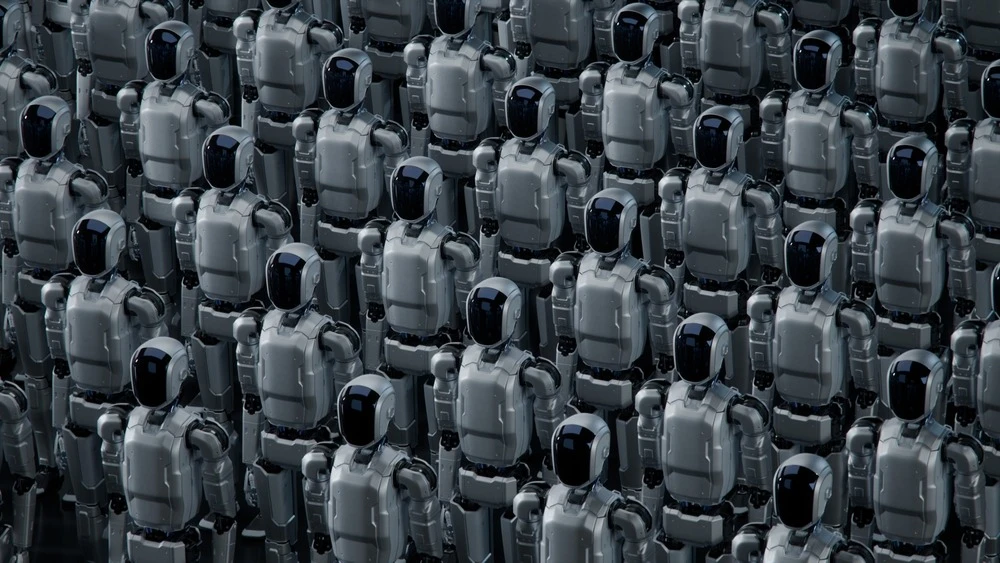
By 2050, revenue in the robotics sector will reach $25 trillion, with more than half of this amount falling on humanoid robots and robot cabs, according to Morgan Stanley. The corresponding review was released by investment bank analyst Adam Jonas, reports Barrons.
Details
Previously, the publication points out, Jonas had been eyeing the dynamics in the automotive industry, but has now decided to focus on "embodied AI" - an area of the market dedicated to AI with a physical form, be it robots or robotaxis. In the coming decades, the analyst estimates that this area is poised for remarkable growth: "AI-based robotics is helping to bring the Third Industrial Revolution closer," Jonas believes.
Like the steam engine that started the first industrial revolution and the spread of electricity and manufacturing that sparked the second, robots too have the potential to re-create the modern economy, multiplying productivity many times over, according to a Morgan Stanley survey.
To estimate the scale of the potential, Barrons points out, Jonas multiplies the global workforce - about 4 billion people - by $10,000, resulting in $40 trillion, which roughly corresponds to one-third of the world's GDP. In 25 years, by 2050, the analyst believes, the robotics market will reach $25 trillion in revenue, with more than half of that amount coming from humanoid robots and robotic cabs, according to the analyst. Jonas calls drones and the sphere specializing in industrial robots the next largest branches of robotics.
Who can win
The nascent industry, according to Morgan Stanley estimates, will need more cameras, lidars, as well as laser and traditional radars. Total demand for lidars in 2025, the analyst points out, was 2.3 million units. By 2050, that figure should grow 300-fold, Jonas believes. Also, according to his forecast, the demand for rare earth metals will increase 480 times in the next 25 years. And the computing power of AI will increase 40,000 times against the background of all this.
According to Jonas, Tesla, Meta Platforms, Alphabet and Nvidia already possess the "basic technologies" for the production of robots. The analyst named Siemens, Cognex and Rockwell Automation among the companies that will be able to provide the technological basis for humanoid robots. Jonas blames Nvidia, Qualcomm, AMD, Intel, Apple and Taiwan Semiconductor for supplying computing technology.
In the field of autonomous vehicles, Morgan Stanley highlights as "core suppliers": Tesla, Alphabet, Nvidia, NXP Semiconductors, Qualcomm, Meta Platforms and Mobileye. And among "integrators of autonomous driving technologies" are Pony AI, Amazon.com (by virtue of its ownership of Zoox), as well as Tesla and Alphabet's Waymo subsidiary.
However, at the moment, Jonas notes, only Tesla has presented prototypes of humanoid robots among U.S. public companies. Many Chinese and private U.S. companies also have their own models, Barrons notes. These include Figure, Agility Robotics and 1X in the U.S. and XPeng, Xiaomi, Fourier and Robotera in China.
Is the future in robots?
Jonas is not the only one who believes that robots can change the world forever, Barrons notes. Nvidia CEO Jensen Huang also expressed his opinion that robotics will become popular "in a couple of years" and then one of the largest industries. In July 2025, Tesla CEO Elon Musk suggested that his company could reach $30 trillion in annual revenue from robots. By 2035, Tesla plans to sell one million humanoid robots.
What else is important to know
This is not Jonas' first prediction, which, at first glance, may look improbable. In 2020, Barrons recalls, the analyst suggested SpaceX's value could reach $175 billion, based largely on its Starlink space broadband business. In early December, sources Bloomberg and The Wall Street Journal reported that SpaceX was preparing a secondary stock sale that could value the company at up to $800 billion and could see an IPO in 2026.
This article was AI-translated and verified by a human editor