A Blind Bet: Howard Marks on the Dangers of the Hype Surrounding AI
No one can say what will happen to the market leaders in five years, according to the co-founder of Oaktree Capital

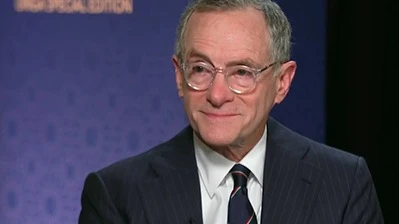
Howard Marks acknowledges that a traditional analysis of the AI sector is not possible. Photo: Oaktree
Investing in artificial intelligence today is more like a gamble than the result of financial analysis, according to billionaire Howard Marks, co-founder of Oaktree Capital Management. However, that hasn’t stopped investors from actively buying shares in these companies. In an interview with Bloomberg’s The China Show, Marks explained why he considers this approach to investing risky and why the recent decline in AI stocks is good news.
Marks is known on Wall Street for his “memos” (notes), in which he describes his views on the stock market. He caught investors’ attention in 2000 when, in a note titled “Bubble.com,” he predicted the imminent crash of tech stocks just three months before the dot-com bubble began to burst. Warren Buffett has said that he always reads Marks’s newsletter and learns something new from it every time.
Details
According to Marks, it is virtually impossible to evaluate most AI companies from a value investing perspective: it is too difficult to predict their profits five years from now and determine whether today’s stock price is justified.
“Take Anthropic. How much are you willing to bet that you can describe today what they’ll be doing five years from now? But if we can’t do that, then it’s simply impossible to approach this company from a strictly analytical perspective, as a value investor.”

Because it is impossible to estimate future profits, Marks describes investments in AI developers as a gamble. He points out how rapidly the AI market is changing: Anthropic, a startup that no one had heard of just five years ago, has transformed the field of programming in just a few years. But if Anthropic was able to achieve such success in such a short time, couldn’t another company just as quickly push it out of the market? According to Marks, investors in AI should take this uncertainty into account.
"When an opportunity looks appealing, but you realize that you don't fully understand it, that should influence both the size of your position and the structure of your investment."

According to Marks, due to the frenzy of recent years, many investors have poured money into AI stocks and bonds. The more participants join this trend, the more demand pushes prices upward. Marks compares the market rally to a baseball game: in baseball, there are nine innings, but in the market, no one knows how much longer the game will last. At the same time, widespread enthusiasm, high prices, and declining standards may indicate that the rally is in its late stages.
"Perhaps the best rule in investing is this: what the wise man does at the beginning, the fool does at the end. No one wants to be the one who arrives too late."

Marks believes that the recent bad news in the AI sector has actually benefited the market—and it’s not just because prices have fallen. The pullback has shaken investors’ belief that the industry is destined for success, and they have begun to assess the risks more soberly.
"I think people are starting to say, 'Hold on, wait a minute, let's be a little more cautious, let's be a little more skeptical.' That's a very healthy sign."

At the same time, Marks emphasizes that he does not consider the correction to be over and views the current moment as a good entry point. Marks compares what is currently happening in the industry to an arms race: companies are discussing investments totaling one trillion dollars, and the scale of their investment plans and needs continues to grow rapidly. According to Marks, the largest players plan to spend a total of $7 trillion by 2032. However, no one knows yet whether the demand for AI and the profits from its implementation will be large enough to justify these investments and ensure attractive returns.
What Should an Investor Do?
Investors shouldn't pay attention to short-term price fluctuations, market trends, or which stocks are performing best today, according to Marks. It is far more important to build a portfolio of assets capable of delivering returns over the long term and to stick with it.
"In the investment business, there's no reward for being overly active. In my view, it's enough to do two things: buy stakes in growing businesses and lend to those who will repay their debts. That's all that's required of us."

This article was AI-translated and verified by a human editor