"AI Bloodbath": Nasdaq 100 Drops 6%, Fear Index Posts Sharpest Rise in 8 Years
The Nasdaq Composite lost a record $2.5 trillion in market capitalization in a single day

Photo: Unsplash/Arnaud STECKLE
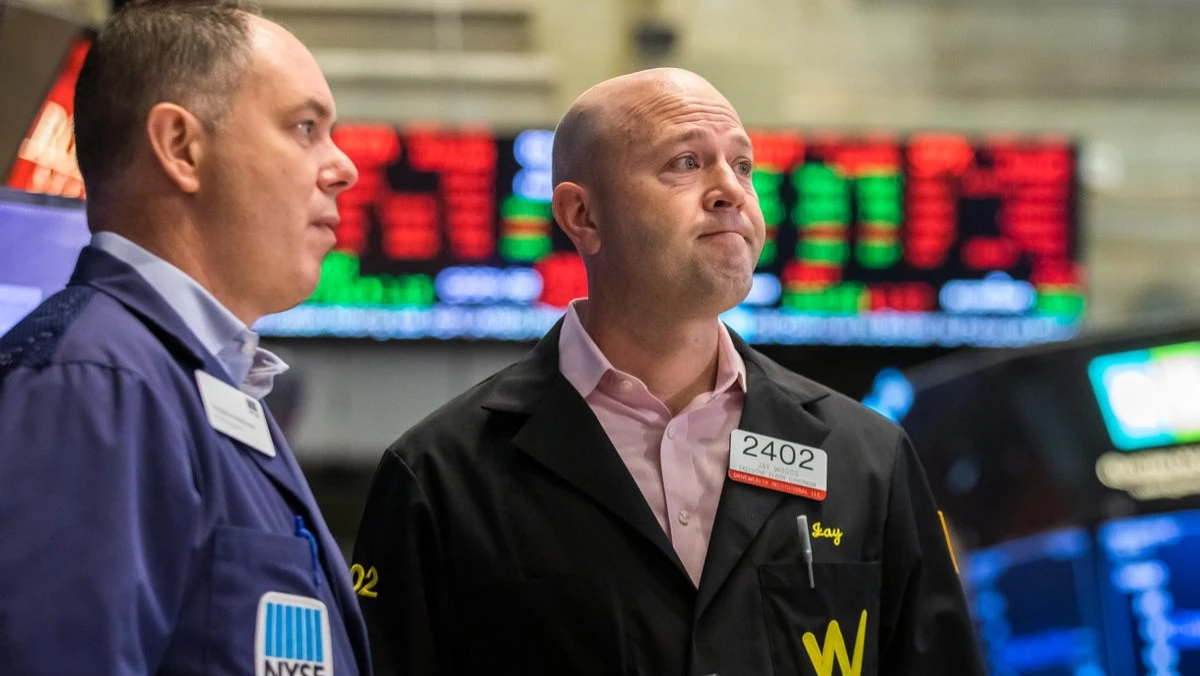
All three major U.S. stock indices had their worst day since April 2025 on Thursday, November 5. The Nasdaq Composite Index plummeted 5.5%, entering correction territory: it fell more than 10% from its most recent record high. The Nasdaq 100 plunged 6.4%. The broad-market S&P 500 index lost 4.4%, while the blue-chip Dow Jones Industrial Average fell 3.4%. The Nasdaq Composite lost approximately $2.5 trillion in market value on Thursday: a record one-day drop in market capitalization, according to MarketWatch.
What Was Happening in the Market
"A bloody AI bloodbath": that's how *Barron's* described what happened in the market. The CBOE Volatility Index (VIX), known as “Wall Street’s fear gauge,” peaked at 28.36 points during the day, surging nearly 71%. It hit a seven-month high, and the one-day percentage gain was the largest since February 2018, according to Seeking Alpha.
Among the 11 sectors in the S&P 500, information technology (-7.3%) was hit the hardest, but overall, the sell-off was broad-based: all 11 sectors ended the day in the red, according to MarketWatch. The drop in tech stocks was the steepest since 2020. Investors appear to be concerned that the Democratic majority in Congress, secured in the midterm elections, could slow down the massive investments in artificial intelligence that have fueled the stock market’s growth this year, the publication writes.

On Thursday, shares of chipmakers plummeted. The Philadelphia Semiconductor Index plunged 12.25%—its worst performance since March 2020, according to Bloomberg. Micron shares lost 17.5% of their value, while SanDisk shares fell 22.3%. Barron’s identified several signs that investors were taking profits: Many stocks had their worst day of 2026, but many of these stocks are still up year-to-date, including SanDisk, Micron, Seagate, and Western Digital, the publication reports.
Shares of Nvidia, a leading manufacturer of AI processors, fell 9.3%: they are now trading 2.6% lower than they were at the start of 2026. The other companies in the “Magnificent Seven” have little to boast about either: for example, Apple fell 1.5%, Microsoft 3.6%, and Alphabet 2.2%. Tesla plummeted 10.8%, and SpaceX fell 9%: combined, the two companies led by Elon Musk lost $450 billion in market capitalization in two days, MarketWatch reported, citing data from Dow Jones Market Data. “Call it the ‘Musk sell-off,’” the publication quips.
Who's to blame?
Many on Wall Street believe that the market crash was caused not by fundamental factors but by liquidations by hedge funds, according to Barron's. “It’s extremely rare for such moves to occur without any major market-moving news. This really looks like a liquidation,” noted Noel Smith, co-chief investment officer at Kai Asset Management, in the publication’s report. He’s referring to panic selling, where positions are offloaded at any price: “All they want is to remove that risk from their positions.” “Bodies will soon start floating to the surface. It really feels like a liquidation,” wrote trader Mark Dow on social media platform X.
One of the driving forces behind the sell-off may have been systematic funds, according to Bloomberg: they apply specific rules to select investment targets. So-called volatility control funds, which use long and short positions depending on volatility levels, were required to review their positions on November 5 and sell approximately $135 billion worth of U.S. stock futures over the next 24 to 48 hours, according to a report by Barclays. These are the largest adjustments since December 2018, Bloomberg reports.

Sell-offs lead to lower prices, which, in turn, trigger further sell-offs, driving prices down even further: this cycle is compounded by the fact that many funds held the same small set of successful stocks, writes Barron’s. “My gut tells me that as soon as the sell-off ends, we’ll bounce back. But my data tells me to reduce risk today, and that’s exactly what I’m doing,” Smith added.
This is not a “turning point” leading to the end of AI-related trading: it isn’t over yet, although it has likely peaked, according to Stephen Dover, senior market strategist at the Franklin Templeton Institute, as quoted by MarketWatch. A slowdown in the race to build AI infrastructure will be “healthy” for the market, Dover believes.
This article was AI-translated and verified by a human editor