Americans Are Looking for the Best Deals: Grocery Sales Helped Walmart Raise Its Forecast

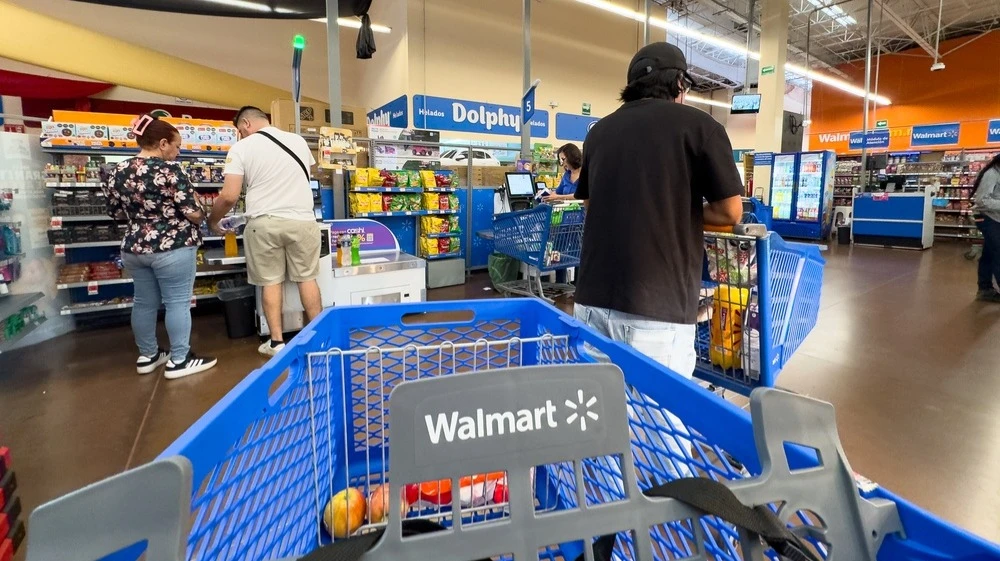
Walmart Raises Forecast: Even Affluent Shoppers Are Flocking to the Store for Low Prices / Photo: JRomero04 / Shutterstock
Walmart, the world’s largest retailer, reported an increase in its share of Americans’ food spending. This comes as consumers try to cope with food inflation, the Financial Times notes. Meanwhile, the retailer’s focus on low prices and steady growth in online sales continues to attract shoppers across all income levels, explains Bloomberg.
All of this enabled Walmart to exceed its third-quarter profit and revenue forecasts and raise its full-year forecasts for those metrics.
Nevertheless, Walmart shares are down about 1% in trading on November 19; they have risen 13% since the beginning of the year. Thanks to the enormous scale of its business, the retailer is considered a barometer of the state of the American consumer, according to Bloomberg.
Details
For the quarter ended October 31, Walmart reported adjusted earnings per share of $0.65, compared with analysts’ expectations of $0.64. Revenue for the reporting period rose 5.2% year-over-year to $188.84 billion, compared with analysts’ forecast of $187.27 billion.
Now, for the current fiscal year, which ends in January 2027, Walmart expects its net sales to grow by 4.9–5.2% instead of the previously projected 4–5%. The company also raised its full-year forecast for adjusted earnings per share to $2.84–2.89 from the previous range of $2.80–2.87. In February, the company had projected this figure at $2.75–2.85, meaning this is the second time it has raised its forecast this year.
The retailer, which accounts for more than one-fifth of all food sales in the U.S., is benefiting from the fact that persistent food inflation is forcing consumers to seek out cheaper options. Shoppers are increasingly turning to chains with lower prices, including Walmart, Costco, and Aldi, and this is creating challenges for traditional supermarkets, the FT notes, pointing out that last month, food inflation in the U.S. accelerated slightly after a summer slowdown.
In the most recent reporting period, Walmart’s market share growth was driven primarily by high-income shoppers, according to Bloomberg. Moreover, Walmart’s share in the grocery segment grew more than at any time in the past three years, the company’s CFO, John David Rainey, said in an interview with the agency. According to him, shoppers “are feeling some pressure due to rising fuel prices, but overall, [their] spending remains fairly high.”
As in recent quarters, e-commerce accounted for all of Walmart’s comparable sales growth in the U.S., the FT notes. Walmart’s global revenue in this segment rose 17% year-over-year in the third fiscal quarter to $44.8 billion, driven by curbside pickup and delivery of orders picked up in stores. Walmart U.S. (Walmart’s U.S. store chain) saw growth of 23%, while Sam’s Club U.S. (the U.S. membership-based warehouse club chain) saw growth of 30%. Revenue from Walmart U.S.’s advertising business (which sells advertising to manufacturers on its website, in its app, and in its stores) increased by 37% for the quarter.
“In reality, rising prices for diesel fuel and transportation are affecting the cost of goods. Therefore, we hope these costs will decrease as soon as possible, and we, in turn, will keep prices as low as possible,” Walmart CEO John Ferner said in an interview with CNBC.
What does that mean?
Investors are waiting for signs of how consumers are feeling ahead of “Black Friday”—which falls on November 27 this year—and “Cyber Monday” (November 30)—some of the most important days of the holiday shopping season, Bloomberg notes. Walmart’s upwardly revised forecast suggests the company will be able to maintain steady growth despite a high base of comparison and the fact that competitors are revising their strategies.
The retailer’s results also indicate that American consumers continue to spend ahead of the holiday season, despite high fuel and food prices. According to Rainey, Walmart has sold 1 million more turkeys since the start of the year than during the same period last year. He added that earlier turkey purchases may indicate that shoppers will start stocking up sooner ahead of the December holidays. “What we’re seeing in the first few weeks of this quarter is quite encouraging,” Rainey said.
Walmart is also competing with Amazon by shortening delivery times and expanding its product lineup. In particular, the company has expanded its partnership with the startup Zipline, which specializes in drone delivery. Ferner, who took the helm at Walmart in February, aims to boost productivity and efficiency, as well as make more active use of artificial intelligence.
43 out of 49 analysts covering Walmart stock recommend buying it. Five are neutral, and one recommends selling. The average price target for the retailer’s stock implies upside potential of nearly 5% relative to the latest closing price.
This article was AI-translated and verified by a human editor