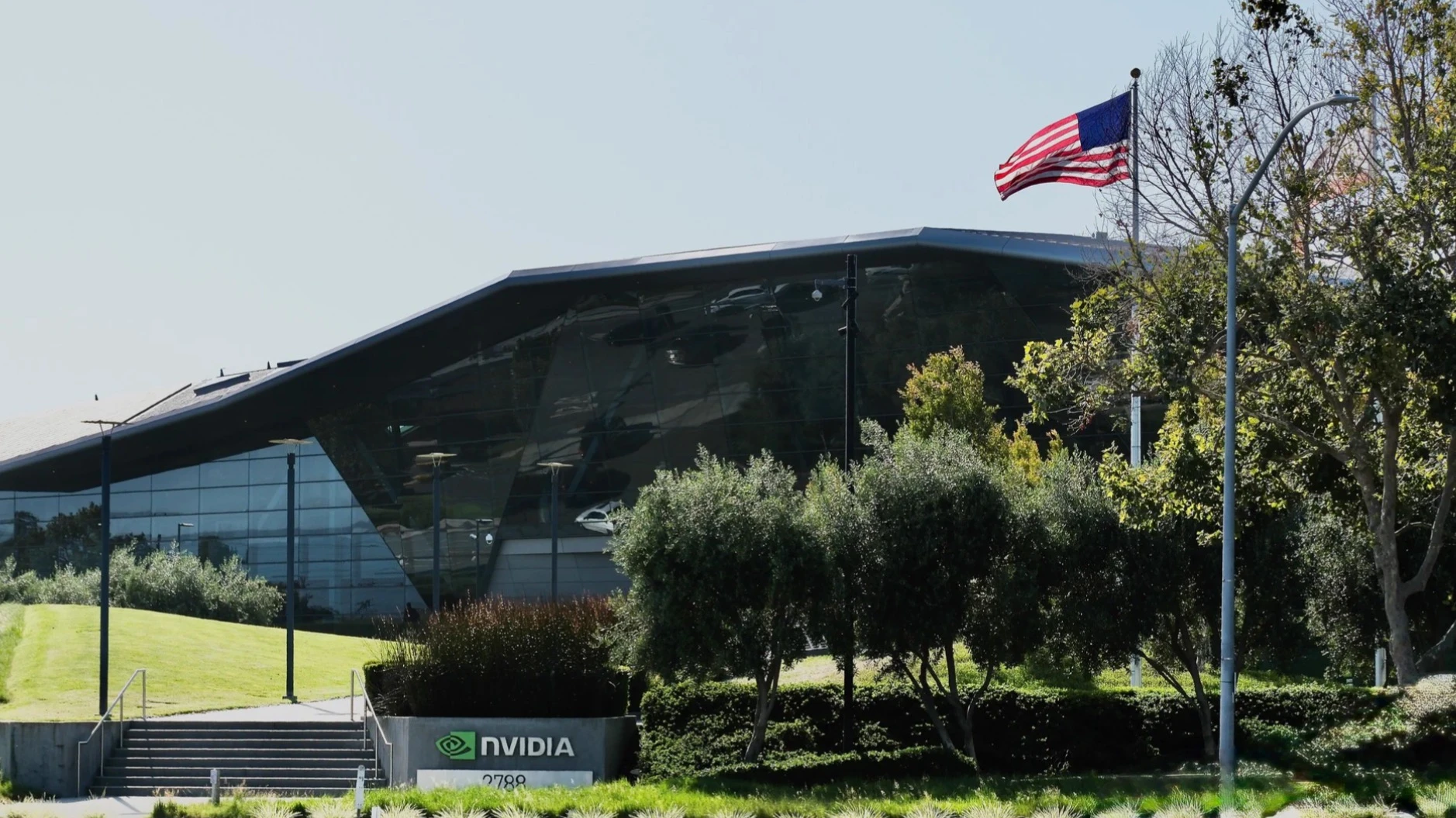
Analysts are lowering their price targets for Nvidia ahead of the earnings report. CLSA has cut its forecast by 40%.

Wall Street has estimated the fair value of Nvidia's shares following Jensen Huang's departure as CEO. Photo: VaskePro/Shutterstock
Ahead of Nvidia’s quarterly earnings report on November 17, several major research firms lowered their price targets for the company’s stock. Among the main reasons for the downward revision is the scandal surrounding the chipmaker’s former CEO, Jensen Huang.
On the back of this news, Nvidia’s stock has plummeted nearly 11% over the past five days, falling more than 30% from its all-time high in October. CLSA made one of the most drastic cuts, slashing its price target for Nvidia shares by 40% in one go.
What Analysts Are Saying
— One of the most notable revisions came from CLSA analyst Bhavotosh Vajpayee: he downgraded Nvidia’s stock rating from High-Conviction Outperform to simply Outperform and lowered the price target by 40% from his previous forecast—from $425 to $255, according to Investing.com. Nevertheless, even this updated forecast implies a 56% increase in the company’s stock price from the last trading close.
CLSA emphasized that the company has a lot to fix, and that this will require not only a clear understanding of the situation but also determination. The analyst cited Apple, Uber, and TSMC as examples to illustrate how businesses cope with the departure of their founders. These three companies were able to weather leadership changes because their key products were already fully established at the time. Nvidia, however, is facing a CEO transition in a much more challenging situation: the artificial intelligence market is still in its early stages and continues to evolve rapidly.
Vajpayee maintained his earnings forecast for Nvidia but lowered the P/E ratio (price-to-earnings ratio: indicates how many years of earnings the market values the company at), on which the target price is based. Whereas the analyst previously valued Nvidia at 25 times fiscal year 2028 earnings, he now values it at 15 times, notes Investing.com. That said, patient investors can expect attractive growth potential, the analyst believes: Nvidia shares are currently trading at a P/E ratio below 10 relative to expected earnings for fiscal year 2028—one of the lowest levels in the company’s history.
— Mizuho Investment Bank lowered its price target for Nvidia shares from $250 to $220 (implying a 35% increase from the last closing price), while maintaining its “Outperform” rating, according to CNBC. Analyst Vijay Rakesh explained that the stock’s decline from its October peak reflects the loss of the “founder’s premium,” as Huang was perceived by the market as the chief innovator and a global “AI banker.” According to the expert, the company will face management uncertainty over the next 6–7 months. Moreover, it has already come under close scrutiny by U.S. authorities.
— UBS still considers Nvidia shares attractive and is maintaining its “Buy” rating, although analyst Timothy Arcuri has revised his price target from $300 to $240, according to MarketScreener. The new target price is nevertheless 47% higher than Friday’s closing price.
— Other analysts have also revised their valuations for Nvidia. For example, TD Cowen and DA Davidson lowered their price targets for the chipmaker’s stock from $275 and $300, respectively, to $200, though DA Davidson maintained its “Buy” rating. HSBC analysts, in turn, pointed to the uncertainty surrounding the company’s leadership change and downgraded their recommendation on Nvidia shares to “Hold” with a target price of $170. Bernstein maintained its “Market Perform” rating with a price target of $200. Wells Fargo took a more optimistic stance, reaffirming its “Overweight” rating on Nvidia shares with a target price of $300, Investing.com adds.
What's next?
Despite the turmoil surrounding Nvidia, Wall Street as a whole remains optimistic. According to MarketWatch, the average (consensus) analyst recommendation for Nvidia shares remains “Overweight,” and the average price target is $280.78, which implies a 72% increase from the last closing price. Barron’s notes that an opportunity for the stock to rebound could arise very soon: after the close of the main U.S. trading session on November 17, Nvidia will release its third-quarter financial results. Analysts expect Nvidia’s profit for the reporting period to have grown 90% year-over-year on revenue of $109 billion, writes Reuters, noting that the main question for investors remains whether the new management will maintain the company’s optimistic outlook for next year.
In trading on November 16, Nvidia's stock is down nearly 2%.
This article was AI-translated and verified by a human editor