Anthropic's Debut and Another Deal Collapse in the Data Center Market: Key Takeaways on the IPO Ahead of November 22

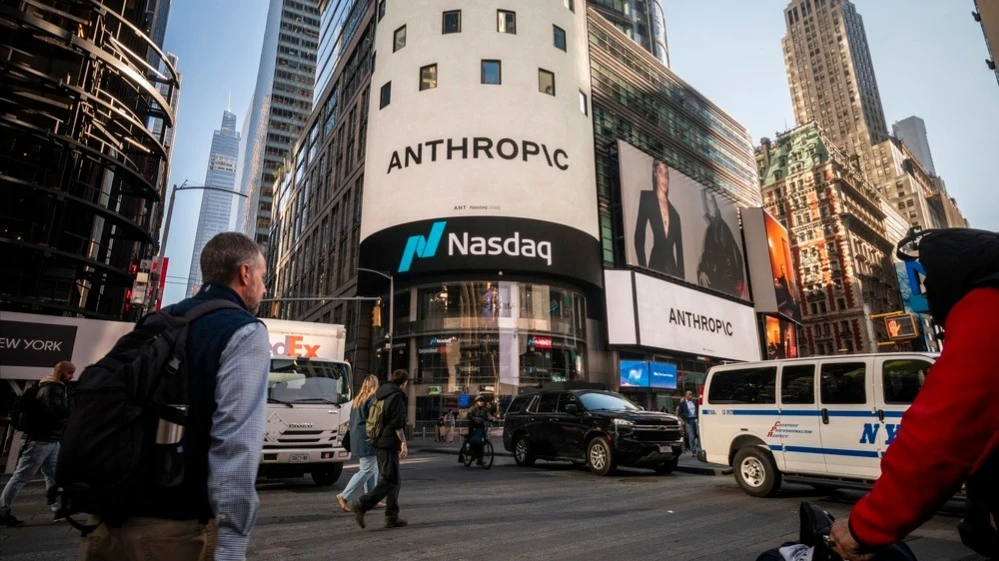
Anthropic completed the largest IPO in history, despite investor concerns about the AI sector / Photo: rblfmr / Shutterstock.com
The highlight of the week was Anthropic’s IPO—one of the most anticipated initial public offerings on the market. This was the first time a company whose business consists exclusively of developing artificial intelligence went public. Despite investor jitters regarding AI stocks in recent weeks, Anthropic staged the largest IPO in history, breaking SpaceX’s record. On the first day of trading, its shares rose 17%, defying a sharp sell-off in the tech sector; however, on the second day, the price fell below the IPO price. Unlike Anthropic, Singapore-based data center operator DayOne—whose largest client is ByteDance—chose to postpone its IPO due to market volatility. Meanwhile, Iceland’s Blue Lagoon, which operates one of the world’s most famous geothermal spa complexes, went public. Check out our roundup of the week’s top events in the initial public offering market.
How Anthropic Became a Public Company
— Anthropic, the AI lab that created the Claude chatbot, held the largest IPO in history, breaking the record previously held by the space company SpaceX. Anthropic and its seven founders raised approximately $93.5 billion, including underwriters’ options, and an additional $26 billion through a separate private placement. Demand for the IPO was nearly seven times the number of shares available. The shares sold for $83 each—above the initial price range of $70–78.
— Anthropic’s Nasdaq debut on November 19 proved to be volatile. At the start of trading, the stock soared more than 30% above the offering price, giving the company a market capitalization of $2 trillion. However, the stock quickly lost half of its gains and closed the day at $97.17—17% higher than its IPO price. Anthropic’s stock rose despite a market-wide sell-off—all major indices lost 2%. On November 20, the first full trading day on the exchange, Anthropic’s stock ???
— Seven analysts have begun covering Anthropic on Wall Street, and five of them have assigned a “buy” rating or equivalent, according to MarketWatch data. No analysts have recommended selling the stock yet. Among those who are currently maintaining a neutral stance is Jay Goldberg, an analyst at Seaport Research Partners. He is known for being the only analyst on Wall Street to recommend that investors sell shares of chipmaker Nvidia. According to Goldberg, to justify the valuation it received at its IPO, Anthropic must demonstrate much higher revenue growth rates over the next two years.
— The seven founders of Anthropic are now much wealthier than before following the IPO. While Forbes previously estimated their net worth at approximately $14 billion each, their combined net worth now exceeds $26 billion. Anthropic co-founder and president Daniela Amodei, sister of CEO Dario Amodei, has entered the top 100 on Bloomberg’s global billionaire index.
— Hollywood actor Ashton Kutcher could also have been one of the beneficiaries of Anthropic’s IPO. Some media outlets were quick to label him a potential billionaire. But it’s difficult to estimate the actor’s net worth due to a lack of information. Kutcher, along with Madonna’s music manager Guy Ozeri, founded the venture capital fund Sound Ventures, which invested a total of $435 million in Anthropic. Bloomberg estimated the fund’s stake in the company at 0.5%—which is now worth billions of dollars following the IPO. However, Kutcher left the fund a few months ago to start a new venture capital firm. The terms of his departure are unknown. The actor himself congratulated Anthropic on its success on the social media platform X the day before.

How Did Other IPOs Go This Week?
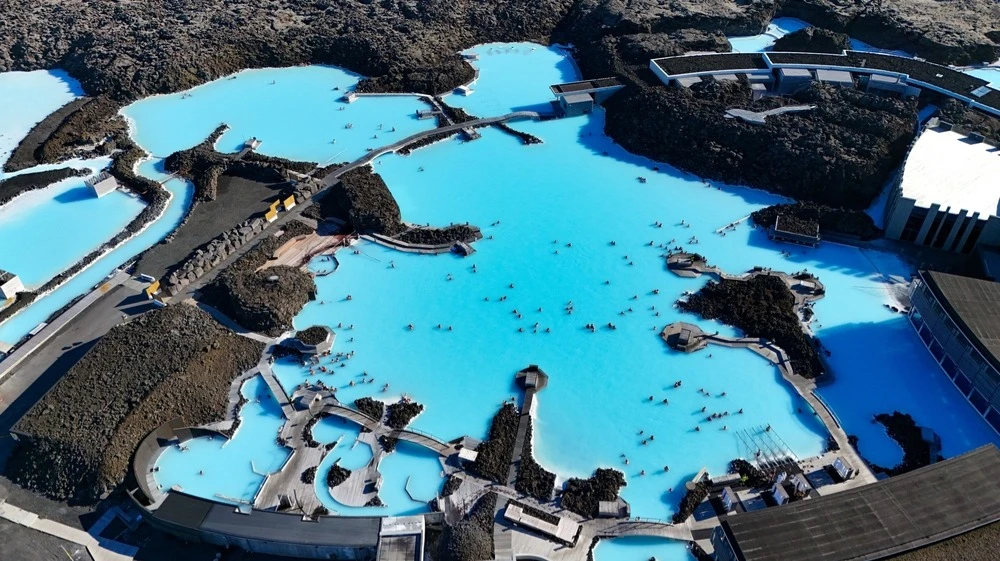
— Iceland’s Blue Lagoon Corp., which operates one of the world’s most famous geothermal spa complexes, raised approximately $110 million in an IPO on the Nasdaq Iceland exchange, CNBC reported. The offering valued the company at approximately $787 million, with demand exceeding supply by 7%. Blue Lagoon operates spa complexes, hotels, and the Michelin-starred Moss restaurant, and also sells cosmetics under its own brand. Over the past decade, the company’s revenue has grown by an average of 11% annually, and it is expected to increase by more than 50% next year. Blue Lagoon will use the funds raised to expand its existing facilities, acquire new assets, and develop tourist destinations.
What is known about future placements
— China’s Envision Group, one of the largest manufacturers of clean energy equipment, is considering including its AI data center power supply business in its planned IPO in Hong Kong, Bloomberg reported, citing a source. The offering could take place in 2027. Previously, the company had planned to list its battery division, Envision AESC, hoping to raise $1–2 billion. Envision is actively developing AI infrastructure: in August, it launched a renewable-energy-powered data center in Inner Mongolia, whose clients include Tencent and ByteDance, and recently implemented an 800-volt power supply system to improve the energy efficiency of computing operations.
— Jera, Japan’s largest electricity producer, is considering an IPO to finance business expansion amid growing demand for electricity from the AI industry, Bloomberg reported, citing the company’s CEO, Yukio Kani. Jera needs significant capital to build power plants and develop LNG infrastructure, but specific plans for the offering have not yet been disclosed. In October, the company announced a partnership with Dell Technologies and RHAELM Holdings to build AI infrastructure worth approximately $15 billion, including a 400-MW data center near Tokyo. Jera is also revising its $31 billion investment program through 2035 to account for growing demand for electricity.
— Stratolaunch, an American aerospace company owned by the investment fund Cerberus Capital Management, has appointed former Goldman Sachs investment banker Wendy Lane to its board of directors as part of its preparations for an IPO, according to Bloomberg. The offering could take place in the first quarter of 2027 and raise up to $500 million, valuing the company at $2–3 billion. Stratolaunch is developing a reusable platform for testing hypersonic technologies at speeds at least five times the speed of sound. Its clients include aerospace companies and defense agencies. In January, the investment fund Elliott Investment Management acquired a stake in Stratolaunch.
Who has postponed its IPO?
— Singapore-based data center operator DayOne Data Centers, whose largest client is TikTok owner ByteDance, has suspended preparations for a U.S. IPO worth up to $5 billion due to investor concerns over inflated valuations of AI infrastructure, Bloomberg reported, citing sources. New U.S. restrictions on the supply of advanced AI chips to Southeast Asian countries are putting additional pressure on the sector, the publication notes. The company may resume its IPO plans in 2027 if market conditions improve.

— Danish pharmaceutical company Leo Pharma, which specializes in the treatment of skin diseases, has postponed its IPO, originally scheduled for 2026, due to market volatility, Bloomberg reported, citing CEO Christophe Bourdon. According to him, the company is ready for the offering, but its shareholders—the investment fund Nordic Capital and the Leo Foundation, which owns about 80% of the business—consider current market conditions unfavorable. The IPO remains on the agenda, but a new timeline has not yet been set. Leo Pharma has joined a number of companies that have postponed their IPOs amid concerns about AI and rising borrowing costs, the agency notes. At the same time, the company’s revenue in the third quarter grew by 11% in constant currencies, and the growth forecast for 2026 remains at 9–11%.
Other Important News from the World of IPOs
— China’s securities regulator (CSRC) plans to ban overseas IPOs by red-chip companies established after the introduction of new rules in 2023, Reuters reported, citing sources. Such companies are registered overseas but control assets and business operations in China. To list on the Hong Kong or New York stock exchanges, they will have to re-register in mainland China, which could delay offerings and increase costs. The tightening of requirements threatens to slow down Hong Kong’s IPO market, where companies raised $52 billion in the first ten months of 2026—an 84% increase from a year earlier, the agency notes. At the same time, the number of red-chip company offerings approved by the CSRC fell from 50 in 2025 to six in 2026. The regulator has also slowed the approval process for IPOs by developers of AI, chips, and humanoid robots amid overheating in these sectors and deteriorating market conditions.
— A decline in the number of IPOs, share buybacks, and a high concentration of ownership are complicating the UAE’s efforts to attract foreign investors, according to Bloomberg. In 2026, the country saw only one IPO, while major shareholders continue to consolidate assets and delist companies. In Dubai, two shareholders control more than 70% of the capital in over 40% of the companies on the main index; in Abu Dhabi, this is true for more than one-third. By comparison, such companies account for about 5% in Saudi Arabia, the agency notes. The situation is exacerbated by Emaar Development’s planned buyout of its parent company, Emaar Properties, which could further reduce market liquidity. Experts warn that further delistings and a reduction in the free-float share of stocks limit investors’ options, and new offerings are needed to restore the attractiveness of the UAE stock exchanges.
This article was AI-translated and verified by a human editor