Why Oil Isn't What It Seems
Objective statistics debunk key myths about oil

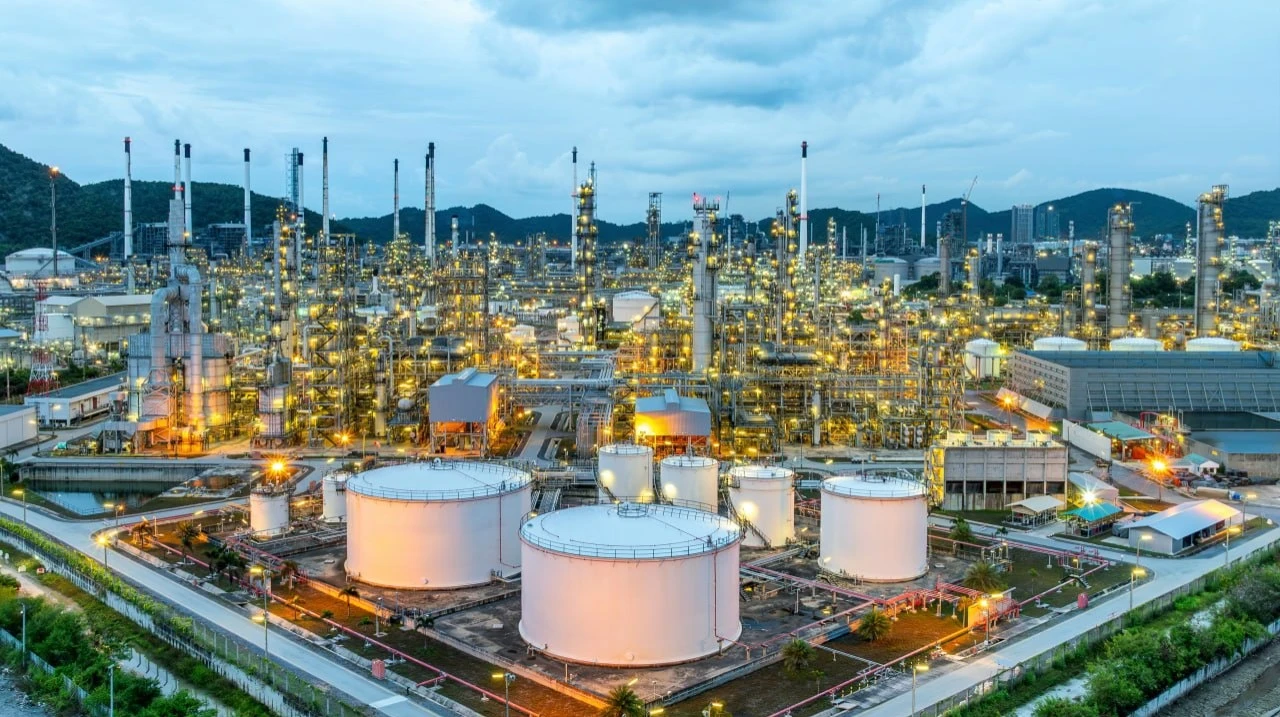
The price of oil sometimes depends not on OPEC's decisions, but on the last available storage tank into which it can be pumped. Photo: Shutterstock.com
Myths about oil arise from isolated ideas that, in the public consciousness, come to shape the outlook for the entire market. Over the past hundred years, oil has “run out” several times. At the beginning of the last century, the U.S. was particularly fearful of a shortage. In 2008, the price per barrel rose to nearly $150, and “peak oil” (the point at which production can no longer be increased) became a widespread fear. In April 2020, amid the uncertainty of the pandemic, prices briefly fell below zero. In this article, we’ll examine the most common misconceptions surrounding this energy resource.
Myth 1. Oil will run out soon
It sounds convincing: oil is a finite resource, old fields are being depleted, and demand is rising. So, one day, the world will run into an empty well. And indeed, once any given oil-bearing field reaches its peak production capacity, output from that field declines. But that doesn’t mean the potential to increase production elsewhere has been exhausted.
In the last century, “black gold” set production records on more than one occasion. In 1919, the U.S. Geological Survey estimated that the country’s domestic oil reserves would last about 10 years, but by the late 1920s, production in the United States had more than doubled. In 1956, geologist Marion King Hubbert predicted that U.S. production capacity would peak sometime between 1965 and 1970. For conventional extraction methods, this forecast proved to be largely accurate. In the 2000s, fears that further increases in production were impossible resurfaced as oil prices reached new all-time highs. However, in the 2020s, the primary concern is a shortage of demand, not a shortage of supply.
Attempts to predict the next production record are generally pointless. Estimates of oil reserves fluctuate along with price, technology, further exploration, and infrastructure. After peaking in 1970, U.S. oil production declined for decades. The turning point came after 2008, when the development of shale production sparked a new wave of growth, and by 2023, the country was producing approximately 12.9 million barrels per day, setting a new global record. A year later, shale oil formations accounted for about 60% of the country’s proven oil reserves.
So it turns out that it's not that oil is running out—it's that the way it's extracted is changing.
One myth claims that oil is the remains of dinosaurs. In fact, it was formed from ancient plankton, algae, and other microscopic organic matter that accumulated on the ocean floor
Myth 2. Someone controls the oil market
When hydrocarbon prices rise, the media look for someone to blame for “turning off the tap.” Very often, OPEC, Saudi Arabia, the United States, Russia, or multinational oil companies are blamed. If oil prices fall, it means someone has “turned on the tap” or started a price war.
This stereotype has a historical basis. In 1973–1974, the price of oil skyrocketed from $2.90 to $11.65 per barrel amid armed conflicts in the Middle East and OPEC’s actions. The world took note: oil can be used as a lever of pressure in the grand political game.
But “influence” does not mean “complete control.” As of the end of 2024, OPEC countries held 79% of the world’s proven crude oil reserves but accounted for only 35% of global production. The actual mechanism by which OPEC agreements influence the market is limited to spare production capacity, which allows for a relatively rapid increase in supply. In February 2025, this spare capacity was estimated at approximately 5.3 million barrels per day (about 5% of global demand), of which 3.1 million were in Saudi Arabia.
In April 2020, energy prices were determined not by geopolitics, but by the dynamics of the derivatives market and storage levels. WTI crude oil futures prices fell below zero. Due to uncertainty surrounding the spread of COVID-19, demand collapsed, coinciding with the expiration of contracts, and storage facilities in Cushing (Oklahoma)—one of the world’s largest oil hubs—were 76% full. It turns out that the price of oil sometimes depends not on OPEC’s will, but on the last available storage tank into which it can be pumped.
Is oil black? Not always. It can be transparent, emerald green, amber, yellow, and even bright red. The color of crude oil depends on its chemical composition: the amount of resins, metal impurities, and sulfur.
Myth 3. High prices are always beneficial to exporters
At first glance, it’s obvious: the higher the price per barrel, the more sellers earn. For Saudi Arabia, Russia, Iraq, or Kazakhstan, a rise in the price of Brent means higher foreign exchange earnings, additional mineral extraction taxes collected, and, consequently, new revenue for the state treasury. According to International Monetary Fund estimates, Saudi Arabia needed an average annual price of $92.3 per barrel to balance its budget in 2025, and $86.6 in 2026.
But an exporter doesn’t need the highest possible price; rather, it needs the price the buyer is willing to pay. Between 1979 and 1982, global oil consumption fell by about 10%, and demand for OPEC products dropped from 30 million barrels per day to below 20 million. In an effort to maintain high prices, Saudi Arabia cut production from more than 10 million barrels per day in 1980 to less than 2.5–3 million in 1985–1986, but oil prices still collapsed.
The same logic played out again in the 2010s: high oil prices spurred the rapid development of shale technology in the U.S. and led to increased investment in the industry, its infrastructure, and geological exploration. This led to an increase in supply, which was one of the factors behind the collapse of hydrocarbon prices in 2014–2016.
Every oil supercycle—and the economic decisions made during that cycle—ultimately leads to its collapse. High oil prices bring money to exporters today, but they also strengthen their competitors and create problems for the future.
Myth 4. Electric cars will bring an end to the oil era
Transportation accounts for about 60% of global energy consumption, which is why the rise in electric vehicle sales is seen by many as a direct threat to the oil industry. The logic seems straightforward: the more cars switch to electric power, the less gasoline and diesel fuel will be needed. There is some truth to this.
According to estimates by the International Energy Agency (IEA), the global fleet of electric vehicles will have already prevented the consumption of approximately 1.7 million barrels of oil per day by 2025. Sales of electric vehicles continue to grow: by 2026, they could reach 23 million units, or about 28% of the global market for new passenger cars. Electrification is progressing particularly rapidly in China, where by the end of the year, the share of fully electric vehicles and plug-in hybrids in new car sales could approach 60%.
However, electric vehicles are currently slowing the growth of oil demand rather than reducing it. According to IEA estimates, in 2025, global oil consumption continued to increase by approximately 680,000–740,000 barrels per day, and in 2026, demand could grow by another 700,000–760,000 barrels. While developed countries are reducing their fuel consumption, developing economies continue to expand their vehicle fleets, transportation volumes, and industrial production, offsetting a significant portion of this effect.
Furthermore, oil is not just fuel for passenger cars. A significant portion of demand comes from aviation, maritime transport, freight transport, the petrochemical industry, and the production of plastics, fertilizers, and other chemical products. In many of these industries, a viable alternative to hydrocarbons is either not yet available or remains too expensive.
It is telling that even forecasts for the future differ. The IEA expects a gradual slowdown in demand growth as electric vehicles become more widespread, while OPEC forecasts an increase in global oil consumption to approximately 120 million barrels per day by 2050, attributing this to population growth, economic growth, and rising energy consumption.
It turns out that electric vehicles aren’t doing away with oil—they’re changing the way it’s used. Like many previous technological shifts, the energy transition isn’t destroying the market overnight, but is gradually forcing it to adapt to new conditions. That is precisely why talk of the imminent end of the oil era seems, for now, more like an exaggeration than a reflection of current global trends.
Myth 5. The history of the oil market is straightforward
The main myth about the hydrocarbon market is that it follows simple logic. In the 1970s, it seemed that hydrocarbon producers had the world at their feet. In 2008, it was believed that production had reached a geological limit. From 2014 to 2016, many were convinced that “shale” had killed the traditional industry. In the 2020s, the widely held view was that the energy transition would either quickly bury oil or fail.
But the real story of oil unfolds in a nonlinear fashion. Its guiding principle is adaptation driven by the emergence of new fields, technologies, routes, forms of demand, and political risks, as well as the industry’s participants’ desire to keep pace with the times—and even move a little faster.
Oil should not be mythologized—neither as an eternal curse, nor as an endless source of wealth, nor as a fading relic. After all, the market for “black gold” has always been—and remains—a complex and flexible system capable of adapting to new economic, technological, and political conditions.
Source: *Finansist* magazine, No. 3 (43), 2026.
This article was AI-translated and verified by a human editor