Axios has learned of efforts to agree a 45-day truce in Iran. Oil slowed down the growth
The stock market reacted with growth

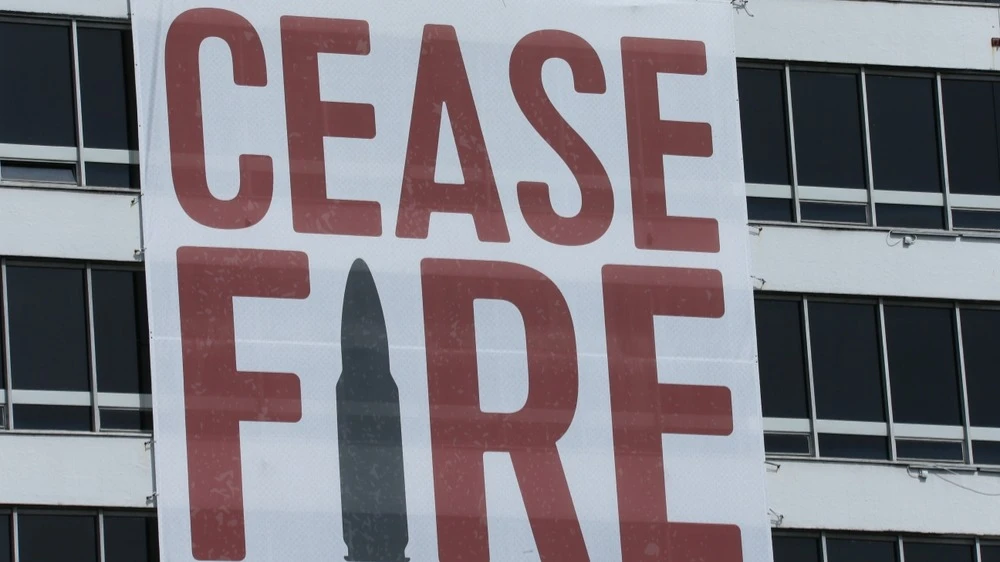
The US and Iran discuss a 45-day truce before the threat of a major Gulf War / Photo: Brendain Donnelly/Shutterstock.com
Washington, Tehran and a group of regional mediators are discussing the terms of a 45-day ceasefire, which could be a step towards the final end of the conflict, Axios portal reported citing American, Israeli and Middle Eastern sources. Amid the news of possible agreements, stock indices in Asia and the US moved to growth, and oil prices stabilized.
Details
Axios sources say diplomatic contacts are being mediated by Pakistan, Egypt and Turkey, as well as through exchanges between U.S. Special Envoy to the U.S. President Steve Whitkoff and Iranian Foreign Minister Abbas Araghchi. The two sides are discussing a two-stage settlement plan. The first envisages a ceasefire for 45 days with the possibility of extension, during which time negotiations will be held on the complete end of hostilities. The second stage should be the signing of a final peace agreement.
According to the portal, the key issues - the full resumption of navigation in the Strait of Hormuz and the fate of Iran's stockpiles of highly enriched uranium - will only be part of the final agreements. The Iranian side is not ready to completely give up these negotiating trump cards in exchange for just a truce. Tehran also demands firm guarantees from Washington that hostilities will not resume, as they did in Gaza and Lebanon, the portal said.
Axios' interlocutors emphasize that the mediators are extremely concerned about the possible consequences of Iran's retaliatory strike on the oil infrastructure of the Persian Gulf states. Iranian officials have been told that there is no time left for diplomatic maneuvers, and the next 48 hours are the last chance to reach agreements and avoid large-scale destruction, the article says.
The White House declined to comment, noting that Donald Trump's administration has conveyed several proposals to Tehran in recent days but they have not yet been accepted.
Market Reaction
On the news about the negotiations on peace with Iran, oil prices stabilized: the cost of a barrel of Brent fell below $110 (at the time of publication, June contracts for Brent are again trading at $110.3), quotations of American West Texas Intermediate (WTI) also fell to the region of $109, having leveled out most of the gain recorded at the beginning of the trading session, according to Trading Economics. Later, May WTI contracts rose again to $112 per barrel.
MSCI Asia Pacific composite index added 0.6%. The ratio of rising and falling securities within the benchmark was almost equal, with the technology sector showed the leading dynamics, states Bloomberg. Futures on the U.S. index S & P 500 and Nasdaq 100 recovered the fall observed at the beginning of the day, and also moved to growth.
Gold has trimmed the drawdown to 0.3% and is trading around $4670 per troy ounce. It has fallen in price by 12% since the start of the conflict: a jump in energy prices has heightened inflationary concerns, making it less likely that interest rates - a key support factor for non-interest bearing metals - will fall.
Context
Last weekend - even before Axios - Donald Trump threatened on social media to give Iran "hell" by striking power plants and other infrastructure if the Strait of Hormuz was not unblocked by Tuesday evening. Tehran has rejected those demands, and for now the transportation corridor remains closed to most vessels.
This article was AI-translated and verified by a human editor