Big Tech Held Hostage: How the Worst-Case Scenario with CoreWeave Might Unfold

CoreWeave's stock price fell by more than 25% over the course of the week, and the yield on its bonds rose sharply. Photo: PJ McDonnell / Shutterstock.com
CoreWeave found itself at the center of the AI sector sell-off. Its stock price plummeted by more than 25% over the course of the week, but, more importantly, the cost of its debt rose sharply. For example, the yield on CoreWeave’s 8-year bonds, issued in July at 9.58% per annum, rose above 15%. The market now estimates CoreWeave’s probability of default at 63% (up from 30% just a year ago). Max Frums, head of distressed and high-yield debt at 9fin, told Reuters that he considers the CoreWeave case a “canary in a coal mine”—that is, an early warning sign for the entire market segment.
Fund manager Alexey Tretyakov wrote on his Telegram channel, “War, Wealth, and Wisdom,” that some investors have begun to view CoreWeave as the “new Lehman Brothers” of the AI sector. In an article for Oninvest, he outlined the consequences of the worst-case scenario—a CoreWeave default. How likely is that?
A New Lehman Brothers for the AI Sector?
The American technology company CoreWeave lost nearly 30% of its market capitalization in a matter of days, while the yield on its bonds on the secondary market exceeded 15% per year.
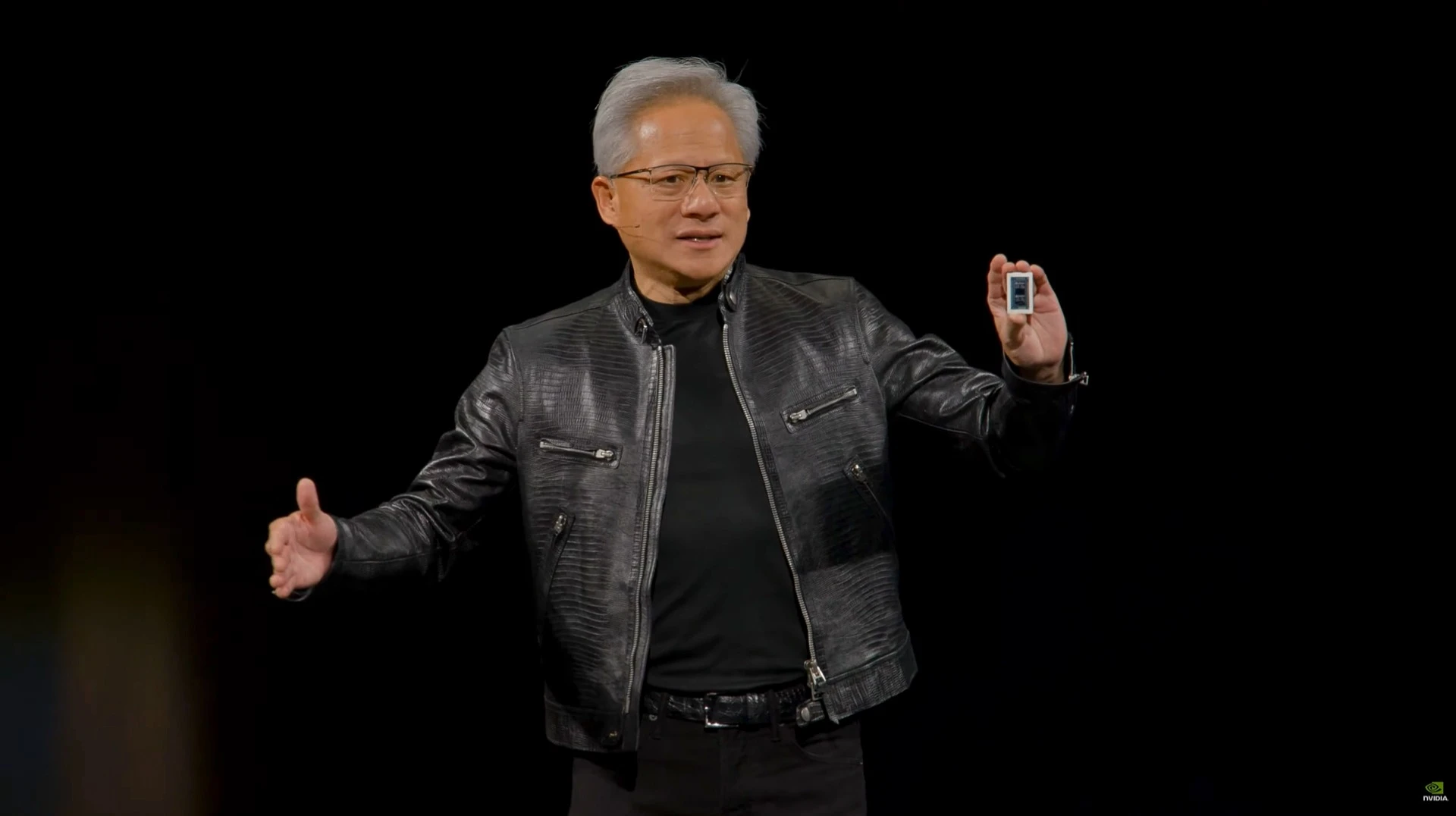
Even the verbal support from Nvidia CEO Jensen Huang (the tech giant is a CoreWeave shareholder) and investor Cathie Wood (both essentially stated that the company’s situation is not critical and that concerns about CoreWeave’s high borrowing costs are unfounded) didn’t help much. Bond yields fell below 15% on Friday, October 16, during the first half of the day, but jumped back above that level toward the evening of the same day.

Why is the CoreWeave situation causing such a stir that some have begun comparing it to Lehman Brothers in terms of its potential impact on the global economy?
CoreWeave is the world’s largest specialized cloud provider in the GPU-as-a-Service category. Its business model is based on long-term leases (10–15 years) of empty data center space from third-party operators, which it then equips with engineering infrastructure and installs Nvidia GPUs. This computing power is then leased to major tech giants—Microsoft, Meta, and OpenAI—for training and running AI models.
Although revenue for the past year totaled just $7.5 billion, CoreWeave is growing rapidly—analysts project it will reach $26 billion in 2027 and $42 billion in 2027. This growth is financed primarily through debt.
According to the latest financial statements, its liabilities total $72 billion. Estimates suggest that by the end of 2027, they could exceed $100 billion.
Despite its relatively small size in the broader industry, it is at the epicenter of the boom, serving as one of Nvidia’s largest chip buyers and a service provider to the biggest tech giants. With contracts worth hundreds of billions of dollars, the “red light” that has gone off regarding plans for new borrowing threatens to trigger a domino effect across the entire AI industry.
Is a CoreWeave default possible?
Judging by the price of five-year CDS contracts on the company's debt, the market has begun to assess the likelihood of this as high—last week, it rose above 60%.
But what’s the reality? Even against the backdrop of the losses typical of most AI startups, CoreWeave stands out for its high-risk business model. It is in the midst of actively building new data centers and needs to raise at least $10 billion every quarter. At the same time, its management has not built up a liquidity cushion, believing that the debt market will always be open at the snap of a finger. According to its first-half financial statements, its cash reserves totaled just $5.5 billion (cash and cash equivalents), while its equity stood at $5 billion—compared to $72 billion in liabilities!
It turns out that the company has neither liquidity nor assets that could be used as collateral for a loan to keep the business running for more than one quarter.
However, a CoreWeave default is such a dire scenario for the entire high-tech sector that, in essence, the entire Big Tech elite has been held hostage by this company and simply cannot help but come to its aid. Therefore, in my view, a default is still an unlikely scenario. Nvidia, Microsoft, or one of its other major clients could purchase a new share offering or provide assistance through another financial instrument.
But let’s imagine what would happen if Coreweave were to default. U.S. courts would initiate Chapter 11 bankruptcy proceedings, imposing an “automatic stay” on the termination of contracts. Private equity firms (Blackstone, Apollo, etc.) would initiate foreclosure proceedings: this would involve hundreds of thousands of Nvidia chips and rights to 2.2 GW of uncompleted power generation capacity.
For the largest tech giants (Microsoft, Meta, OpenAI), the provider’s collapse will paralyze key roadmaps for training next-generation models, and the release of new models and updates will have to be postponed for 6–12 months. This will force them to urgently spend billions of dollars out of their own pockets to acquire and complete the construction of the stalled data centers.
From the industry's perspective, CoreWeave's default will lead to the closure of off-balance-sheet financing arrangements for AI securities.
Even though leading technology companies have already taken on a record amount of debt in recent times, the amount of off-balance-sheet liabilities they have assumed is many times higher! According to some estimates, hidden debt amounts to $3 trillion.
While Google and Amazon may report negative or minimal net debt and hold AA-level credit ratings in their official financial statements, when off-balance-sheet liabilities are taken into account, their net debt/EBITDA ratio rises above 3, which should result in a sharp downgrade of their credit ratings to the minimum investment-grade level of BBB or even to speculative grade.
What's next?
All of CoreWeave’s key clients—Microsoft, Meta, Google, and even OpenAI (via Microsoft’s parent infrastructure)—have vast networks of their own massive data centers. At a time when CoreWeave found itself on the brink of collapse, the question arises: why do we even need such an intermediary?
Part of the reason is a severe shortage of everything needed for AI development, especially chips and electricity.
CoreWeave (as well as its competitor Crusoe Energy) managed, during the very earliest stages of the boom (in 2022–2024) managed to legally secure massive amounts of capacity from U.S. utility companies and has an exclusive agreement with Nvidia to supply cutting-edge graphics accelerator models.
But the most important reason is to conceal expenses and debt. Tech giants prefer to enter into agreements with external providers to lease future computing capacity, despite the intermediary margin built into the contracts and much higher interest expenses, rather than recognizing the debt directly on the balance sheet.
Meta itself, in addition to using CoreWeave, has devised a scheme involving SPV companies in which control is transferred to external managers. Essentially, these shell companies—whose sole valuable asset is a contract to supply computing power to Meta itself—use such contracts to attract multibillion-dollar investments in data center construction.
The issue isn’t whether CoreWeave will default or not! In fact, investors have already realized how risky it is to finance such intermediaries. One way or another, the biggest players will be forced to honor their commitments and wind down off-balance-sheet financing schemes for their data centers, which could be a reality check for the AI investment boom.
It's fair to say that, regardless of what happens next with Corewave, the AI "party" is coming to an end.
I believe that the decline in yields on U.S. Treasury bonds, which began on Wednesday, October 14, along with the plunge in CoreWeave securities, objectively reflects concerns that the fallout will affect not only the AI sector but also the U.S. economy as a whole.
The days when startups are valued at billions right from the start, investors are willing to fund any amount of investment, and consumers can enjoy excellent products for practically nothing are over. Everyone will start counting their money.
Until recently, investment bank analysts predicted that the combined capital expenditures of just the five largest AI giants (Amazon, Google, Microsoft, Meta, and Oracle) would exceed $1.1 trillion in 2027. Even a simple halving of the growth rate to $500 billion would mean a massive slowdown in the economy and a drop in stock prices on the stock market.
I would start preparing for such a scenario right now by avoiding investments in stocks and bonds of high-tech companies and opting instead for “safe-haven” U.S. Treasuries.
Most investments in companies like CoreWeave will fail. But, just like the internet in the early 2000s, AI will continue to evolve, becoming more powerful and cheaper.
This article was AI-translated and verified by a human editor