"Bloodbath": What Does the Sell-Off of Chipmakers in Asia Signify?
If the sell-off of memory chip manufacturers' stocks continues today in the U.S., a disaster could unfold when the Korean stock market opens on Monday, warned an IG analyst

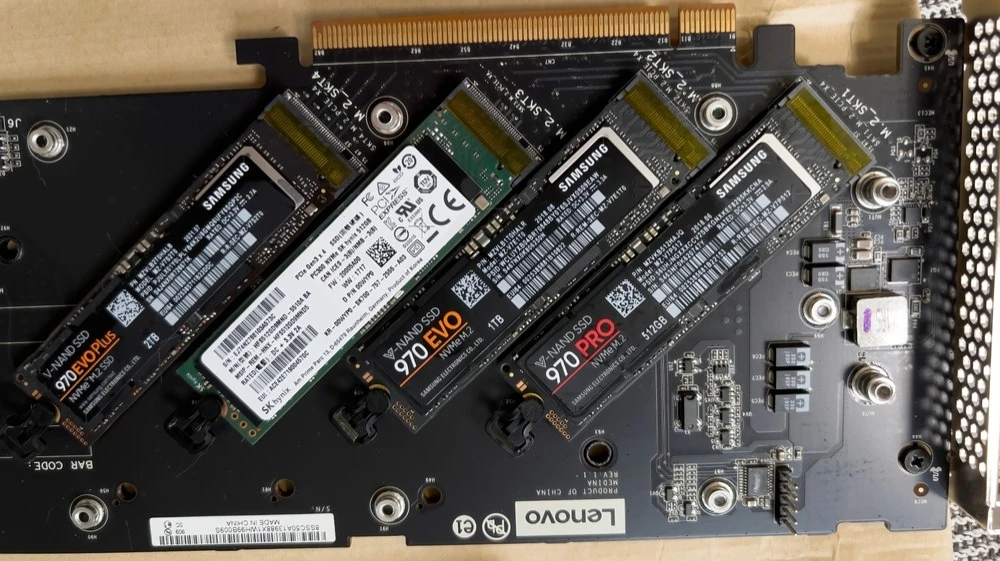
Shares of Samsung and its main competitor, SK Hynix, have fallen by a third from their June highs / Photo: Hadrian/Shutterstock.com
Shares of Asian memory chip manufacturers have plummeted: Japan’s Kioxia has fallen by half from its June peak, while South Korea’s Samsung Electronics and SK Hynix have dropped by about a third. On Friday, July 17, the sell-off accelerated: the Japanese and Taiwanese indices fell by as much as 6%, and Japan’s Nikkei 225 entered a correction—it has dropped more than 10% from its record close on June 25.
A Big Turnaround
After months of a dramatic rally fueled by the AI boom, the top stocks in the Asia-Pacific region have fallen: investors have grown skeptical of the sky-high valuations of Asian chipmakers, and the Korean stock exchange—one of the world’s hottest trading venues— has begun to restrict speculative trading.
Nowhere is this turnaround more evident than at Japan’s Kioxia, notes Business Insider. In the first half of the year, the memory manufacturer’s shares rose 631%—placing them second in terms of returns among non-U.S. stocks in the MSCI All Country World Investable Market Index. In June, Kioxia became Japan’s most valuable publicly traded company, but since then its market capitalization has fallen by half—by approximately $185 billion. Today, Kioxia’s shares plummeted by 16% in Tokyo following a sell-off of chipmakers’ stocks in the U.S.
TSMC, the world’s largest contract chip manufacturer, fell more than 7% in Taiwan—despite reporting outstanding second-quarter results. The Korean market was closed on July 17 in observance of Constitution Day. However, Samsung Electronics and SK Hynix have already lost about a third of their value from this year’s highs. SK Hynix shares, listed on the Nasdaq, closed down 14% on July 16. In pre-market trading on July 17 in the U.S., SK Hynix is up 0.1%, but Nasdaq technology index futures are down 1.6%.
What Analysts Are Saying
— Takamasa Ikeda, Senior Portfolio Manager at GCI Asset Management (Tokyo): “The Nikkei is closely correlated with the SOX Index (the PHLX Semiconductor Index—OnInvest note). The SOX’s growth rate has been volatile, and a correction has now begun there. It was expected, but it happened sooner than the market had anticipated. The market has begun to question whether hyperscalers will be able to generate returns that justify their massive investments. And these investments are financed by highly leveraged loans from banks and private lenders”;
— Fabien Yip, market analyst at IG (Sydney): “Retail investors were (opened leveraged positions—ed. OnInvest) to trade this truly impressive AI rally, so the unwinding of leveraged positions will certainly exacerbate the decline. If the sell-off continues tonight during the U.S. session, then in Korea, when the market opens, I think it will be a real disaster.”
— Kay Okamura, portfolio manager at Neuberger Berman (Tokyo): “I think the Fed was most likely the trigger. [The head of the U.S. regulator] Kevin Warsh, his comments, and his shift toward what appears to be a rather ‘hawkish’ Fed policy set off a cascade effect—investors began pulling their chips off the table. Selling pressure began to gain momentum—first in very high-profile names like SK Hynix and Samsung, and from there it spread further. The Nikkei isn’t faring any better, and perhaps even slightly worse. The term “bloodbath” is appropriate here, because everything is falling across the board.”
— Gary Tan, portfolio manager at Allspring Global Investments (Singapore): “Judging by the flows we’re seeing, this looks more like the froth being shaken out of an overheated AI trade than a knee-jerk reaction to rising yields. Equity market flows show that investors are taking profits on the stocks of the biggest AI beneficiaries, rather than confidently shifting into software developers, consumer, and internet companies that have lagged since the start of the year.” (all quotes are from Reuters).
This article was AI-translated and verified by a human editor